Yellow Chert or Quartzite Water-Worn River Stone
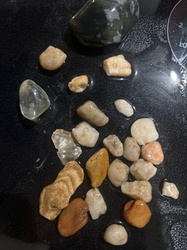
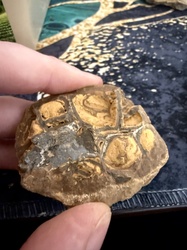
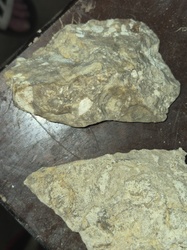
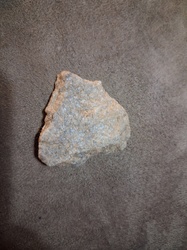
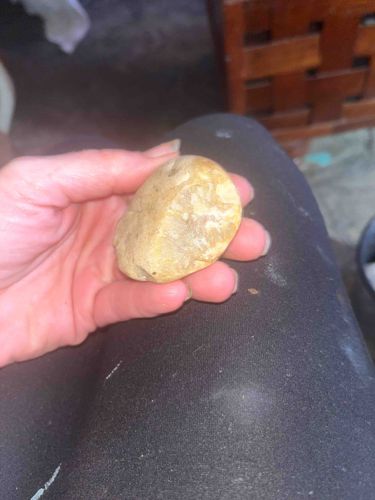
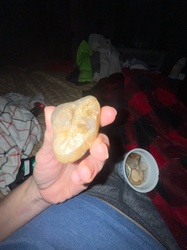
This item is a naturally occurring, water-worn cobble or river stone, held by a hand for scale, approximately 2 to 3 inches in diameter. The stone exhibits a predominantly tan to mustard-yellow coloration, likely indicative of chert, jasper, or a highly iron-stained quartzite. Physically, the object features a rounded, sub-angular shape with a smooth, matte surface finish consistent with prolonged fluvial erosion. It possesses a compact, microcrystalline structure with visible surface variegation, including pale inclusions and darker mineral spotting. There are no definitive maker's marks or anthropogenic modifications; however, several small percussion chips on the bottom edge indicate historical impacts with other stones in a high-energy water environment. The stone's condition is consistent with natural weathering, showing a fine patina of silt or mineral crusting in deeper crevices. This type of rock is geologically ancient, likely millions of years old, and is commonly found in riverbeds or glacial tills. Its quality is inherent to its natural state, showing typical durability for high-silica stones without significant internal fractures visible on the surface.
AI-Generated Appraisal Disclaimer
Estimated Value
$5.00 - $15.00
Basic Information
Category
Rocks, Minerals, and Fossils
Appraised On
April 4, 2026
Estimated Value
$5.00 - $15.00
Item Description
This item is a naturally occurring, water-worn cobble or river stone, held by a hand for scale, approximately 2 to 3 inches in diameter. The stone exhibits a predominantly tan to mustard-yellow coloration, likely indicative of chert, jasper, or a highly iron-stained quartzite. Physically, the object features a rounded, sub-angular shape with a smooth, matte surface finish consistent with prolonged fluvial erosion. It possesses a compact, microcrystalline structure with visible surface variegation, including pale inclusions and darker mineral spotting. There are no definitive maker's marks or anthropogenic modifications; however, several small percussion chips on the bottom edge indicate historical impacts with other stones in a high-energy water environment. The stone's condition is consistent with natural weathering, showing a fine patina of silt or mineral crusting in deeper crevices. This type of rock is geologically ancient, likely millions of years old, and is commonly found in riverbeds or glacial tills. Its quality is inherent to its natural state, showing typical durability for high-silica stones without significant internal fractures visible on the surface.
Get Your Items Appraised
Instant estimates of your treasures with AI-powered instant appraisals