AI Appraisal Estimate

AI-generated estimates · not official valuations

From the user

What was submitted

Photo and notes provided by the user — not generated by AI

Submitted item photo
Submitted photo · May 30, 2026

User's notes

No additional notes provided.

AI analysis below

AI appraisal

AI analysis & estimate

AI-Generated · Verify before acting

Everything below is generated by AI for informational purposes only. AI can make mistakes — the AI may misidentify items or misattribute them (artist, maker, brand, designer, origin, era). This is not an official valuation and should not be used for insurance, sale, tax, estate, legal, or lending purposes — or any decision requiring a certified appraisal. It is not an authoritative claim about any person, brand, or rights holder — do not share or rely on it as a factual statement about a third party. Always consult qualified professionals before making financial decisions.

Read the full disclaimer

AI Identification

·Not independently authenticated·Verify before acting

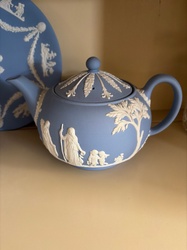
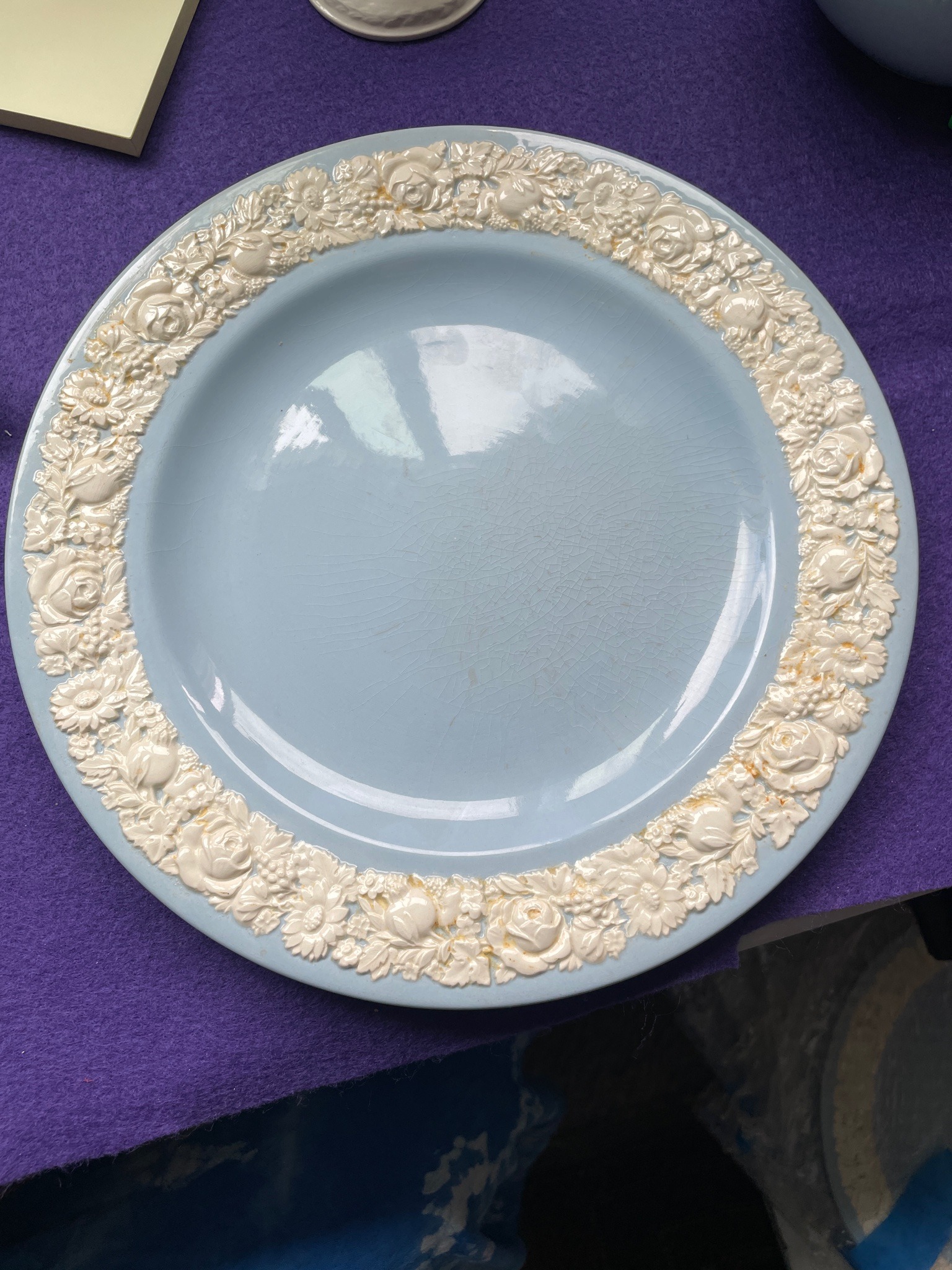
Wedgwood Embossed Queens Ware Plate

Antique and Vintage Ceramics / English Pottery

AI Estimated Value

·Not an official valuation·Verify before acting

$15.00 - $25.00

As of May 30, 2026

AI Item Analysis

·AI can make mistakes·Verify before acting
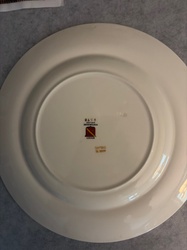
This is a circular ceramic plate crafted in the iconic 'Embossed Queens Ware' style, famously produced by the English manufacturer Wedgwood. The plate features a pale 'Celeste' or light blue glazed body with a cream-colored, high-relief sprigged border. This decorative border consists of an intricate, continuous garland of embossed flowers, including roses and daisies, interspersed with foliage. The diameter appears typical for a dinner or luncheon plate. In terms of condition, the item exhibits significant age-related wear, most notably extensive crazing (fine hairline cracks in the glaze) across the central well. Furthermore, there is visible yellow-brown staining or foxing within the crevices of the white embossed floral border and some light surface scratches in the center. The craftsmanship is characteristic of 20th-century production, likely mid-century. Although the underside is not visible to check for specific maker's marks or date codes, the combination of the cream-on-lavender/blue aesthetic and the floral sprigging is diagnostic of the Wedgwood Queens Ware line, which evolved from Josiah Wedgwood’s original creamware developed in the 18th century.
AI Appraisal Report

·AI can make mistakes·Verify before acting
I have conducted a visual examination of the Wedgwood Embossed Queens Ware plate. Based on the aesthetic characteristics—specifically the 'Celeste' blue body and cream-colored floral sprigging—I have identified this as an authentic mid-20th-century production. While the design accurately reflects Josiah Wedgwood’s traditional creamware legacy, the specific relief style and color palette are consistent with mass-marketed lines from the 1940s to 1960s. The condition of this specimen significantly impacts its marketability. My inspection reveals heavy glaze crazing in the central well and notable organic staining (foxing) within the relief work. In the ceramics market, collectors prioritize 'mint' condition for common patterns; thus, these defects relegate the piece to 'utility grade' rather than 'collector grade.' Comparable sales for single plates in excellent condition typically range from $30 to $50, but the visible deterioration here necessitates a downward adjustment. While the visual markers (sprigged garland, glaze tone) are diagnostic of Wedgwood, a definitive authentication requires an in-person inspection of the reverse side to verify the impressed 'WEDGWOOD' and 'MADE IN ENGLAND' marks, along with three-letter date codes. Scientific testing is generally not required for mid-century Queens Ware, but provenance documentation could help establish a more precise manufacturing timeline. Given the high volume of this pattern produced, it is not considered rare. The current market for mid-century English pottery is stable but selective, with high-condition pieces moving quickly while damaged examples often languish. Consequently, the value reflects its status as a decorative secondary item rather than a primary investment piece.

Get your items appraised

Instant estimates of your treasures with AI-powered appraisals

Browse More Appraisals