These notes were written by the person who submitted this item. Appraiser.AI has not verified them, and the AI's identification and estimate may rely on them.
AI Estimated Value
Not an official valuation
$25-45
AI estimate as of September 17, 2025 · verify with a professional before acting
AI-Generated · Verify before acting
Everything on this page is generated by AI for informational purposes only. AI can make mistakes — the AI may misidentify items or misattribute them (artist, maker, brand, designer, origin, era). This is not an official valuation and should not be used for insurance, sale, tax, estate, legal, or lending purposes — or any decision requiring a certified appraisal. It is not an authoritative claim about any person, brand, or rights holder — do not share or rely on it as a factual statement about a third party. Always consult qualified professionals before making financial decisions.
This analysis also relies on unverified notes provided by the user, which may be incomplete or inaccurate and could affect the result.
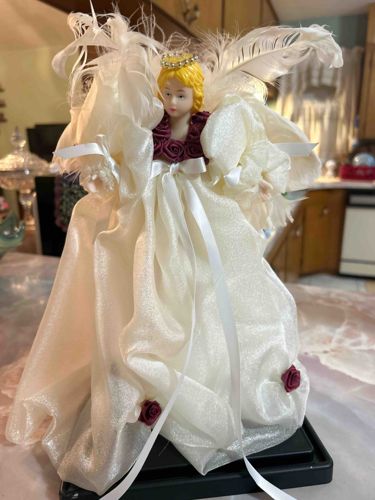
This item is a vintage angel Christmas tree topper, designed to sit atop a Christmas tree with a stand for stability. The angel features a porcelain or ceramic head and hands, with delicate facial features including painted eyes, eyebrows, and lips. Her hair is molded and painted yellow, topped with a small, golden crown adorned with tiny rhinestones, suggesting a regal or divine status. The angel's body is comprised of layers of fabric. She wears a voluminous cream or off-white dress made of sheer, shimmery organza-like material, which creates a gathered and flowing silhouette. The puffed sleeves are also made of this material. Beneath the sheer overlay, visible at the neckline, is a darker red or burgundy fabric, possibly velvet or a similar plush material, intricately decorated with sculpted rosette details, adding a touch of richness and contrast. A white satin ribbon is tied in a bow at her waist, with long streamers extending down the front of the dress. Further embellishment includes small burgundy fabric roses strategically placed on the skirt of the dress, one visible on the viewer's left and another on the right. Large, feathery wings, likely faux feathers, are attached to the back, contributing to the angelic appearance. The overall condition appears good, with no obvious signs of significant damage, though some light wear consistent with age and decorative use might be present, particularly on the delicate fabric elements or feathers. The construction indicates a mass-produced item from the late 20th century, likely between the 1970s and 1990s, characteristic of holiday decor from that era. Its unique combination of materials and decorative details contributes to its vintage charm.
AI Appraisal Report
Upon examining the provided images of this vintage angel Christmas tree topper, I have conducted an appraisal based on its visual characteristics. The item presents in what appears to be good to very good vintage condition. It features a porcelain or ceramic head and hands, a multi-layered fabric dress of organza and a red plush material, and faux feather wings. The design, materials, and construction are consistent with mass-produced holiday decor from the late 20th century, likely dating from the 1970s to the 1990s. There are no obvious signs of major damage such as cracks in the porcelain or large tears in the fabric, though some minor age-related wear, such as slight discoloration, crushed fabric, or ruffled feathers, is to be expected and observed.
The market for such vintage Christmas decorations is active, particularly among collectors of nostalgic holiday items. Comparables for similar mass-produced angel toppers from this era typically sell in the $20 to $50 range, depending on condition, specific manufacturer, and design intricacy. This angel's specific combination of a detailed dress and crown makes it an attractive example within its category. Its value is primarily driven by decorative and nostalgic appeal rather than significant rarity or artistic merit.
It is important to note the limitations of an appraisal based solely on images. Without a physical inspection, I cannot confirm the manufacturer by checking for marks, definitively identify all materials (e.g., porcelain vs. ceramic), or assess the full extent of any subtle condition issues like fabric fragility or hidden repairs. Full authentication would require an in-person examination to search for maker's marks, which could significantly impact value if a desirable brand like Kurt S. Adler or a specific artist were identified.