AI estimate as of November 13, 2025 · verify with a professional before acting
AI-Generated · Verify before acting
Everything on this page is generated by AI for informational purposes only. AI can make mistakes — the AI may misidentify items or misattribute them (artist, maker, brand, designer, origin, era). This is not an official valuation and should not be used for insurance, sale, tax, estate, legal, or lending purposes — or any decision requiring a certified appraisal. It is not an authoritative claim about any person, brand, or rights holder — do not share or rely on it as a factual statement about a third party. Always consult qualified professionals before making financial decisions.
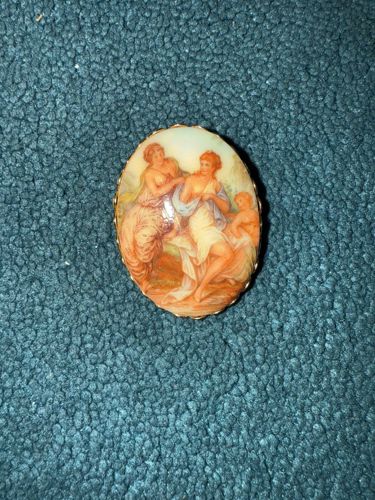
This item is an oval-shaped brooch featuring a hand-painted classical scene. The central image depicts three figures, likely mythical or allegorical, in a pastoral setting. There appear to be two adult female figures and one smaller, possibly cherubic, figure. The figures are rendered with soft, flowing drapery in hues of white, light blue, and various shades of peach and orange for their skin tones and surrounding elements. The background of the painting seems to include muted greens, yellows, and browns, suggesting foliage or a natural landscape. The overall color palette is warm and delicate, characteristic of Rococo or Neoclassical styles. The brooch is encased in a scalloped or ridged gold-tone metal bezel, which adds a decorative frame to the artwork. The material of the painted surface appears to be a type of porcelain, enamel, or possibly ivory, known for its smooth finish suitable for miniature painting. The condition of the brooch seems to be good, with no immediately visible chips, cracks, or significant wear to the painted surface or the metal frame, though closer inspection would be required to confirm this. The age of the piece is difficult to ascertain without maker's marks or further details, but the style of painting suggests it could date from the 19th or early 20th century. The craftsmanship appears fine, indicating a piece created for adornment, likely as a personal accessory.
AI Appraisal Report
This oval hand-painted classical scene brooch displays a delicate aesthetic, likely dating from the late 19th to early 20th century, a period when such miniature painted jewelry was popular. The central image, probably on porcelain or enamel, depicts three figures in a pastoral setting, rendered with soft colors and flowing drapery, reminiscent of Neoclassical or Rococo revival styles. The gold-tone metal bezel frames the artwork nicely. Based on the image, the condition appears good, with no obvious chips, cracks, or significant wear to the painted surface or metal. However, without in-hand inspection, I cannot fully assess the integrity of the paint layer or the metal's condition and purity.
From a market perspective, classical scene brooches, while charming, do not command the same high prices as pieces with precious gemstones or signed works by renowned miniaturists unless they are of exceptional artistic merit or historical provenance. Comparables for unsigned pieces in good condition typically fall within the low to mid-hundreds. Demand for such items is moderate, appealing to collectors of antique jewelry and miniature art. Factors impacting value include the artistic quality of the painting, the material of the plaque (porcelain vs. ivory), and the quality of the metal setting.
Limitations in authenticity verification are significant based solely on images. In-person examination would be crucial to confirm the painting's material (porcelain, enamel, or ivory), assess the true condition of both the painting and metal, and search for any maker's marks or hallmarks. Scientific testing could verify material composition if needed. Provenance documentation would greatly aid in confirming age and origin, potentially adding historical value.