AI estimate as of September 27, 2025 · verify with a professional before acting
AI-Generated · Verify before acting
Everything on this page is generated by AI for informational purposes only. AI can make mistakes — the AI may misidentify items or misattribute them (artist, maker, brand, designer, origin, era). This is not an official valuation and should not be used for insurance, sale, tax, estate, legal, or lending purposes — or any decision requiring a certified appraisal. It is not an authoritative claim about any person, brand, or rights holder — do not share or rely on it as a factual statement about a third party. Always consult qualified professionals before making financial decisions.
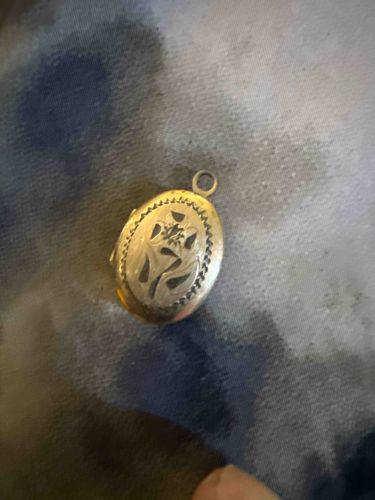
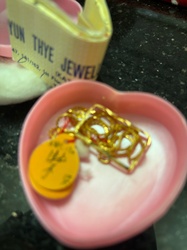
This item is an oval-shaped locket pendant, likely crafted from a base metal with gold plating or gold-filled material, exhibiting a warm, slightly tarnished metallic hue. Its dimensions appear to be small, suitable for a charm or a delicate necklace. The front surface of the locket features intricate repoussé and engraved embellishments. A central floral or foliate motif, stylized and possibly resembling a thistle or a similar organic form, dominates the design. This central element is surrounded by a border of fine, serrated or 'pie-crust' edging, which adds texture and visual interest. The background within the decorative elements appears darkened, suggesting intentional antiquing or the natural accumulation of patination, enhancing the contrast with the raised metallic areas. The reverse side is not visible but often would be plain or feature a simpler engraving. At the top of the locket, a small, circular bail or jump ring is attached, indicating its function as a pendant for a chain or bracelet. The overall condition shows visible wear consistent with age and use, including potential surface scratches, minor indentations, and areas where the plating might be thinning, revealing the underlying metal. The patina suggests it could be an antique or vintage piece, possibly dating from the late 19th to early 20th century, given the prevalent styles of decorative lockets during that period. The craftsmanship, though showing signs of mass production typical of the era, still exhibits attention to detail in the decorative work, indicating a reasonably good quality for its type.
AI Appraisal Report
This item is an oval-shaped locket pendant, likely crafted from a base metal, possibly brass or copper, with a gold-plated or gold-filled finish. The warm metallic hue and tarnishing are consistent with this assessment. Its small dimensions suggest it was intended as a charm or delicate necklace pendant. The front features intricate repoussé and engraved embellishments, centered by a stylized floral or foliate motif, possibly a thistle, surrounded by a fine 'pie-crust' border. The darkened background within the decorative elements points to intentional antiquing or natural patination, adding contrast. While the reverse is not visible, it would typically be plain or minimally adorned. A small, circular bail is attached at the top.
My visual examination reveals visible wear consistent with age and use, including surface scratches, minor indentations, and areas where the plating may be thinning. This piece appears to be antique or vintage, likely dating from the late 19th to early 20th century. The craftsmanship, though showing signs of mass production typical of the era, still exhibits attention to detail.
Market conditions for similar gold-filled or plated lockets are stable but not high. Comparables typically sell for under $150, with decorative elements being a key factor. Demand is moderate, primarily from collectors of antique jewelry or those seeking period-specific accessories. Rarity is low, as such lockets were mass-produced. Factors impacting value negatively include the non-precious base metal and significant wear. Positively, the intricate design and age add appeal.
Limitations: Without physical inspection, I cannot confirm the exact metal composition (e.g., gold-filled vs. plated), the presence of any internal compartments or photographs, or the structural integrity of the hinge/closure. Full authenticity verification would require in-person examination to inspect hallmarks (if any), assess the quality of the plating, and confirm metal content through scientific testing. Provenance documentation would also add significant value and authenticity assurance.