AI Appraisal Estimate

AI-generated estimates · not official valuations

From the user

What was submitted

Photo and notes provided by the user — not generated by AI

Submitted item photo
Submitted photo · June 1, 2026

User's notes

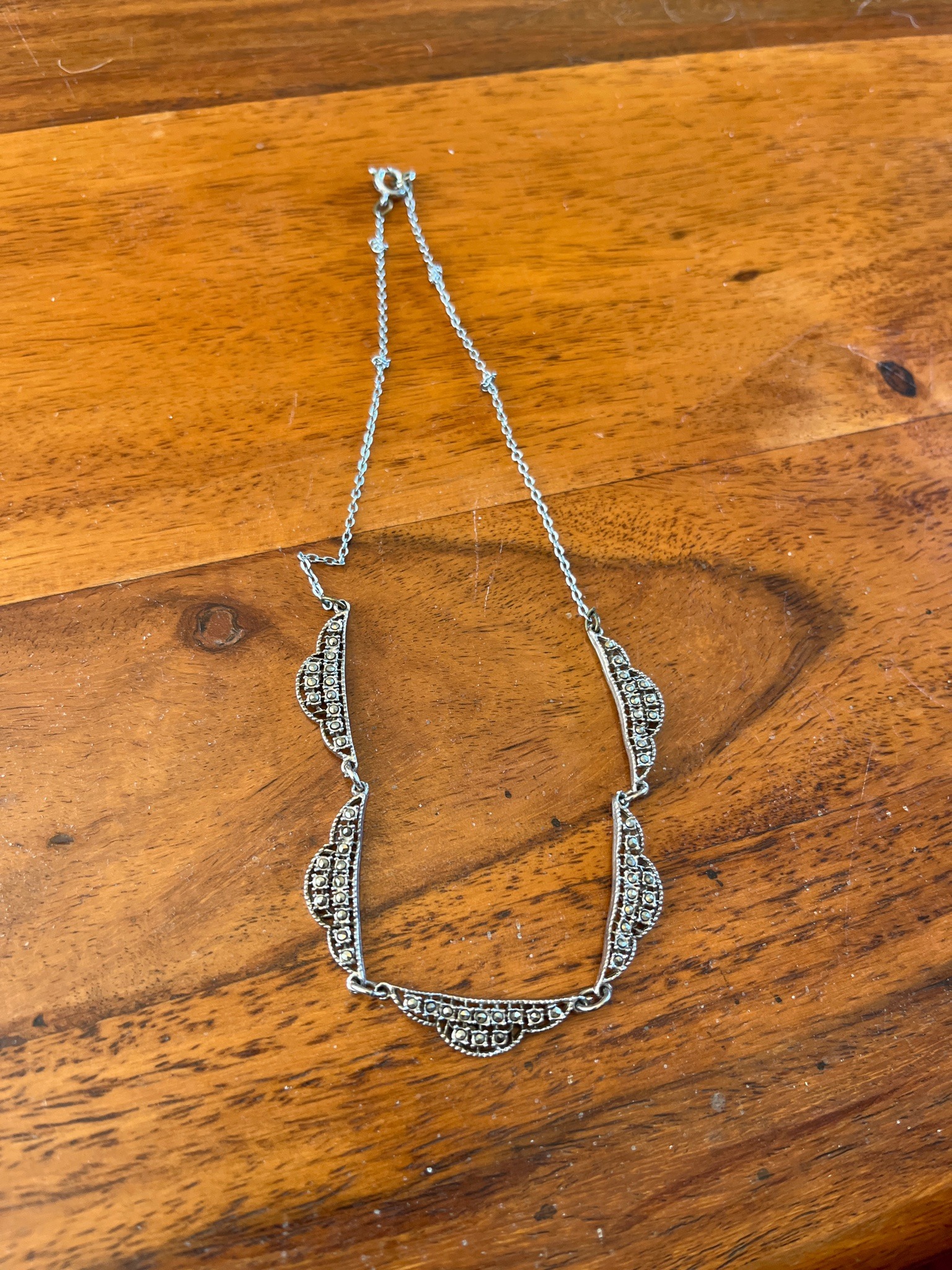
Vintage silver and diamond scalloped necklace

AI analysis below

AI appraisal

AI analysis & estimate

AI-Generated · Verify before acting

Everything below is generated by AI for informational purposes only. AI can make mistakes — the AI may misidentify items or misattribute them (artist, maker, brand, designer, origin, era). This is not an official valuation and should not be used for insurance, sale, tax, estate, legal, or lending purposes — or any decision requiring a certified appraisal. It is not an authoritative claim about any person, brand, or rights holder — do not share or rely on it as a factual statement about a third party. Always consult qualified professionals before making financial decisions.

Note

This analysis also relies on unverified notes provided by the user, which may be incomplete or inaccurate and could affect the result.

Read the full disclaimer

AI Identification

·Not independently authenticated·Verify before acting

Vintage Art Deco Style Marcasite and Sterling Silver Scalloped Necklace

Antique and Vintage Jewelry

AI Estimated Value

·Not an official valuation·Verify before acting

$175 - $250

As of June 1, 2026

AI Item Analysis

·AI can make mistakes·Verify before acting
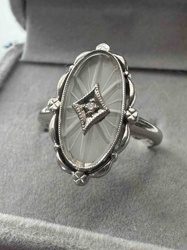
This is a vintage necklace featuring a series of five distinct scalloped, fan-shaped panels linked together to form a bib-style focal point. While the user context mentions diamonds, the visual characteristics strongly suggest the stones are actually marcasite (iron pyrite), which was extremely popular in silver jewelry of this style to mimic the sparkle of small diamonds. Each panel is crafted with intricate openwork filigree and milgrain detailing, a hallmark of Art Deco and Art Deco revival aesthetics. The metal appears to be sterling silver, exhibiting a deep, natural greyish patina in the recessed areas which highlights the geometric texture. The center panel is the largest, flanked by four graduated smaller panels, all joined by small jump rings. The focal section is attached to a fine-link cable chain that includes small bead or faceted stations for added texture. The piece secures with a traditional spring-ring clasp. Although no maker's marks are visible in the provided image, the craftsmanship suggests a mid-20th-century production, likely 1940s-1960s, drawing on earlier 1920s design motifs. The condition appears excellent with all stones present and no visible repairs or broken links, though the metal shows surface oxidation consistent with age.
AI Appraisal Report

·AI can make mistakes·Verify before acting
Based on my visual examination of this vintage Art Deco-style scalloped necklace, I have determined it to be a high-quality mid-20th-century revival piece. While the owner's description mentions diamonds, the aesthetics, setting style, and period-correct materials strongly indicate that these are rose-cut marcasites set in .925 sterling silver. The necklace exhibits excellent craftsmanship, featuring intricate milgrain work and openwork filigree that captures the geometric elegance of the 1920s. The condition appears to be excellent, with a desirable natural patina that provides depth to the design. In the current secondary market, Art Deco revival jewelry remains highly collectible, though prices are influenced by the lack of a visible maker's mark (e.g., Theodor Fahrner or Liberty & Co.). Comparable silver and marcasite bib necklaces typically sell within the $150 to $300 range at boutique auctions and through vintage specialists. Factors impacting value include the integrity of the graduated fan panels and the completeness of the stones. Marcasite jewelry often suffers from stone loss; however, this specimen appears intact. The primary limitation of this appraisal is the inability to physically test the metal purity or verify stone composition. A physical inspection would be required to confirm the 'diamonds' are indeed marcasites through magnification, and to search for microscopic hallmarks that could tie the piece to a specific designer or geographical origin (likely Germany or England). Provenance documentation or original packaging would significantly enhance rarity and market value.

Get your items appraised

Instant estimates of your treasures with AI-powered appraisals

Browse More Appraisals