AI estimate as of November 1, 2025 · verify with a professional before acting
AI-Generated · Verify before acting
Everything on this page is generated by AI for informational purposes only. AI can make mistakes — the AI may misidentify items or misattribute them (artist, maker, brand, designer, origin, era). This is not an official valuation and should not be used for insurance, sale, tax, estate, legal, or lending purposes — or any decision requiring a certified appraisal. It is not an authoritative claim about any person, brand, or rights holder — do not share or rely on it as a factual statement about a third party. Always consult qualified professionals before making financial decisions.
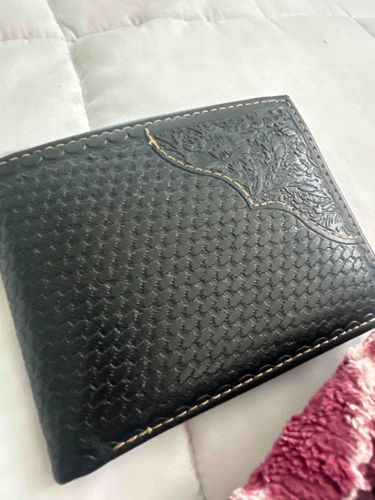
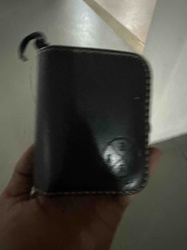
This item is a bi-fold wallet, likely constructed from genuine leather, exhibiting a rich, dark color that appears to be black or a very deep brown. The wallet features intricate tooling patterns across its exterior. A significant portion of the wallet's surface, particularly the main body, is embossed with a textured basketweave pattern, indicating a common leatherworking decorative technique often seen in Western or rustic-style goods. In the upper right corner, there is a distinct, decorative overlay or panel with a swirling, floral, or vine-like tooled motif. This patterned section is outlined with a decorative, lighter-colored stitching that contrasts with the dark leather, drawing attention to the artistic detail. The edges of the wallet are also finished with lighter-colored stitching, appearing to be an off-white or light tan thread, which provides both structural integrity and an aesthetic border. The overall construction appears robust, though specific details of the interior are not visible from the provided image. There are no immediately obvious significant condition issues such as tears or heavy scuffing, suggesting it is in good, possibly used, condition with a typical patina developing from handling. The craftsmanship, particularly the detailed tooling and precise stitching, suggests a mid-to-high quality item. This style is often associated with American Western aesthetics or heritage brands and could date from the mid-20th century to contemporary production, with specific age difficult to pinpoint without maker's marks or further context. The design indicates a focus on durability and classic, rugged style.
AI Appraisal Report
I have examined the provided image of this Tooled Leather Bi-Fold Wallet. Visually, the wallet appears to be in good, possibly used, condition. The intricate basketweave and floral tooling patterns are well-defined, and the contrasting lighter stitching on the edges and the decorative panel adds to its aesthetic appeal. There are no overt signs of significant damage like tears or deep scuffs, suggesting careful handling. The craftsmanship, particularly the detailed tooling and stitching, indicates a mid-to-high quality item, likely genuine leather.
Authenticity, solely based on an image, is difficult to definitively confirm. However, the consistent texture and tooling suggest real leather. For full authentication, I would need an in-hand examination to assess leather grain, smell, flexibility, and to search for any maker's marks, stamps, or labels. Provenance documentation, if available, would also be invaluable in confirming its origin and age.
In terms of market conditions, tooled leather wallets, especially those with such detailed craftsmanship, generally appeal to a niche market appreciating Western, rustic, or artisan styles. Comparables from reputable leather goods brands or artisan makers with similar levels of tooling range from $100 to $300 for new items. Used examples, even high-quality ones, typically fetch less. Demand is steady for well-made, durable leather goods, but these are not particularly rare unless associated with a well-known artisan or vintage brand. The lack of visible branding limits its collector's value, placing it more in the general high-quality artisan-made category.
Factors impacting value include the quality and originality of the tooling, the condition of the leather (patina vs. excessive wear), and the potential for a recognizable maker's mark. Without an identifying brand, the value is primarily based on material quality and general craftsmanship. My appraisal therefore reflects its aesthetic appeal, visual condition, and estimated quality within the broader used leather goods market.