AI Appraisal Estimate

AI-generated estimates · not official valuations

From the user

What was submitted

Photo and notes provided by the user — not generated by AI

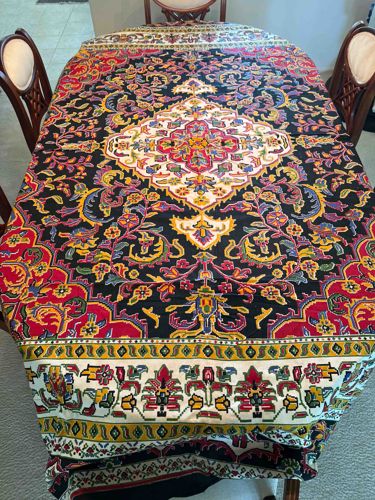
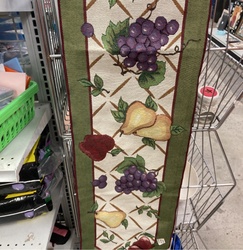
Submitted item photo
Submitted photo · June 15, 2026

User's notes

90s possible middle eastern table cloth

AI analysis below

AI appraisal

AI analysis & estimate

AI-Generated · Verify before acting

Everything below is generated by AI for informational purposes only. AI can make mistakes — the AI may misidentify items or misattribute them (artist, maker, brand, designer, origin, era). This is not an official valuation and should not be used for insurance, sale, tax, estate, legal, or lending purposes — or any decision requiring a certified appraisal. It is not an authoritative claim about any person, brand, or rights holder — do not share or rely on it as a factual statement about a third party. Always consult qualified professionals before making financial decisions.

Note

This analysis also relies on unverified notes provided by the user, which may be incomplete or inaccurate and could affect the result.

Read the full disclaimer

AI Identification

·Not independently authenticated·Verify before acting

Traditional Persian-Style Block-Printed Cotton Tablecloth (Ghalamkar)

Home Textiles & Decorative Linens

AI Estimated Value

·Not an official valuation·Verify before acting

$150-$250

As of June 15, 2026

AI Item Analysis

·AI can make mistakes·Verify before acting
This item is a large, rectangular decorative textile, likely a ‘Ghalamkar’ or hand-block printed cotton cloth. The piece features a prominent central multi-lobed diamond medallion in cream, red, and blue, surrounded by a dense field of floral arabesques and scrolling vine motifs on a deep navy or black ground. The color palette is rich and traditional, utilizing shades of madder red, indigo blue, saffron yellow, and cream. The borders are structured with geometric and botanical friezes, displaying a repetitive motif of stylized cypress trees or shrubs. The craftsmanship suggests a hand-printed technique where individual wooden stamps are used to apply each color, resulting in the slight variations and overlapping pigments characteristic of authentic Persian block printing. Based on the textile's luster and drape, it appears to be a medium-weight cotton. It is in good vintage condition with vibrant colors and no immediate signs of significant fraying or heavy staining. The style is indicative of late 20th-century production (circa 1990s) from Isfahan, Iran, or a similar regional textile center. The intricate layering of patterns and the precision of the registration between different colored blocks indicate high-quality artisanal work.
AI Appraisal Report

·AI can make mistakes·Verify before acting
Based on my visual examination of this large Ghalamkar textile, I have identified it as a high-quality hand-block printed cotton cloth typical of Isfahan production from the late 20th century. My assessment of the intricate multi-lobed diamond medallion and the precision of the registration between the red, indigo, and cream dyes indicates a skilled level of artisanal craftsmanship. The presence of natural-looking color bleeding and minor registration overlaps suggests authentic hand-tooling rather than automated screen printing. The textile appears to be in excellent vintage condition; the vibrant preservation of the madder-red and saffron-yellow hues suggests it has been stored away from direct UV exposure and moisture. The market for Middle Eastern textiles, particularly Ghalamkar, is currently stable but influenced by high supply due to significant tourist exports during the 1990s. While older 19th-century pieces command thousands, contemporary examples are valued for their decorative utility and representative traditional style. Comparable sales for items of this size and complexity typically range between $150 and $250 in the current decorative arts market. Limitations: This appraisal is based solely on digital images. A physical inspection is required to confirm the textile's fiber content (to differentiate cotton from synthetic blends) and to verify if natural vegetable dyes or chemical pigments were used. Authenticity as a true 'Isfahan Ghalamkar' would be further bolstered by identifying a maker's stamp (typically located in a corner or border) or provenance documentation from the point of sale. Scientific testing via light microscopy or chemical dye analysis could definitively confirm the materials used.

Get your items appraised

Instant estimates of your treasures with AI-powered appraisals

Browse More Appraisals