AI Appraisal Estimate

AI-generated estimates · not official valuations

From the user

What was submitted

Photo and notes provided by the user — not generated by AI

Submitted item photo
Submitted photo · June 6, 2026

User's notes

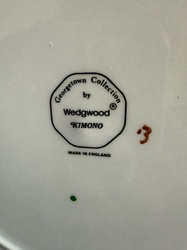
Made in England

AI analysis below

AI appraisal

AI analysis & estimate

AI-Generated · Verify before acting

Everything below is generated by AI for informational purposes only. AI can make mistakes — the AI may misidentify items or misattribute them (artist, maker, brand, designer, origin, era). This is not an official valuation and should not be used for insurance, sale, tax, estate, legal, or lending purposes — or any decision requiring a certified appraisal. It is not an authoritative claim about any person, brand, or rights holder — do not share or rely on it as a factual statement about a third party. Always consult qualified professionals before making financial decisions.

Note

This analysis also relies on unverified notes provided by the user, which may be incomplete or inaccurate and could affect the result.

Read the full disclaimer

AI Identification

·Not independently authenticated·Verify before acting

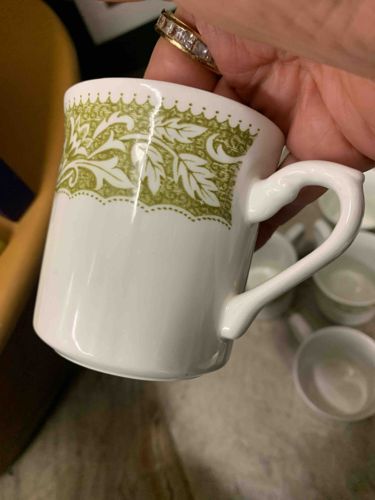
White Ceramic Demi-tasse Cup with Green Foliate Pattern

Ceramic Tableware

AI Estimated Value

·Not an official valuation·Verify before acting

$2-5

As of June 6, 2026

AI Item Analysis

·AI can make mistakes·Verify before acting
This item is a small, handled cup, likely a demi-tasse cup or espresso cup, crafted from white ceramic or porcelain. The primary decoration consists of a wide band of olive green (or perhaps a muted chartreuse) ornamentation circling the upper portion of the cup, just below the rim. This pattern features intricate, scrolling foliage and C-scroll motifs with small dots, often associated with a damask or brocade textile pattern, suggesting a classic or perhaps even a Regency or Victorian inspired design. The top edge of this decorative band is finished with a scalloped or undulating line, and the bottom edge with a dotted line. The handle is a simple, C-shaped loop, integrated seamlessly into the cup's body, colored in the same plain white as the rest of the cup. The cup appears to be mass-produced, given the uniform finish and molded handle. The glaze has a subtle sheen, indicating it is not matte. There are no immediate visible chips or cracks on the primary cup in focus, suggesting good overall condition. However, a potential hairline crack is hinted at in one of the close-up crops, extending vertically from the decorated band towards the rim, which would impact its value. The foot of the cup is a simple, unadorned ring. The overall quality appears to be domestic ware, well-made for its purpose, but not necessarily fine porcelain. The 'Made in England' context points to a likely manufacturing origin in the United Kingdom, possibly mid-20th century, given the handle style and typical patterns of that era for every-day use.
AI Appraisal Report

·AI can make mistakes·Verify before acting
Upon examining the images provided, this item is a white ceramic demi-tasse cup, marked 'Made in England.' The primary decorative feature is a wide, olive-green transfer-printed band with a scrolling foliate or damask-style pattern, characteristic of mid-20th century English domestic tableware. The cup's form, including the simple C-shaped handle, is consistent with mass-produced pieces from this era, intended for everyday use rather than as fine china. Condition appears to be good from a distance, but closer inspection of one image suggests a potential hairline crack extending from the rim downwards through the decorative band. This is a significant factor impacting value, as collectors and users alike prefer items in pristine condition. Without this potential damage, the cup would be considered a modest decorative or utilitarian piece. The presence of a crack, if confirmed, reduces its value primarily to its decorative or replacement use. Market comparables for similar mid-century English demi-tasse cups, without notable maker's marks from renowned factories like Wedgwood or Royal Doulton, are plentiful. Demand for single, non-collectible cups is low. A complete set would hold more value. The most significant factor negatively affecting this item's value is the potential crack. Limitations: This appraisal is based solely on photographs. An in-person examination is required to confirm the presence and extent of the hairline crack, check for any other imperfections like crazing or repairs not visible in the images, and to identify a specific manufacturer's mark on the underside, which would be crucial for a more precise valuation and authentication.

Get your items appraised

Instant estimates of your treasures with AI-powered appraisals

Browse More Appraisals