AI Appraisal Estimate

AI-generated estimates · not official valuations

From the user

What was submitted

Photo and notes provided by the user — not generated by AI

Submitted item photo
Submitted photo · June 10, 2026

User's notes

No additional notes provided.

AI analysis below

AI appraisal

AI analysis & estimate

AI-Generated · Verify before acting

Everything below is generated by AI for informational purposes only. AI can make mistakes — the AI may misidentify items or misattribute them (artist, maker, brand, designer, origin, era). This is not an official valuation and should not be used for insurance, sale, tax, estate, legal, or lending purposes — or any decision requiring a certified appraisal. It is not an authoritative claim about any person, brand, or rights holder — do not share or rely on it as a factual statement about a third party. Always consult qualified professionals before making financial decisions.

Read the full disclaimer

AI Identification

·Not independently authenticated·Verify before acting

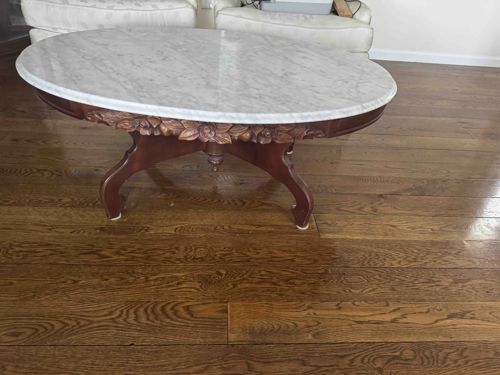
Carved Wood and Marble Top Coffee Table

Furniture

AI Estimated Value

·Not an official valuation·Verify before acting

$600-900

As of June 10, 2026

AI Item Analysis

·AI can make mistakes·Verify before acting
This is an oval coffee table featuring a white marble top with characteristic gray veining. The base is constructed from dark reddish-brown wood, possibly mahogany or walnut, with a carved apron. The apron is adorned with a continuous relief carving of foliage and blooming flowers, likely roses based on the visible petals and leaves. The table is supported by four cabriole legs that terminate in simple pad feet or possibly missing caps (white elements are visible at the base of each foot, one appears loose). A central finial or pendant drop is visible under the apron where the legs converge. The wood shows a rich, polished finish, and while there are no overt signs of significant damage like cracks or major chips visible in the provided image, there may be minor surface wear consistent with age and use. The carving appears to be skilled but its precise craftmanship details are difficult to assess from the image alone. The style suggests a possible Rococo Revival influence due to the ornate carvings and cabriole legs, placing its potential age in the late 19th or early 20th century. No manufacturer's marks or signatures are discernible in the image.
AI Appraisal Report

·AI can make mistakes·Verify before acting
Based on my examination of the provided image, this Carved Wood and Marble Top Coffee Table appears to be a Rococo Revival piece, plausibly dating from the late 19th or early 20th century. The white marble top with gray veining seems in good condition, complementing the dark reddish-brown wood base. The wood exhibits a continuous relief carving of foliage and flowers on the apron, and the table is supported by four cabriole legs ending in pad feet. The visible white elements at the feet bases appear to be wear or possibly remnants of glides, with one appearing loose, which could impact value depending on stability. The central finial under the apron adds to the decorative quality. The overall condition appears good based on the image, with expected minor surface wear consistent with age. Craftsmanship seems skilled, but precise details and potential repairs cannot be fully assessed from a photograph. Market conditions for antique and vintage furniture with marble tops and decorative carving are generally stable, with demand influenced by design trends and condition. Comparable tables of this style and apparent quality typically trade in the mid-hundreds to low thousands, depending heavily on provenance, condition, and verifiable age. This style is not exceptionally rare, but well-executed examples are desirable. The lack of discernible maker's marks limits the potential highest value range. Factors impacting value include the condition of the marble and wood, the stability of the legs and feet components, and the intricacy and condition of the carving. Without physical inspection, I cannot definitively authenticate the age, wood type, or verify the absence of professional repairs beneath the finish. A physical examination would allow for assessment of joinery, wood grain, and closer inspection of the carving and finish for authenticity markers and any hidden condition issues. Provenance documentation, while absent here, would also significantly enhance the appraisal.

Get your items appraised

Instant estimates of your treasures with AI-powered appraisals

Browse More Appraisals