AI Appraisal Estimate

AI-generated estimates · not official valuations

From the user

What was submitted

Photo and notes provided by the user — not generated by AI

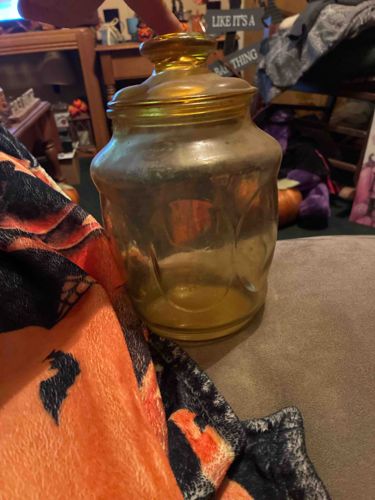
Submitted item photo
Submitted photo · May 27, 2026

User's notes

No additional notes provided.

AI analysis below

AI appraisal

AI analysis & estimate

AI-Generated · Verify before acting

Everything below is generated by AI for informational purposes only. AI can make mistakes — the AI may misidentify items or misattribute them (artist, maker, brand, designer, origin, era). This is not an official valuation and should not be used for insurance, sale, tax, estate, legal, or lending purposes — or any decision requiring a certified appraisal. It is not an authoritative claim about any person, brand, or rights holder — do not share or rely on it as a factual statement about a third party. Always consult qualified professionals before making financial decisions.

Read the full disclaimer

AI Identification

·Not independently authenticated·Verify before acting

Amber Glass Canister Jar with Lid

Kitchenware / Storage Jar

AI Estimated Value

·Not an official valuation·Verify before acting

$15-25

As of May 27, 2026

AI Item Analysis

·AI can make mistakes·Verify before acting
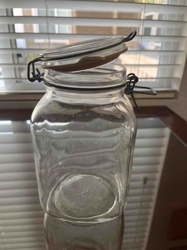
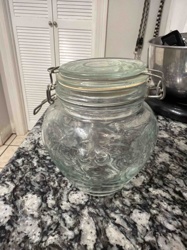
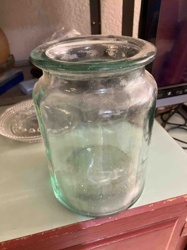
This item is an amber-colored glass canister jar with a matching glass lid. The jar features a somewhat squat, rounded body that tapers slightly towards the top and bottom. The glass material is translucent, allowing light to pass through, and has a distinct golden-amber hue, characteristic of reproductions or vintage Depression-era glass, or possibly even later mid-century kitchenware. The body of the jar appears to have a subtle panel or fluted design, creating vertical lines or facets around its circumference which catch and reflect light, adding visual interest. The surface of the glass, particularly towards the base and lower half of the body, shows visible signs of a cloudy or hazy residue, suggesting a build-up of mineral deposits from water or prolonged storage, or simply needing a thorough cleaning. There are no obvious chips, cracks, or significant damage discernible from the image, but the overall surface appears somewhat scuffed or dulled rather than pristine and clear. The lid is also made of the same amber glass and features a prominent, ridged knob for easy lifting. It fits snugly into the mouth of the jar, with a stepped or tiered design on its perimeter to ensure a good seal. The manufacturing method likely involved molding, given the uniform appearance and decorative elements. Without clearer views of the base or any potential manufacturing marks, an exact age is difficult to pinpoint, but its style suggests a mid-20th century influence (1930s-1970s). The quality appears to be consumer-grade glassware, functional for storage.
AI Appraisal Report

·AI can make mistakes·Verify before acting
Upon visual examination of the provided image, I assess this amber glass canister jar with lid to be in fair to good condition. The prominent cloudy residue on the lower half of the jar suggests significant mineral deposits or prolonged storage in less than ideal conditions, which currently detracts from its aesthetic appeal. While no chips or cracks are evident, the overall surface appears dulled and scuffed rather than pristine. Authenticity is challenging to confirm solely from images; the style points to mid-20th century production (1930s-1970s), consistent with consumer-grade kitchenware. However, without maker's marks, seam lines, or base characteristics, definitive attribution to a specific manufacturer or era is not possible. This type of amber glass storage jar is relatively common in the vintage market. Similar items from brands like Anchor Hocking, Federal Glass, or reproductions often appear in thrift stores, antique malls, and online marketplaces. Demand is moderate, largely driven by collectors of vintage kitchenware or those seeking aesthetic accents for retro-themed decor. It is not considered rare. Factors significantly impacting value include the current haziness, which would require extensive cleaning or restoration to improve. Without a clear brand identity or unique design, its value remains in the utilitarian and decorative realm. For full authentication and a more precise dating, an in-person examination would be necessary to inspect the base for marks, analyze the glass quality and manufacturing imperfections, and assess the residue firsthand.

Get your items appraised

Instant estimates of your treasures with AI-powered appraisals

Browse More Appraisals