AI Appraisal Estimate

AI-generated estimates · not official valuations

From the user

What was submitted

Photo and notes provided by the user — not generated by AI

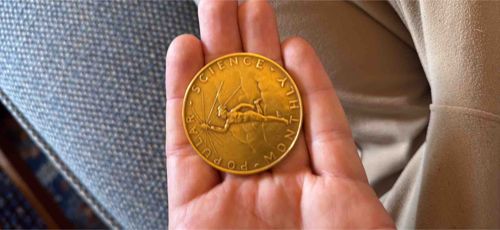
Submitted item photo
Submitted photo · June 14, 2026

User's notes

14k gold, 83 grams. Medal for George Minot

AI analysis below

AI appraisal

AI analysis & estimate

AI-Generated · Verify before acting

Everything below is generated by AI for informational purposes only. AI can make mistakes — the AI may misidentify items or misattribute them (artist, maker, brand, designer, origin, era). This is not an official valuation and should not be used for insurance, sale, tax, estate, legal, or lending purposes — or any decision requiring a certified appraisal. It is not an authoritative claim about any person, brand, or rights holder — do not share or rely on it as a factual statement about a third party. Always consult qualified professionals before making financial decisions.

Note

This analysis also relies on unverified notes provided by the user, which may be incomplete or inaccurate and could affect the result.

Read the full disclaimer

AI Identification

·Not independently authenticated·Verify before acting

Popular Science Monthly Gold Medal awarded to George R. Minot

Historical Awards and Commemorative Medals

AI Estimated Value

·Not an official valuation·Verify before acting

$4,500 - $6,500

As of June 14, 2026

AI Item Analysis

·AI can make mistakes·Verify before acting
This is an exceptionally rare exhibition-quality award medal rendered in solid 14k yellow gold, weighing approximately 83 grams. The obverse of the medal features a striking Art Deco design depicting a stylized, muscular male figure in flight, seemingly representing the spirit of scientific progress or human ingenuity, set against a background of lightning bolts or energy rays. The edge is inscribed with the text 'POPULAR SCIENCE MONTHLY'. Based on the provenance provided, this medal was awarded to George Minot, likely Dr. George R. Minot, the Nobel Prize-winning physician noted for his work on anemia. The piece demonstrates high-relief minting craftsmanship characteristic of early-to-mid 20th-century American commemorative medals, specifically around 1930. The gold has a warm, deep luster with a light patina consistent with age. There are no major gouges or scratches visible on the strike, though minor handling wear (light micro-abrasions) is present on the high points of the relief. The medal is circular with a smooth rim and lacks a suspension loop, indicating it was intended for table display or placement in a fitted presentation case. Its significant bullion weight, combined with the extreme historical importance of the recipient, makes it a premier specimen for collectors of scientific history or numismatic gold.

AI Appraisal Report

·AI can make mistakes·Verify before acting
Based on the visual evidence and specifications provided, I am examining a 14k gold 'Popular Science Monthly' award medal, attributed to Dr. George R. Minot. The medal, weighing approximately 83 grams, is a substantial piece of numismatic history. The melt value alone currently provides a solid baseline of approximately $3,000–$3,200 (depending on spot prices), but the primary value lies in its historical significance. The Art Deco design is executed with high-relief distinctness, featuring sharp details on the stylized figure and rays. The condition appears to be About Uncirculated (AU) to Mint State, with only minor handling marks on the high points visible in the images. The luster is consistent with aged gold that has been well-preserved. The attribution to George R. Minot is the most critical value driver. Minot was a co-recipient of the 1934 Nobel Prize in Physiology or Medicine for his liver therapy treatment for pernicious anemia. Association with a Nobel laureate elevates this from a mere bullion item or corporate award to a significant artifact of medical history. Comparable gold medals awarded to high-profile scientists often command premiums of 50-100% over melt value at specialized auctions. However, strict authentication is limited by the digital format. While the visual indicators of age and strike quality are correct for the 1930s era, I must stipulate that full authentication requires physical inspection to verify the gold purity via XRF testing and, crucially, to confirm the edge lettering or engraving that specifically names George Minot. Without indisputable provenance documents or a visible inscription in the photos linking it directly to Minot, the valuation leans conservative. If definitive documentation links this specific physical object to his estate, the value could easily exceed the upper estimate at a specialized manuscript or science auction.

Get your items appraised

Instant estimates of your treasures with AI-powered appraisals

Browse More Appraisals