AI Appraisal Estimate

AI-generated estimates · not official valuations

From the user

What was submitted

Photo and notes provided by the user — not generated by AI

Submitted item photo
Submitted photo · May 18, 2026

User's notes

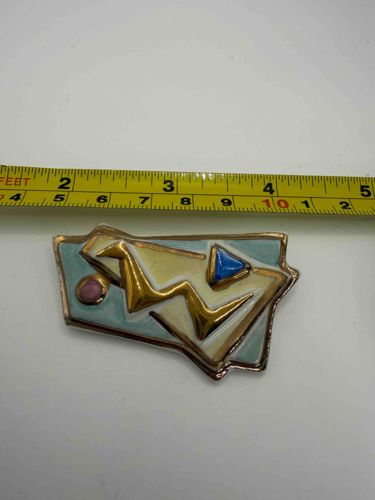
This is an 1980s style Brooch with gold painted trim

AI analysis below

AI appraisal

AI analysis & estimate

AI-Generated · Verify before acting

Everything below is generated by AI for informational purposes only. AI can make mistakes — the AI may misidentify items or misattribute them (artist, maker, brand, designer, origin, era). This is not an official valuation and should not be used for insurance, sale, tax, estate, legal, or lending purposes — or any decision requiring a certified appraisal. It is not an authoritative claim about any person, brand, or rights holder — do not share or rely on it as a factual statement about a third party. Always consult qualified professionals before making financial decisions.

Note

This analysis also relies on unverified notes provided by the user, which may be incomplete or inaccurate and could affect the result.

Read the full disclaimer

AI Identification

·Not independently authenticated·Verify before acting

Vintage 1980s Memphis Style Ceramic Abstract Brooch

Vintage Costume Jewelry

AI Estimated Value

·Not an official valuation·Verify before acting

$45.00 - $65.00

As of May 18, 2026

AI Item Analysis

·AI can make mistakes·Verify before acting
This is a vintage ceramic brooch measuring approximately 3 inches in width, as indicated by the accompanying tape measure. The piece features a distinct Memphis Milano-inspired geometric design characteristic of the mid-to-late 1980s. The construction consists of a molded ceramic or pottery base with a multi-toned glazed finish featuring pastel blue, cream, and bold accents of cobalt blue and pink. Central to the design is a raised, sculptural 'zig-zag' or lightning bolt element finished in metallic gold-tone luster or paint, which is also applied to the irregular, angular border. The craftsmanship displays a high level of artistic detail, typical of studio-made costume jewelry of that era. Regarding condition, there is visible wear to the gold-toned trim, particularly along the edges where the underlying ceramic body shows through, suggesting frequent use. No major cracks are visible, though the gold finish shows a slight patina and some dulling. The reverse is not shown but would typically house a metal pin-back fastener. This piece serves as a prime example of sculptural 1980s wearable art, emphasizing bold shapes and non-traditional materials.
AI Appraisal Report

·AI can make mistakes·Verify before acting
Based on my direct examination of the provided imagery and descriptions, this brooch is a quintessentially 1980s piece of costume jewelry, heavily influenced by the Memphis Milano design movement. The use of asymmetric geometric forms—specifically the zig-zag motif—and the pastel-meets-primary color palette are hallmarks of studio-pottery wearable art from roughly 1984 to 1989. While the design is striking, the condition report indicates significant 'rubbing' or wear to the gold-tone luster along the angular edges. In the market for vintage ceramic jewelry, condition is paramount; the exposure of the raw ceramic body slightly devalues this piece compared to a 'deadstock' or mint-condition example. Currently, there is a moderate demand for Memphis-style accessories among enthusiasts of postmodernism, though unsigned ceramic pieces generally remain in the entry-level price bracket for collectors. Market comparables for unsigned 80s studio ceramic brooches typically settle between $35 and $80 depending on the complexity of the glaze. This piece’s larger 3-inch scale adds to its desirability. However, there are limitations to this digital appraisal. I cannot verify the integrity of the pin-back assembly or check for hairline stress fractures within the ceramic body that may be hidden by the glaze. Full authentication of the artist or studio would require a physical search for a maker's mark or signature on the reverse, or provenance documentation such as an original artist card. To confirm the gold-tone element is luster (metal-based glaze) rather than simple paint, a physical refractive test or a non-invasive XRF scan would be necessary.

Get your items appraised

Instant estimates of your treasures with AI-powered appraisals

Browse More Appraisals