AI estimate as of December 13, 2025 · verify with a professional before acting
AI-Generated · Verify before acting
Everything on this page is generated by AI for informational purposes only. AI can make mistakes — the AI may misidentify items or misattribute them (artist, maker, brand, designer, origin, era). This is not an official valuation and should not be used for insurance, sale, tax, estate, legal, or lending purposes — or any decision requiring a certified appraisal. It is not an authoritative claim about any person, brand, or rights holder — do not share or rely on it as a factual statement about a third party. Always consult qualified professionals before making financial decisions.
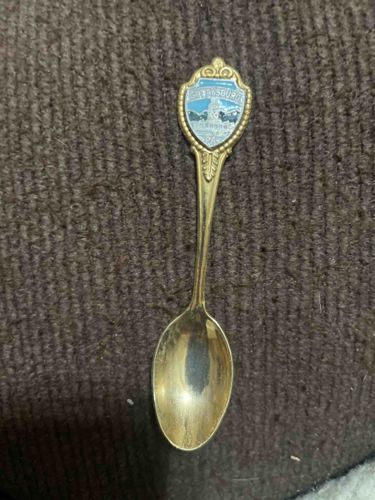
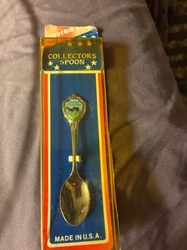
This item is a vintage or antique souvenir spoon, likely made from a base metal, possibly brass or a gold-tone alloy, given its warm metallic color. The overall length is typical of a demitasse or collectible spoon, suggesting it's not for practical eating but rather display or collection. The spoon features a decorative handle culminating in a shield-shaped crest at the top. This crest is adorned with an enamel design depicting a scenic view, possibly a cityscape or landmark, under a light blue sky with white clouds. Above the scene, the word 'St. Petersburg' is clearly legible in white lettering, indicating the location it commemorates. The enamel work exhibits a charming, somewhat aged appearance, with no significant chips or cracks visible, suggesting good preservation of this delicate element. The handle beneath the crest features some molded decorative detail, possibly acanthus leaves or scrolls, adding to its ornamental quality. The bowl of the spoon is relatively small and shallow, consistent with souvenir spoons, and shows a noticeable patina or tarnish, indicating its age and material, possibly silver-plated brass or a similar alloy that oxidizes over time. There are no obvious dents or significant scratches on the bowl, though general surface wear consistent with handling and age is present. The craftsmanship appears to be commercial grade, common for souvenir items from the early to mid-20th century. The item does not appear to have any visible maker's marks or signatures from the provided image.
AI Appraisal Report
I have examined the provided image of this Souvenir Spoon with St. Petersburg Enamel Crest. Based on my visual assessment, the spoon appears to be in good vintage condition. The enamel crest, a critical decorative element, shows no visible chips or significant cracks, which is positive for its preservation. The base metal, likely brass or a gold-tone alloy, exhibits a consistent warm patination, indicating its age, with no apparent major dents or deep scratches on the bowl, only general surface wear consistent with handling over time. The craftsmanship is typical of commercial souvenir items from the early to mid-20th century.
Souvenir spoons, while collectible, generally fall into a niche market. The 'St. Petersburg' identification is specific, which can appeal to collectors of items from that location, but it doesn't represent a highly sought-after category for broad collecting. Comparables for similar vintage enamel crest souvenir spoons, especially those not crafted from sterling silver, typically range from $10 to $40. Demand is moderate, driven primarily by regional collectors or those specializing in souvenir memorabilia. Rarity is low to moderate, as such items were mass-produced. The absence of a prominent maker's mark limits any potential for a premium from a specific manufacturer.
The primary factor impacting value is its good condition, particularly the intact enamel. However, its base metal composition and common souvenir nature limit its upper value. Without physical inspection, I cannot confirm the exact metal composition, rule out hairline cracks not visible in the image, or verify if any restoration has occurred. For full authentication and a more precise determination of material, an in-person examination, potentially including a metal test, would be necessary. Provenance documentation could also add to its historical value, though it's rarely available for such items.