AI estimate as of November 11, 2025 · verify with a professional before acting
AI-Generated · Verify before acting
Everything on this page is generated by AI for informational purposes only. AI can make mistakes — the AI may misidentify items or misattribute them (artist, maker, brand, designer, origin, era). This is not an official valuation and should not be used for insurance, sale, tax, estate, legal, or lending purposes — or any decision requiring a certified appraisal. It is not an authoritative claim about any person, brand, or rights holder — do not share or rely on it as a factual statement about a third party. Always consult qualified professionals before making financial decisions.
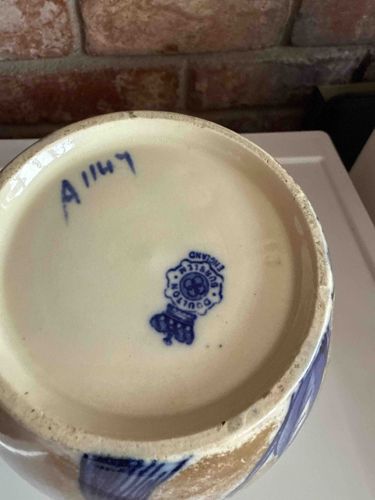
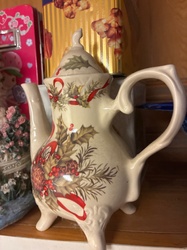
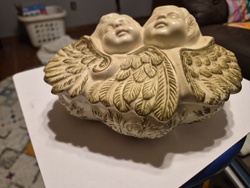
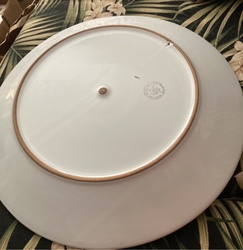
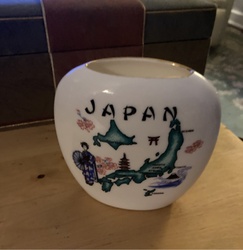
The item is a ceramic piece, likely a jug, pot, or vase, given the visible curved side and flared rim. The visible base is off-white or cream-colored stoneware or earthenware. The main body of the item appears to have a decorative pattern, predominantly in shades of blue and possibly light brown or beige, on a lighter background, though only a small portion of this pattern is visible. The underside of the base features a prominent blue transfer-printed maker's mark. This mark is circular with a serrated edge, typical of a seal or stamp, and reads "DOULTON BURSLEM ENGLAND". Below this circular mark is a distinctive crown insignia, also in blue, indicating its origin from the Doulton Burslem factory. Adjacent to the maker's mark, in handwritten blue script, is the number "A1147", which could be a pattern number, model number, or an internal factory code. The base shows some signs of wear and slight discoloration, consistent with age and use, but no major chips or cracks are immediately apparent from this view. The glaze on the base appears to be semi-glossy. The style of the maker's mark with 'England' suggests a manufacturing period from around the late 19th century to early 20th century. The overall construction quality appears solid, typical of Doulton's reputable ceramic production.
AI Appraisal Report
I have examined the provided image of the Doulton Burslem ceramic item. Based on the visible portions, particularly the base and the clear 'DOULTON BURSLEM ENGLAND' mark with the crown insignia, I can confirm its authenticity as a production from the Doulton Burslem factory. The 'ENGLAND' designation typically places its manufacture between 1891 and 1936. The handwritten 'A1147' is likely a pattern or shape number.
From the image, the condition of the base appears good, with expected wear and minor discoloration consistent with age, but no apparent chips or cracks. However, a full condition assessment would require examining the entire piece for damage, repairs, or significant crazing, which is not possible from this single view. The overall form, though largely obscured, appears to be a functional vessel like a jug or vase, common for Doulton Burslem ware.
In terms of market conditions, Doulton Burslem ceramics are generally appreciated for their quality and historical significance. However, pieces like this, which appear to be standard production ware rather than rare art pottery or exceptional decorative pieces, typically fall into a mid-range value category. Demand is steady among collectors of Victorian and Edwardian ceramics, but it is not considered exceptionally rare. The value largely hinges on the specific pattern (which is only partially visible), the full condition of the piece, and its visual appeal. Without seeing the entire piece and its decorative motif, and without a thorough physical inspection for damage or restoration, I cannot provide a more precise valuation. Factors that could significantly impact value include the completeness of the design, the presence of any artist's signatures, or a more intricate, sought-after pattern.
To conduct a full authentication and valuation, I would need a comprehensive physical examination of the entire item, including various angles, close-ups of the decorative work, and a thorough inspection for any hairlines, chips, repairs, or significant wear beyond what's visible on the base. Provenance documentation, though not strictly necessary for this type of item, could also add to its history and potential value, especially if linked to a significant collection or exhibition. Scientific testing is generally not required for standard Doulton Burslem marks.