AI estimate as of August 1, 2025 · verify with a professional before acting
AI-Generated · Verify before acting
Everything on this page is generated by AI for informational purposes only. AI can make mistakes — the AI may misidentify items or misattribute them (artist, maker, brand, designer, origin, era). This is not an official valuation and should not be used for insurance, sale, tax, estate, legal, or lending purposes — or any decision requiring a certified appraisal. It is not an authoritative claim about any person, brand, or rights holder — do not share or rely on it as a factual statement about a third party. Always consult qualified professionals before making financial decisions.
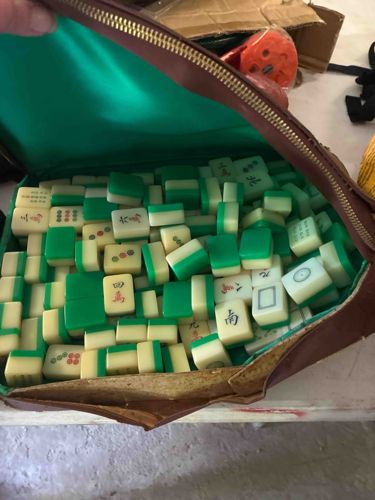
This item is a vintage Mahjong set, clearly visible within a brown zippered carrying case lined with green fabric. The set consists of numerous individual Mahjong tiles, each approximately rectangular in shape. The tiles feature a distinctive two-toned construction: a creamy ivory to off-white opaque material on the playing face, and a vibrant green translucent or opaque material forming the back and sides. This two-layer design is characteristic of many Mahjong sets, often indicating an older manufacturing process or material like bakelite or celluloid, though without closer inspection, definitive material identification is difficult. Many of the tiles display traditional Mahjong characters and symbols in black, red, and possibly blue, consistent with suits like 'characters' (萬), 'bamboo' (索), 'dots' (筒), and wind/dragon tiles. Some characters appear to be hand-painted or machine-stamped with a fine level of detail.
The carrying case appears to be made of a textured, possibly faux leather or aged real leather material, with a prominent brass-colored zipper running along its top edge. The interior green lining is likely a satin or felt-like fabric intended to protect the tiles. The case itself shows signs of moderate wear, particularly at the bottom edges where the material appears scuffed and possibly peeling, suggesting age and frequent use. The condition of the tiles themselves appears to be good overall, with no obvious major chips or cracks visible, although some might exhibit minor scuffs or discoloration typical of antique or vintage game pieces. The craftsmanship, particularly the precision of the tile cutting and the duality of the colors, suggests a well-made set, likely from the mid-20th century.
AI Appraisal Report
I have examined the provided image of this vintage Mahjong set. The most striking feature, and a key indicator of its potential value, is the two-tone tile construction. The creamy ivory playing face combined with the vibrant green translucent or opaque backing strongly suggests the tiles are made of a material like Bakelite or celluloid, common for sets produced in the mid-20th century. While without direct inspection or material testing, I cannot definitively confirm the exact material, the visual characteristics align with these desirable vintage plastics. The visible hand-painted or precisely stamped characters on the tiles, often a hallmark of quality, appear to be in good condition. The carrying case, a zippered brown material with green lining, shows moderate wear, particularly scuffing and peeling at the bottom edges. This wear is consistent with a used vintage item but does not unduly detract from the set's overall appeal.
In terms of market conditions, vintage Bakelite or celluloid Mahjong sets with complete tiles, especially those in good condition, are consistently sought after by collectors. Sets like this, with their distinctive two-tone tiles, often command higher prices than more common homogeneous plastic sets. Demand is steady, driven by both collectors of vintage games and enthusiasts of Mahjong itself. Rarity is moderate; while not exceedingly rare, finding completos and well-preserved sets can be challenging. Factors significantly impacting value include the confirmed material (Bakelite usually fetches more), the completeness of the tile set, and the overall condition of both tiles and case.
It is crucial to note that this appraisal is based solely on visual examination of the image. A definitive authenticity assessment of the tile material would require in-person examination, including a 'hot water test' for Bakelite or specific gravity tests. Provenance documentation, such as original purchase receipts or family history, could also enhance authenticity and value. Without physical inspection, I cannot confirm the integrity of all tiles (e.g., chips on edges not clearly visible) or the true material composition.