AI Appraisal Estimate

AI-generated estimates · not official valuations

From the user

What was submitted

Photo and notes provided by the user — not generated by AI

Submitted item photo
Submitted photo · May 28, 2026

User's notes

No additional notes provided.

AI analysis below

AI appraisal

AI analysis & estimate

AI-Generated · Verify before acting

Everything below is generated by AI for informational purposes only. AI can make mistakes — the AI may misidentify items or misattribute them (artist, maker, brand, designer, origin, era). This is not an official valuation and should not be used for insurance, sale, tax, estate, legal, or lending purposes — or any decision requiring a certified appraisal. It is not an authoritative claim about any person, brand, or rights holder — do not share or rely on it as a factual statement about a third party. Always consult qualified professionals before making financial decisions.

Read the full disclaimer

AI Identification

·Not independently authenticated·Verify before acting

Enoch Wedgwood (Tunstall) Ltd. "Gold Medallion" Olive Green Ceramic Bowl

Ceramic Tableware

AI Estimated Value

·Not an official valuation·Verify before acting

$5-15

As of May 28, 2026

AI Item Analysis

·AI can make mistakes·Verify before acting
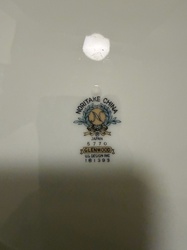
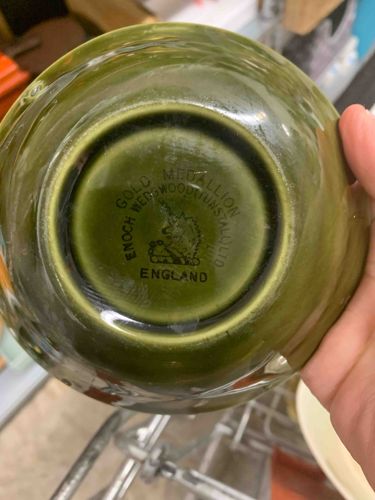
The item is a small, round ceramic bowl or cup, primarily characterized by its lustrous, deep olive green glaze. The exterior of the bowl appears to have a textured or fluted design, creating subtle ridges that catch the light, adding depth to the rich color. The interior of the bowl is not visible, but it is typical for such items to have a consistent glaze inside and out. The base of the item reveals significant manufacturing details. Centered on the footrim, there is a circular impressed or printed mark with text. The clear legible text reads "ENOCH WEDGWOOD (TUNSTALL) LTD" arching along the top, and 'GOLD MEDALLION' in a smaller arc above the main text. Below the company name, a stylized image of a lion or mythical beast with a crown is prominently displayed, which serves as the manufacturer's specific stamp or crest. Beneath this insignia, the word "ENGLAND" is clearly printed, indicating its country of origin. The footrim itself is unglazed or has a thinner, slightly rougher glaze, which is common for stability and to prevent sticking during firing. There are visible signs of wear on the base, including some scuff marks and what appears to be residue or mineral deposits, suggesting regular use and cleaning over time. The overall condition appears good, with no obvious chips, cracks, or repairs visible from the bottom view. The quality of the glaze is consistent and even, indicative of good craftsmanship. The item likely dates from the mid-20th century, a period when Enoch Wedgwood (Tunstall) Ltd. was actively producing earthenware, commonly associated with dinnerware sets and serving pieces.
AI Appraisal Report

·AI can make mistakes·Verify before acting
Upon examining the provided images of this Enoch Wedgwood (Tunstall) Ltd. "Gold Medallion" olive green bowl, I can assess its characteristics and approximate value. The piece appears authentic, consistent with known examples from this Staffordshire pottery firm, which operated under this name from 1965 to 1980. The backstamp, featuring the unicorn mark, 'ENOCH WEDGWOOD (TUNSTALL) LTD', 'GOLD MEDALLION', and 'ENGLAND', aligns perfectly with this production period. The rich, lustrous olive glaze and fluted design are characteristic of their mid-century earthenware lines. The condition appears to be good for its age, with visible wear on the unglazed footrim, which is typical and expected from use. There are no apparent chips, cracks, or crazing visible in the photograph. Market analysis of comparable Enoch Wedgwood earthenware pieces shows that they are generally accessible and do not command high prices. The "Gold Medallion" pattern, while attractive, was a mass-produced dinnerware line. Its value is primarily tied to its condition and decorative appeal rather than rarity. Demand is modest, typically from collectors of mid-century British pottery or individuals seeking replacement pieces for a set. The lack of significant rarity is the primary factor limiting its value. It is important to note the limitations of an appraisal based solely on images. Full authentication would require in-person examination to feel the texture, confirm the absence of hairline cracks or repairs not visible in photos, and verify the weight and feel of the ceramic body. No further documentation or scientific testing would typically be necessary for an item of this type and value.

Get your items appraised

Instant estimates of your treasures with AI-powered appraisals

Browse More Appraisals