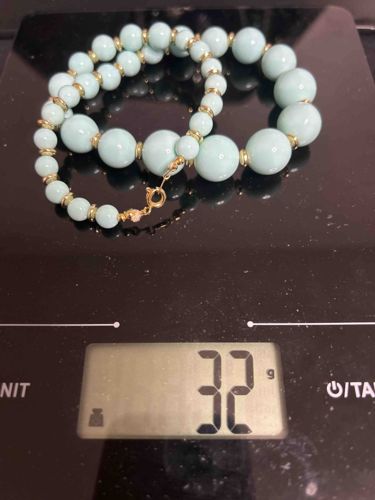
18 inch long vintage necklace on a white string 32 grams, smallest bead is 1/4 inch largest bead which is in the center of the necklace is 1/2 inch with small flat gold tone beads in between
These notes were written by the person who submitted this item. Appraiser.AI has not verified them, and the AI's identification and estimate may rely on them.
AI Estimated Value
Not an official valuation
$25-45
AI estimate as of November 5, 2025 · verify with a professional before acting
AI-Generated · Verify before acting
Everything on this page is generated by AI for informational purposes only. AI can make mistakes — the AI may misidentify items or misattribute them (artist, maker, brand, designer, origin, era). This is not an official valuation and should not be used for insurance, sale, tax, estate, legal, or lending purposes — or any decision requiring a certified appraisal. It is not an authoritative claim about any person, brand, or rights holder — do not share or rely on it as a factual statement about a third party. Always consult qualified professionals before making financial decisions.
This analysis also relies on unverified notes provided by the user, which may be incomplete or inaccurate and could affect the result.
This is an 18-inch long vintage necklace, weighing 32 grams, featuring graduated beads of a soft, light blue hue. The beads are smooth and spherical, made of what appears to be glass, ceramic, or a synthetic material, possibly simulating chalcedony or robin's egg blue jade. Their color is uniform and opaque. The smallest beads, measuring approximately 1/4 inch in diameter, are positioned near the clasp, gradually increasing in size with the largest bead, about 1/2 inch in diameter, centrally located. Between each larger light blue bead are two smaller, flat, gold-tone spacer beads, adding a metallic accent and creating a symmetrical rhythm. The necklace is strung on a white string, visible particularly at the clasp area, indicating a traditional stringing method. The clasp itself is a functional, gold-tone spring ring clasp, which appears to be in good working order. There are no readily apparent manufacturing marks or signatures visible from the image. The overall condition appears good, with no obvious chips, cracks, or significant wear on the beads. The gold-tone spacers and clasp show minimal signs of tarnish, consistent with a vintage item that has been well-maintained or with limited use. The design suggests a classic style, likely dating from the mid-20th century, epitomizing a timeless aesthetic that would complement various attire. The craftsmanship indicates a carefully assembled piece, with the graduation of beads displaying an intentional design choice.
AI Appraisal Report
Upon examining the images of this vintage graduated light blue beaded necklace, my assessment is that it is a well-maintained piece of costume jewelry, likely dating from the mid-20th century (c. 1950s-1970s). The overall condition is good; the beads appear free of significant chips or cracks, and the gold-tone clasp and spacers show only minimal signs of wear consistent with its age. The design is classic, but the materials appear to be common for the era: likely glass or a similar synthetic material for the blue beads, and base metal for the gold-tone components. The spring ring clasp and simple stringing are typical of mass-produced, accessible fashion jewelry.
Key factors influencing the value are the materials and lack of a designer signature. While aesthetically pleasing, the use of non-precious materials places it firmly in the vintage costume jewelry category. Current market comparables for similar unsigned, glass-beaded necklaces from this period typically range from $25 to $45. The value is driven by its wearable condition and retro appeal rather than intrinsic material worth or rarity.
It is crucial to note the limitations of this appraisal, as it is based solely on images. Without physical inspection, I cannot definitively identify the bead material or the metal content of the spacers and clasp. A hands-on examination would allow for testing of the materials (e.g., gemological testing for the beads, acid testing for metal purity) to confirm they are not, for instance, genuine chalcedony or gold-filled components, which would significantly alter the value. Full authentication would require such physical tests, as no maker's marks are visible to attribute it to a specific, more valuable brand.