AI Appraisal Estimate

AI-generated estimates · not official valuations

From the user

What was submitted

Photo and notes provided by the user — not generated by AI

Submitted item photo
Submitted photo · May 27, 2026

User's notes

No additional notes provided.

AI analysis below

AI appraisal

AI analysis & estimate

AI-Generated · Verify before acting

Everything below is generated by AI for informational purposes only. AI can make mistakes — the AI may misidentify items or misattribute them (artist, maker, brand, designer, origin, era). This is not an official valuation and should not be used for insurance, sale, tax, estate, legal, or lending purposes — or any decision requiring a certified appraisal. It is not an authoritative claim about any person, brand, or rights holder — do not share or rely on it as a factual statement about a third party. Always consult qualified professionals before making financial decisions.

Read the full disclaimer

AI Identification

·Not independently authenticated·Verify before acting

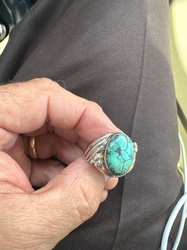
Southwest Style Sterling Silver and Spiny Oyster Flower Ring

Jewelry / Native American & Southwest Silver

AI Estimated Value

·Not an official valuation·Verify before acting

$175 - $250

As of May 27, 2026

AI Item Analysis

·AI can make mistakes·Verify before acting
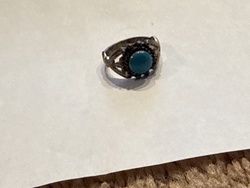
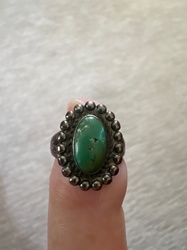
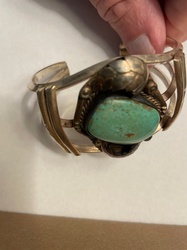
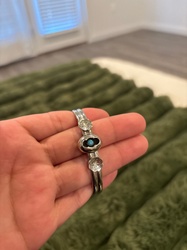
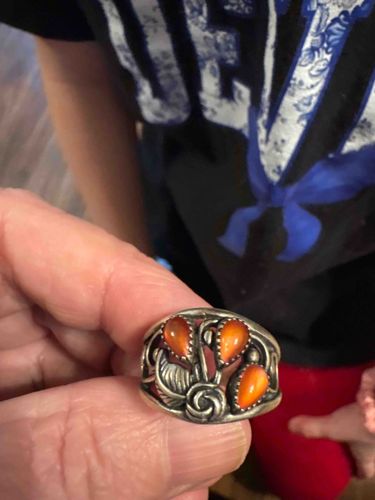
This is a wide-band statement ring crafted in a Southwestern or Native American aesthetic, likely mid-to-late 20th century. The ring is constructed from silver (likely .925 sterling) and features an ornate floral motif. The center design consists of three teardrop-shaped orange cabochons, which appear to be spiny oyster shell or possibly carnelian, set within saw-tooth bezels. The stones exhibit a vibrant, translucent orange hue with slight internal variations in color. The decorative metalwork includes a cast or hand-stamped leaf with fine vein details, a coiled silver wire representing a rose or bud, and small silver spheres (raindrops) interspersed throughout the design. The background of the recessed areas shows significant oxidation or a forced patina, which creates a high-contrast look that highlights the raised silver elements. The band transitions into a solid, wide shank. In terms of condition, there is visible surface wear and light scratching consistent with age and use. The patina is heavy in the crevices, which is a desirable stylistic feature for this genre of jewelry. No visible hallmarks are seen in this view, though they would typically be located on the inner band. The craftsmanship suggests a hand-assembled piece with attention to traditional smithing techniques.
AI Appraisal Report

·AI can make mistakes·Verify before acting
Based on my visual examination of this Southwestern-style statement ring, I have assessed its value within the current secondary market for artisan silver jewelry. The piece features three teardrop-shaped orange spiny oyster shell cabochons, characterized by their vibrant hue and desirable striations. The construction employs classic sand-casting and fabrication techniques, including hand-stamped leaf motifs and silver 'raindrops.' The heavy oxidation provides an excellent contrast that enhances the Three-dimensional floral arrangement. The condition appears consistent with a mid-to-late 20th-century vintage piece; the surface 'frosted' wear and minor scratches on the shank indicate a period of use that collectors often prefer as it validates age. However, the lack of a visible hallmark or artist’s signature limits its value to the 'unattributed' category. If the piece were confirmed to be by a known Navajo or Zuni master smith (such as those from the Begay or Livingston families), the value could double or triple. Market demand for spiny oyster jewelry remains steady, particularly for wide-band 'cuff' style rings. This item is a solid example of the genre but is not considered rare. Significant limitations of this appraisal include the inability to verify the silver purity via acid testing or to confirm the stones are not stabilized or dyed. A full authentication would require an in-person inspection of the inner shank for hidden hallmarks, a weighted silver test, and a microscopic examination of the shell's pore structure to ensure it is natural Spondylus crassisquama rather than a synthetic composite.

Get your items appraised

Instant estimates of your treasures with AI-powered appraisals

Browse More Appraisals