AI estimate as of October 7, 2025 · verify with a professional before acting
AI-Generated · Verify before acting
Everything on this page is generated by AI for informational purposes only. AI can make mistakes — the AI may misidentify items or misattribute them (artist, maker, brand, designer, origin, era). This is not an official valuation and should not be used for insurance, sale, tax, estate, legal, or lending purposes — or any decision requiring a certified appraisal. It is not an authoritative claim about any person, brand, or rights holder — do not share or rely on it as a factual statement about a third party. Always consult qualified professionals before making financial decisions.
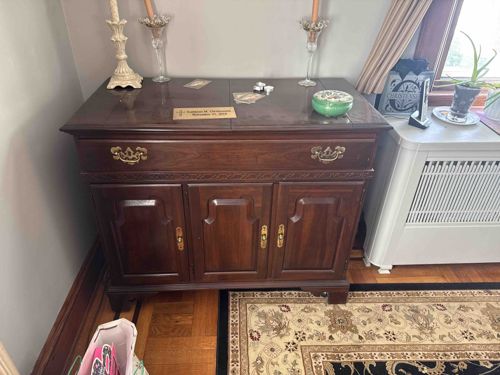
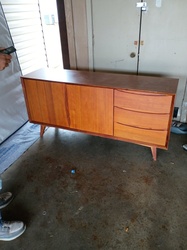
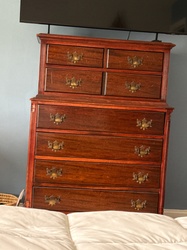
This is a rectangular-shaped server or sideboard, likely constructed from a dark-stained hardwood, possibly mahogany, walnut, or a similar species, given its rich, dark reddish-brown hue and visible grain. The top surface is flat and appears to be a single, solid piece of wood, showing some signs of wear such as minor scratches, scuffs, and possibly some liquid rings or discoloration consistent with regular use over time. Along the front, just beneath the tabletop, there is a single, narrow drawer that spans nearly the entire width of the piece. This drawer is adorned with two ornate, brass-toned or gold-colored bail pulls featuring a rococo or antique floral design. Directly below the drawer, there's a decorative carved relief, possibly a repeating motif like a ribbon or scrolling pattern, adding a touch of traditional elegance. The lower section of the server features three cabinet doors. The two outer doors are solid panels with a recessed center that curves outwards at the top and bottom, creating a framed effect. The middle door is similarly styled, but all three are fitted with small, matching brass-toned drop pulls or knobs. The cabinet doors suggest internal storage for dinnerware, linens, or other household items. The piece stands on short, possibly block or tapered feet, which are part of the overall base construction. Its style is distinctly traditional, reminiscent of 18th or 19th-century American or European furniture, suggesting an estimated age of several decades. The craftsmanship appears solid and functional, with visible joinery or construction details largely concealed by the finish and overall design. There are no immediate visible signs of major damage like cracks or breaks, but the surface wear indicates its age and consistent use.
AI Appraisal Report
I have examined the provided image of this traditional dark wood server or sideboard. Visually, the piece presents as a solid, functional item constructed from what appears to be a dark-stained hardwood, likely mahogany or walnut, judging by the rich hue and visible grain. The design, featuring a single drawer with ornate bail pulls, a carved relief, and three cabinet doors with recessed panels, strongly suggests a traditional style, possibly 18th or 19th-century American or European inspiration, manufactured several decades ago.
The condition, as observed from the image, shows considerable surface wear on the top, including scratches, scuffs, and possible rings, all consistent with regular use over time. While no major structural damage like cracks or breaks is apparent, these surface imperfections will impact its value. The hardware, though ornate, appears to be brass-toned rather than solid brass, which is typical for mass-produced traditional furniture.
In the current market, demand for traditional dark wood furniture like this has softened somewhat, with mid-century modern and lighter-toned pieces being more favored. However, well-constructed traditional pieces still hold value for those seeking classic aesthetics. Comparables for similar vintage traditional sideboards in good to fair condition typically fall within the $300-$700 range, with higher values for pieces in pristine condition or with significant provenance. This piece, with its visible wear, falls on the lower to mid-end of that spectrum. Rarity is not a significant factor here, as many similar servers were produced.
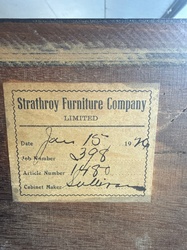
Limitations: Without physical inspection, I cannot confirm the wood species, actual age, or internal construction details (e.g., dovetail joinery). An in-person examination would allow me to assess the extent of surface damage, structural integrity, and the quality of the hardware. Provenance documentation or scientific testing would be necessary to definitively confirm its historical period or origin, which could significantly alter the appraisal if it proved to be a rare antique or from a notable maker.