AI Appraisal Estimate

AI-generated estimates · not official valuations

From the user

What was submitted

Photo and notes provided by the user — not generated by AI

Submitted item photo
Submitted photo · June 6, 2026

User's notes

Oil on board

AI analysis below

AI appraisal

AI analysis & estimate

AI-Generated · Verify before acting

Everything below is generated by AI for informational purposes only. AI can make mistakes — the AI may misidentify items or misattribute them (artist, maker, brand, designer, origin, era). This is not an official valuation and should not be used for insurance, sale, tax, estate, legal, or lending purposes — or any decision requiring a certified appraisal. It is not an authoritative claim about any person, brand, or rights holder — do not share or rely on it as a factual statement about a third party. Always consult qualified professionals before making financial decisions.

Note

This analysis also relies on unverified notes provided by the user, which may be incomplete or inaccurate and could affect the result.

Read the full disclaimer

AI Identification

·Not independently authenticated·Verify before acting

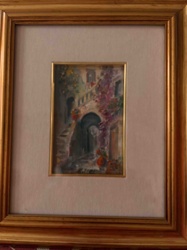
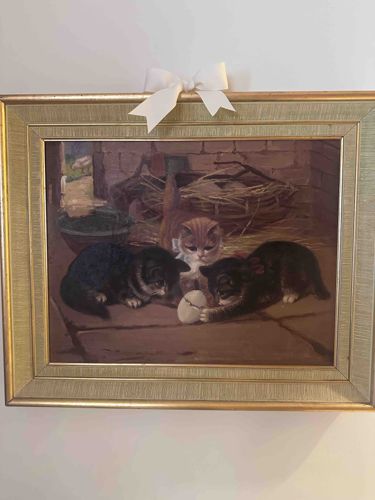
Three Kittens Playing with an Egg (Oil on Board)

Fine Art - Paintings

AI Estimated Value

·Not an official valuation·Verify before acting

$1,200 - $1,800

As of June 6, 2026

AI Item Analysis

·AI can make mistakes·Verify before acting
This is a charming 19th-century style oil painting on board depicting three kittens inside a rustic barn or stable setting. The composition centers on a ginger tabby and two dark tabby kittens curiously interacting with a single cracked white egg on a stone-tiled floor. In the background, a wicker basket filled with straw and additional eggs is visible, along with a green bowl and a brick wall. The color palette is composed of warm earth tones, deep browns, and muted greens, creating a cozy, domestic atmosphere. The brushwork appears deliberate and soft, typical of Victorian animalier paintings that aimed to capture the sentimental nature of pets. The board is housed in a substantial tiered gilt wood frame with a distinctive vertically ridged pattern and gilded finish. A white decorative bow has been added to the top of the frame. While the painting appears in good overall condition, there is a minor horizontal scratch or lineage visible near the center-left edge of the board. The frame shows minor signs of age-appropriate wear but maintains its integrity. The style is reminiscent of artists such as Henriëtte Ronner-Knip or Alfred Brunel de Neuville, though no signature is immediately visible in the provided image.

AI Appraisal Report

·AI can make mistakes·Verify before acting
I have carefully examined the provided images of this oil on board painting. The work is a fine example of 19th-century 'animalier' painting, specifically the popular sub-genre of sentimental domestic cats. The composition, featuring three kittens discovered near a cracked egg, is classic 'genre' storytelling intended for a Victorian-era middle-class audience. My assessment shows the paint layers remain vibrant, though the minor horizontal abrasion on the center-left and some light surface grime suggest it would benefit from a light professional cleaning. The substantial gilt-wood frame is period-appropriate and significantly enhances the decorative appeal. Market demand for cat-related art remains consistently high, particularly for works echoing the styles of Henriëtte Ronner-Knip or Alfred Brunel de Neuville. While unsigned, the technical execution of the fur and reflections in the kittens' eyes suggests a skilled hand. Comparables for unsigned 19th-century works of this quality and size typically achieve the $1,200 to $1,800 range at regional auction houses, whereas a confirmed signature from a known master could see this value triple. However, there are significant limitations to a remote visual appraisal. I cannot verify the substrate's age, the presence of older varnish layers, or potential overpainting without a physical inspection. To finalize authentication, I would require an in-person examination under UV light and a raking light to assess structural integrity. Documentation of provenance (history of ownership) would also be essential to differentiate this from a high-quality 20th-century revival piece. Scientific testing of the pigments could further confirm the 19th-century attribution.

Get your items appraised

Instant estimates of your treasures with AI-powered appraisals

Browse More Appraisals