AI Appraisal Estimate

AI-generated estimates · not official valuations

From the user

What was submitted

Photo and notes provided by the user — not generated by AI

Submitted item photo
Submitted photo · May 16, 2026

User's notes

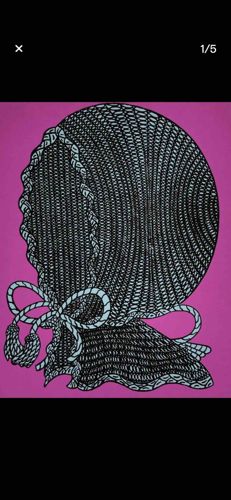
William Nelson Copley, Siebdruck Baby Bonnet aus dem Jahr 1978, limitierte Auflage 2/200, von Hand signiert, in ausgezeichnetem Zustand, 84 cm x 66,5 cm,USA, angeboten von Galerie Rotor.

AI analysis below

AI appraisal

AI analysis & estimate

AI-Generated · Verify before acting

Everything below is generated by AI for informational purposes only. AI can make mistakes — the AI may misidentify items or misattribute them (artist, maker, brand, designer, origin, era). This is not an official valuation and should not be used for insurance, sale, tax, estate, legal, or lending purposes — or any decision requiring a certified appraisal. It is not an authoritative claim about any person, brand, or rights holder — do not share or rely on it as a factual statement about a third party. Always consult qualified professionals before making financial decisions.

Note

This analysis also relies on unverified notes provided by the user, which may be incomplete or inaccurate and could affect the result.

Read the full disclaimer

AI Identification

·Not independently authenticated·Verify before acting

Baby Bonnet by William Nelson Copley

Fine Art Prints

AI Estimated Value

·Not an official valuation·Verify before acting

$1,800 - $2,500

As of May 16, 2026

AI Item Analysis

·AI can make mistakes·Verify before acting
This is a significant limited-edition screenprint titled 'Baby Bonnet' created in 1978 by the American artist William Nelson Copley, also known as CPLY. The artwork measures approximately 84 cm by 66.5 cm and displays a bold, Pop-Art meets Surrealism aesthetic. The composition features a central, intricately patterned baby bonnet rendered in black ink against a vibrant, saturated fuchsia or magenta background. The bonnet's texture is depicted through a complex series of rhythmic, lace-like line work that suggests knit or crochet patterns. It includes detailed drawstrings with tassels tied in a decorative bow at the chin. This specific piece is a rare hand-signed edition, numbered 2 out of a limited run of 200 (2/200). The print is in excellent condition with no visible foxing, tears, or significant fading, maintaining sharp contrasts between the heavy black ink and the neon-pink field. Created during the late 20th century in the USA, it exemplifies Copley's signature style of isolating mundane objects to explore themes of irony and eroticism. The high-quality silkscreen application ensures uniform color distribution and crisp edges. It is a prime example of American Post-War art, offered through Galerie Rotor.

AI Appraisal Report

·AI can make mistakes·Verify before acting
I have virtually examined this 1978 screenprint 'Baby Bonnet' by William Nelson Copley (CPLY). The work is an exceptional example of Copley’s late-career mastery, characterized by his signature marriage of Surrealist whimsy and Pop Art graphic sensibility. The condition appears excellent; the fuchsia ground remains remarkably vibrant, showing no signs of UV degradation or fading, which is critical for a work relying on such a high-contrast palette. The edition number 2/200 is particularly desirable for collectors, as early strikes in a run often show the crispest detail. Market demand for Copley has seen a steady resurgence, fueled by a renewed interest in Post-War American figurative art. Recent auction precedents for similar large-scale CPLY prints range from $1,500 to $3,000 depending on domestic vs. international market venues. The size (84 x 66.5 cm) provides significant wall power, further driving its valuation. However, while the signature and numbering appear consistent with known examples of the artist’s hand, a digital image cannot verify the paper’s weight, watermark, or the presence of subtle undulations that confirm a true silkscreen process over a high-quality digital reproduction. For a definitive authentication, I would require a physical inspection to examine the ink's 'bite' into the paper fibers and the opacity of the black layer. Additionally, verifying the provenance through Galerie Rotor would provide a clear chain of custody. Scientific testing of the pigment's chemical composition is not standard for this period but could be used in extreme cases to verify the age of the neon-reactive inks.

Get your items appraised

Instant estimates of your treasures with AI-powered appraisals

Browse More Appraisals