AI Appraisal Estimate

AI-generated estimates · not official valuations

From the user

What was submitted

Photo and notes provided by the user — not generated by AI

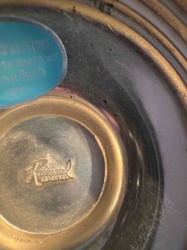
Submitted item photo
Submitted photo · May 25, 2026

User's notes

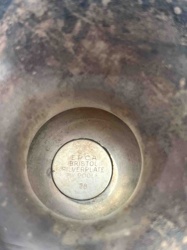
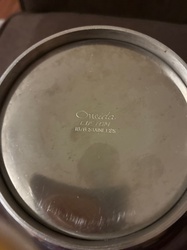
On back: stamped 945 old English reproductions e. Pon copper

AI analysis below

AI appraisal

AI analysis & estimate

AI-Generated · Verify before acting

Everything below is generated by AI for informational purposes only. AI can make mistakes — the AI may misidentify items or misattribute them (artist, maker, brand, designer, origin, era). This is not an official valuation and should not be used for insurance, sale, tax, estate, legal, or lending purposes — or any decision requiring a certified appraisal. It is not an authoritative claim about any person, brand, or rights holder — do not share or rely on it as a factual statement about a third party. Always consult qualified professionals before making financial decisions.

Note

This analysis also relies on unverified notes provided by the user, which may be incomplete or inaccurate and could affect the result.

Read the full disclaimer

AI Identification

·Not independently authenticated·Verify before acting

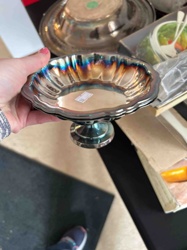
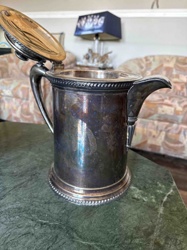
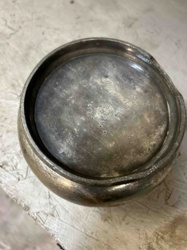
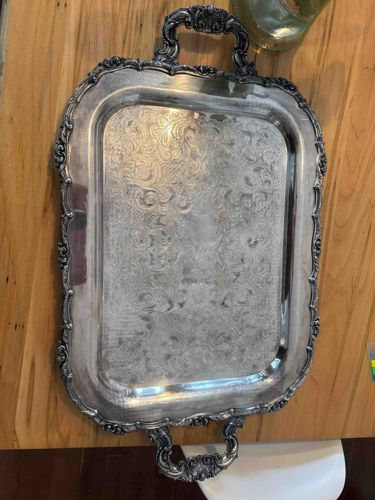
Old English Reproduction Silverplate on Copper Footed Waiter Tray

Vintage Silverplate Hollowware

AI Estimated Value

·Not an official valuation·Verify before acting

$45 - $85

As of May 25, 2026

AI Item Analysis

·AI can make mistakes·Verify before acting
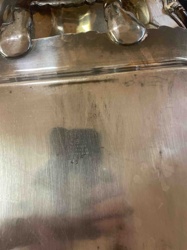
This is a large, rectangular-shaped silver-plated waiter tray featuring a recessed flat surface with intricate chased scrolling foliate and floral patterns throughout the center. The tray is constructed with a heavily ornate, scalloped grape-and-leaf motif rim (sometimes referred to as a Chippendale or Victorian style border) and two matching cast handles with floral embellishments for easy transport. Per the user-provided context, the reverse is stamped with '945 Old English Reproductions E. P. ON COPPER,' which indicates the piece is 'electroplated on copper.' This manufacturing technique was common in the mid-20th century to emulate the weight and look of solid sterling silver. The copper base provides a substantial weight to the piece, while the silver plating offers a bright, reflective finish. Regarding condition, there is visible tarnishing and oxidation, particularly in the deep crevices of the decorative rim and handles. Notable surface scratches and 'bleeding' (where the underlying copper base begins to show through the silver plating) are evident on the flat surface due to age and polishing over time. The craftsmanship is typical of high-quality reproduction hollowware from the 1940s-1960s, designed to evoke the elegance of earlier 18th-century English silver designs.
AI Appraisal Report

·AI can make mistakes·Verify before acting
Based on my examination of the high-resolution images and provided markings, I have assessed this rectangular footed waiter tray. The stamp 'E.P. ON COPPER' confirms this is electroplated hollowware, not solid sterling silver. The 'Old English Reproductions' mark, specifically model number 945, identifies this as a mid-20th-century mass-produced piece—likely from the 1940s or 50s—designed to mimic the aesthetic of the Georgian ‘Chippendale’ style. Condition is the primary factor impacting this tray's value. I observed significant 'bleeding,' a term used when the silver layer has worn away through repeated polishing to reveal the warm copper beneath. While some collectors appreciate this 'copper-bleed' for its vintage character, it generally lowers the market value compared to fully intact plating. The heavy tarnishing in the chasing and grape-motif rim suggests it has not been professionally cleaned recently, though the base metal remains structurally sound. The market for silver-plated hollowware is currently saturated, as modern lifestyles shift away from high-maintenance formal service items. Comparables for standard-sized plated waiter trays with similar wear frequently Hammer between $40 and $90 at estate auctions. This piece is valued for its decorative utility rather than its metal content or rarity. Limitations: My assessment is based solely on digital images. A physical inspection would be required to rule out structural repairs, verify the weight, and check for pits or deep corrosion that could lead to 'zinc rot.' For full authentication and a formal insurance valuation, I would recommend a professional acid test to confirm the thickness of the remaining silver and documentation of its provenance to determine if it originated from a specific reputable manufacturer like Lehman or Sheridan.

Get your items appraised

Instant estimates of your treasures with AI-powered appraisals

Browse More Appraisals