AI estimate as of June 28, 2025 · verify with a professional before acting
AI-Generated · Verify before acting
Everything on this page is generated by AI for informational purposes only. AI can make mistakes — the AI may misidentify items or misattribute them (artist, maker, brand, designer, origin, era). This is not an official valuation and should not be used for insurance, sale, tax, estate, legal, or lending purposes — or any decision requiring a certified appraisal. It is not an authoritative claim about any person, brand, or rights holder — do not share or rely on it as a factual statement about a third party. Always consult qualified professionals before making financial decisions.
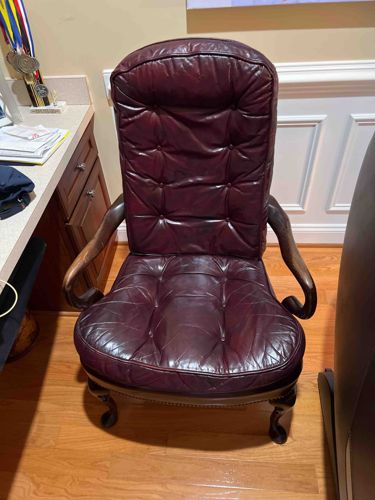
This is a classic high-back armchair, upholstered in a rich, dark reddish-brown, often described as burgundy or oxblood colored, leather. Both the backrest and the seat cushion feature deep button tufting, which creates a plush, distinguished aesthetic and contributes to comfortable seating. The tufting on the backrest appears to have seven buttons across horizontally, extending vertically along the back. The seat cushion also exhibits similar uniform tufting. The chair boasts a robust dark wood frame, visible in the elegantly curved and rolled armrests, which are partially exposed, showcasing the polished wood grain and carved details. The wooden frame continues down to form four sturdy, possibly cabriole-style, carved legs that terminate in decorative scroll feet. A band of brass or antique-finish nailhead trim decorates the perimeter of the seat frame just below the leather upholstery, adding to its traditional appeal. The leather displays natural creasing and a soft sheen, indicative of genuine leather that has developed a desirable patina over time. While no significant damage like tears or major scuffs are immediately evident from the image, the leather shows clear signs of regular use and age, particularly visible in the gentle wear, wrinkling, and variations in luster on the seat and backrest. This design points to a traditional style, closely resembling a classic executive or library chair, likely dating from the mid-20th century or possibly earlier, embodying a timeless aesthetic. The solid construction, detailed wood carving, and meticulous button tufting suggest a piece of good quality craftsmanship.
AI Appraisal Report
Based on my visual examination of the provided image, this high-back tufted leather armchair presents as a stately and well-crafted piece of seating furniture. The condition appears to be good vintage; the rich, dark reddish-brown leather exhibits a desirable patina, natural creasing, and gentle wear consistent with its age and regular use. There are no immediate signs of significant tears, excessive scuffs, or major damage to the upholstery evident from the description. The robust dark wood frame, with its elegantly curved armrests and carved legs, appears structurally sound, and the brass nailhead trim enhances its traditional appeal. This chair's design points to a classic executive or library chair, likely dating from the mid-20th century or possibly earlier, embodying a timeless aesthetic and high-quality craftsmanship, particularly in the meticulous tufting.
In terms of market conditions, there is consistent demand for quality vintage leather armchairs, especially those with classic designs. Comparables would include 'Chesterfield-style' or traditional executive chairs from reputable manufacturers of the period. While not exceedingly rare, well-preserved pieces like this, with genuine leather and solid wood construction, are sought after by collectors and interior designers. Factors positively impacting its value include its classic design, genuine leather with appealing patina, quality construction, and good overall vintage condition. The detailed wood carving and tufting are also strong attributes.
However, it is crucial to note the limitations of an appraisal based on images alone. Authenticity verification is partial; while the chair visually aligns with its described age and quality, precise dating and definitive attribution to a specific maker are impossible without physical inspection for manufacturer's marks or unique construction details. The true condition of internal components (e.g., springs, webbing) and unseen areas of the frame or leather cannot be assessed. For full authentication and a conclusive appraisal, an in-person examination would be required to verify joinery methods, assess the full integrity of the frame, check for hidden repairs or damage, and identify any labels or stamps. Provenance documentation, if available, would further enhance its value and authenticity.