AI Appraisal Estimate

AI-generated estimates · not official valuations

From the user

What was submitted

Photo and notes provided by the user — not generated by AI

Submitted item photo
Submitted photo · June 6, 2026

User's notes

No additional notes provided.

AI analysis below

AI appraisal

AI analysis & estimate

AI-Generated · Verify before acting

Everything below is generated by AI for informational purposes only. AI can make mistakes — the AI may misidentify items or misattribute them (artist, maker, brand, designer, origin, era). This is not an official valuation and should not be used for insurance, sale, tax, estate, legal, or lending purposes — or any decision requiring a certified appraisal. It is not an authoritative claim about any person, brand, or rights holder — do not share or rely on it as a factual statement about a third party. Always consult qualified professionals before making financial decisions.

Read the full disclaimer

AI Identification

·Not independently authenticated·Verify before acting

Vintage Steel Milk Can (Milk Churn)

Vintage Farm Equipment / Antique Dairy Memorabilia

AI Estimated Value

·Not an official valuation·Verify before acting

$45 - $85

As of June 6, 2026

AI Item Analysis

·AI can make mistakes·Verify before acting
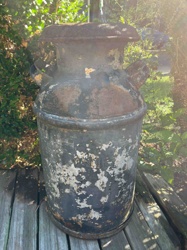
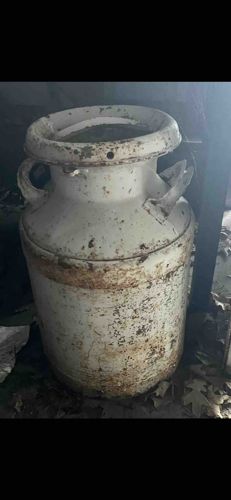
This is a large, vintage industrial milk can, likely dating from the early to mid-20th century. The item is constructed from heavy-duty galvanized or carbon steel with a white painted finish that shows extensive signs of age. It features a traditional cylindrical body with a tapersed shoulder leading to a wide neck and flared rim. Two symmetrical, heavy-duty loop handles are welded to the shoulders for manual transport. The construction appears to be multi-part, with a visible horizontal seam around the upper middle section where the shoulder assembly meets the body. The condition is heavily weathered, characterized by significant surface oxidation (rust), particularly along the seams, base, and around the handles. The white paint is chipped, distressed, and exhibits a mottled brown patina from prolonged exposure to moisture and iron oxide. There are several structural marks, including one notable circular hole on the flared rim, which may have been used for a locking wire or seal during dairy transport. While no specific maker’s marks are visible in the photograph, the utilitarian design and robust welding are indicative of mass-produced dairy equipment from the 1930s-1950s. The interior is not visible, but the exterior wear suggests this piece has spent considerable time in a farm or storage environment.
AI Appraisal Report

·AI can make mistakes·Verify before acting
Based on my visual examination of this vintage steel milk can, I have identified it as a standard utilitarian dairy vessel from approximately the mid-20th century. The item exhibits authentic age markers, specifically the multi-part welded construction and integrated loop handles typical of industrial farm equipment from the 1930s to 1950s. The heavy oxidation and distressed paint are consistent with prolonged exposure in a rural environment. The condition is 'poor' to 'fair' from a functional standpoint, though it possesses a desirable 'shabby chic' aesthetic favored in interior decor. The significant rust at the base and seams suggests potential structural thinning, which limits its value to decorative use rather than practical storage. In current market conditions, dairy memorabilia of this type is common; millions were produced, making them widely available at estate sales and antique malls. Comparables for churns in this weathered condition generally sell between $45 and $85, whereas examples with intact original embossed creamery names or lids can exceed $150. Factors negatively impacting value include the lack of a matching lid, the heavy pitting on the rim, and the absence of identifiable manufacturer or dairy stamping. Furthermore, without a physical inspection, I cannot confirm if the bottom is rusted through or if the white finish contains lead-based pigments common to that era. A full authentication would require an in-person search for faint maker’s marks on the handles or base, and a tactile assessment of the metal's integrity. This estimate assumes the item is an authentic period piece and not a modern reproduction.

Get your items appraised

Instant estimates of your treasures with AI-powered appraisals

Browse More Appraisals