AI Appraisal Estimate

AI-generated estimates · not official valuations

From the user

What was submitted

Photo and notes provided by the user — not generated by AI

Submitted item photo
Submitted photo · May 27, 2026

User's notes

No additional notes provided.

AI analysis below

AI appraisal

AI analysis & estimate

AI-Generated · Verify before acting

Everything below is generated by AI for informational purposes only. AI can make mistakes — the AI may misidentify items or misattribute them (artist, maker, brand, designer, origin, era). This is not an official valuation and should not be used for insurance, sale, tax, estate, legal, or lending purposes — or any decision requiring a certified appraisal. It is not an authoritative claim about any person, brand, or rights holder — do not share or rely on it as a factual statement about a third party. Always consult qualified professionals before making financial decisions.

Read the full disclaimer

AI Identification

·Not independently authenticated·Verify before acting

Light Blue Depression Glass Relish Dish with Handles

Dinnerware/Serveware

AI Estimated Value

·Not an official valuation·Verify before acting

$25-40

As of May 27, 2026

AI Item Analysis

·AI can make mistakes·Verify before acting
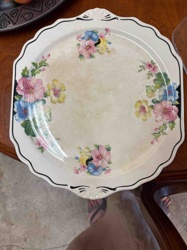
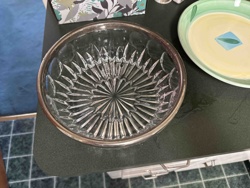
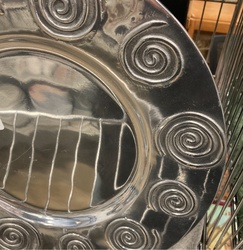
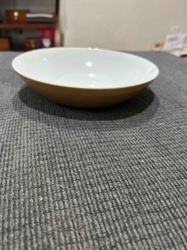
This item is a circular, shallow relish dish, likely crafted from light blue Depression glass, characterized by its subtly tinted, translucent appearance. The dish features a scalloped or undulating rim, providing an ornamental edge. Two handles are integrated into the design, positioned opposite each other on the rim; these handles appear to be molded in an organic, possibly floral or scrolled pattern, contributing to its decorative aesthetic. The interior of the dish is divided into several compartments by raised glass separators, suggesting its use for serving multiple food items like relishes, nuts, or candies. From the visible details, there appear to be at least two internal dividers creating sections within the main circular form. The glass exhibits a distinctive swirling or radial pattern molded into the bottom and sides, enhancing its visual appeal and typical of glass manufacturing techniques from the early to mid-20th century. The overall construction suggests it was machine or mold-pressed. No obvious chips, cracks, or significant damage are discernible from the image, but specific surface wear or patina cannot be fully assessed. The item's condition appears relatively good. The color saturation is uniform, characteristic of mass-produced colored glass. The craftsmanship, while not hand-blown, is indicative of a well-executed mold and finish for the period. The style points to a Depression-era piece, likely dating from the 1920s to 1940s.
AI Appraisal Report

·AI can make mistakes·Verify before acting
Upon visual examination of the provided image, I can confirm this is a light blue Depression glass relish dish, consistent with manufacturing techniques and aesthetic trends of the 1920s to 1940s. The circular form with a scalloped rim, integrated ornamental handles, and segmented interior are typical features of serveware from this period. The visible swirling or radial pattern molded into the glass further supports its era and mass-produced nature. From the image, the condition appears good; I do not observe any obvious chips, cracks, or significant damage. The color saturation is uniform, which is expected for this type of glass. Regarding market conditions, Depression glass, while popular, is readily available. Pieces like this relish dish are not considered rare, though specific patterns can command slight premiums. Comparables for similar multi-compartment relish dishes in good condition typically fall within the $20-$50 range. Demand is stable but not exceptionally high, driven mainly by collectors and those seeking vintage decorative or functional items. Factors impacting value positively include its apparently good condition and classic Depression glass aesthetic. However, its mass-produced nature and the general availability of Depression glass prevent it from achieving a higher valuation. To fully authenticate and determine the exact pattern, and thereby a more precise value, an in-person examination would be necessary to check for manufacturer marks, assess minor surface wear not visible in the image, and confirm the absence of any faint hairlines or fleabites. Without physical inspection, specific surface wear or patina cannot be fully assessed, and the exact pattern identification remains presumptive based on general forms.

Get your items appraised

Instant estimates of your treasures with AI-powered appraisals

Browse More Appraisals