AI Appraisal Estimate

AI-generated estimates · not official valuations

From the user

What was submitted

Photo and notes provided by the user — not generated by AI

Submitted item photo
Submitted photo · June 23, 2026

User's notes

No additional notes provided.

AI analysis below

AI appraisal

AI analysis & estimate

AI-Generated · Verify before acting

Everything below is generated by AI for informational purposes only. AI can make mistakes — the AI may misidentify items or misattribute them (artist, maker, brand, designer, origin, era). This is not an official valuation and should not be used for insurance, sale, tax, estate, legal, or lending purposes — or any decision requiring a certified appraisal. It is not an authoritative claim about any person, brand, or rights holder — do not share or rely on it as a factual statement about a third party. Always consult qualified professionals before making financial decisions.

Read the full disclaimer

AI Identification

·Not independently authenticated·Verify before acting

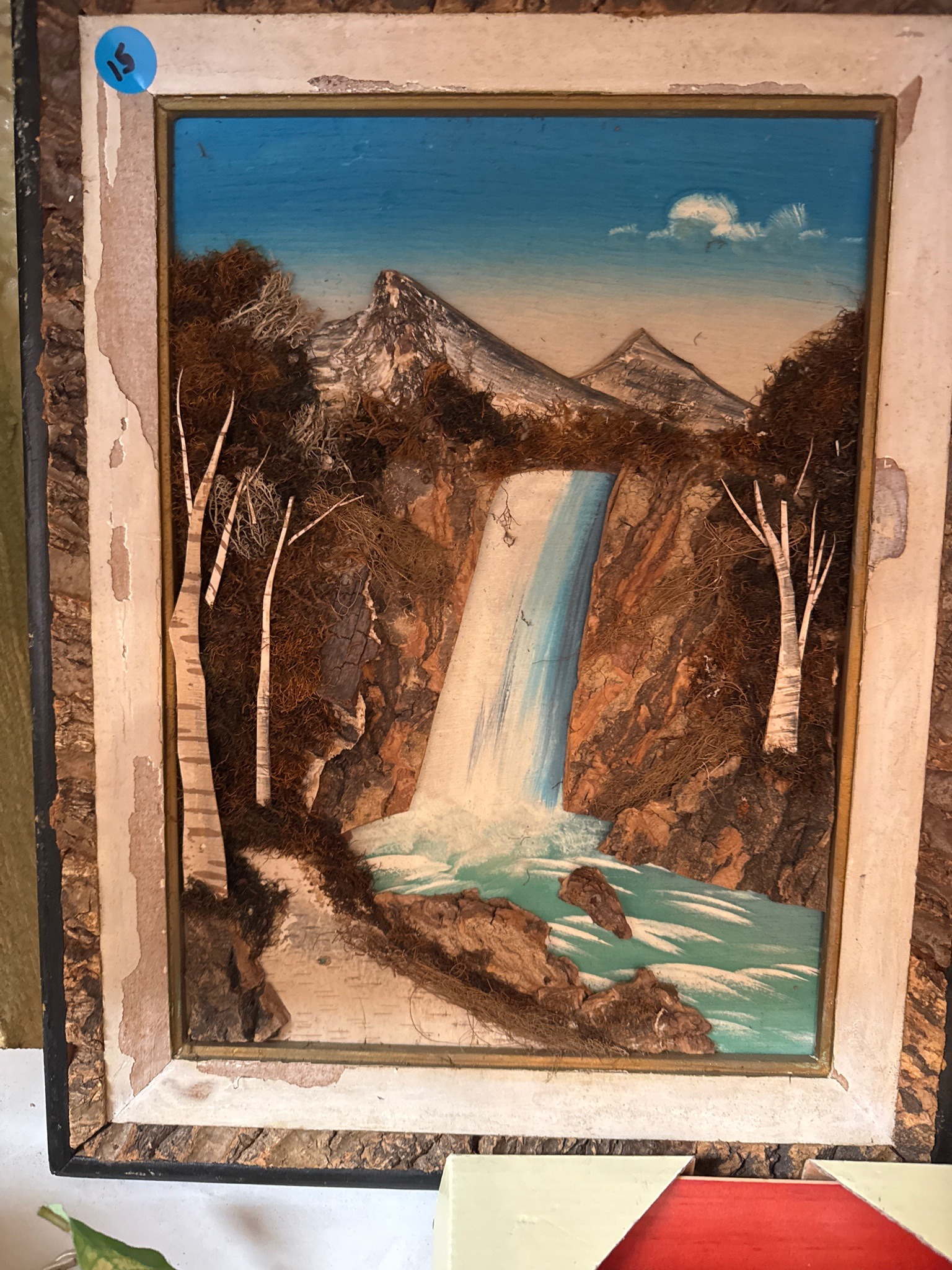
Mixed-Media 3D Birch Bark and Moss Diorama of a Waterfall

Folk Art / Mixed-Media Wall Decor

AI Estimated Value

·Not an official valuation·Verify before acting

$150 - $275

As of June 23, 2026

AI Item Analysis

·AI can make mistakes·Verify before acting
This unique mixed-media artwork features a three-dimensional landscape scene of a waterfall nestled among mountains and birch forests. The piece is constructed using organic materials, including layered strips of birch bark to represent tree trunks, natural dried moss and lichen to depict dense foliage, and textured cork or bark for the rocky terrain. The background sky, mountain peaks, and flowing water are hand-painted in shades of cerulean blue, white, and earthy browns. The construction is highly relief-focused, with the birch bark trees and mossy banks projecting forward to create depth. The piece is housed in a rustic, wide wooden frame that has been partially covered in natural tree bark, further emphasizing its folk-art aesthetic. Notable features include the intricate layering of natural fibers to create texture and the use of white paint to highlight the splash of the waterfall. The condition shows significant signs of age and wear: the frame's white inner border is heavily scuffed and peeling, exposing the wood beneath, and there is a blue circular sticker labeled '15' in the upper left corner. The organic materials appear somewhat brittle, typical of folk art from the mid-20th century (likely 1950s-1970s). No visible artist signature or maker's mark is present on the front, suggesting a piece of traditional handicrafts or studio folk art.
AI Appraisal Report

·AI can make mistakes·Verify before acting
Based on my visual examination of this mixed-media birch bark and moss diorama, I have identified it as a piece of mid-20th-century vernacular folk art, likely dating from the 1960s. The piece demonstrates a high degree of manual skill in the 'tramp art' or rustic tradition, utilizing organic materials like birch bark, cork, and lichen to create a three-dimensional landscape. Authenticity as a period original appears consistent with the localized oxidation of the natural fibers and the specific wear patterns on the frame. However, the lack of a signature or maker's mark relegates this to the category of 'anonymous studio folk art,' which limits its market ceiling compared to known artists like those of the Adirondack school. The market for rustic decor remains steady, though current collectors prioritize pieces with minimal structural loss. The condition assessment is a primary factor in the valuation; significant scuffing on the inner liner and the brittleness of the moss decrease the value. Comparables for unsigned 3D nature scenes of this scale generally sell within the $100 to $300 range at regional auctions specializing in Americana. Limitation Note: This appraisal is based solely on high-resolution imagery. A physical inspection is necessary to verify the stability of the adhesive used and to ensure no hidden pest damage exists within the organic materials. Furthermore, provenance documentation or a reverse-side inspection for hidden inscriptions would be required to definitively confirm the geographical origin (likely North American or Scandinavian) and precise decade of manufacture.

Get your items appraised

Instant estimates of your treasures with AI-powered appraisals

Browse More Appraisals