AI estimate as of November 2, 2025 · verify with a professional before acting
AI-Generated · Verify before acting
Everything on this page is generated by AI for informational purposes only. AI can make mistakes — the AI may misidentify items or misattribute them (artist, maker, brand, designer, origin, era). This is not an official valuation and should not be used for insurance, sale, tax, estate, legal, or lending purposes — or any decision requiring a certified appraisal. It is not an authoritative claim about any person, brand, or rights holder — do not share or rely on it as a factual statement about a third party. Always consult qualified professionals before making financial decisions.
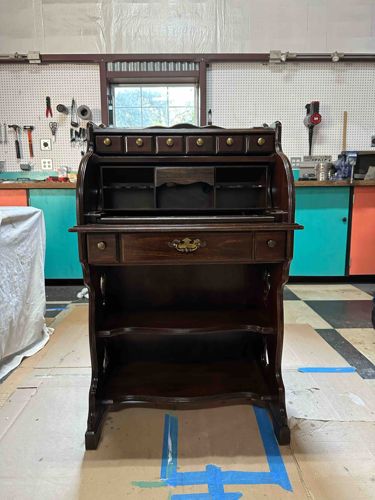
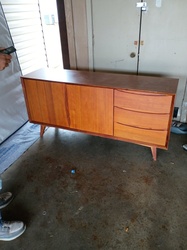
This is an antique or vintage rolltop desk, crafted from what appears to be a dark-stained hardwood, possibly mahogany or walnut, given its rich, deep brown color. The desk features a classic rolltop mechanism that conceals the interior writing surface and various compartments. Above the rolltop, there is a gallery of five small drawers, each equipped with a brass or brass-toned knob. Below the rolltop, the interior (partially obscured) shows several cubbyholes, a central small drawer with a scalloped apron, and possibly other organizational slots for stationery. The writing surface itself is hidden under the closed rolltop. Below the main writing area, there is a single long drawer across the front, adorned with an ornate, possibly Rococo Revival style, brass drawer pull featuring a scallop shell or floral motif. This drawer is flanked by two smaller round knobs, suggesting there might be additional, smaller compartments or faux drawer fronts on either side. The desk is supported by elegantly curved, S-shaped side panels that extend downwards to form legs. These side panels frame an open bookcase-style base with two shelves. Both shelves exhibit a subtly curved front edge, adding to the decorative appeal. The overall construction appears solid, indicating quality craftsmanship typical of furniture from the late 19th or early to mid-20th century. Visible condition issues include some dust and a general patina consistent with age and use, but no major cracks or structural damage are immediately apparent from the image. The finish appears largely intact, displaying a gentle sheen. The design combines functionality with decorative elements, making it suitable for a traditional study or home office setting.
AI Appraisal Report
Upon visual inspection of the provided image, this antique or vintage rolltop desk presents as a well-preserved piece, likely crafted from dark-stained hardwood such as mahogany or walnut. Its classic design, featuring a functional rolltop, multiple interior compartments, and a bookcase base, points to a late 19th to early 20th-century origin. The overall condition appears good, with a consistent patina indicative of age and use, and no immediately visible structural damage or significant finish loss from the image. The ornate brass drawer pull on the main drawer is a charming decorative element. The S-shaped side panels and curved shelf edges add a desirable aesthetic touch.
Market conditions for such functional antique desks are moderately strong, particularly for pieces that combine practicality with attractive design. Desks with integrated shelving, like this one, tend to command a higher value due to increased utility and visual appeal. Comparables in similar condition with solid construction typically range from $700 to $1,800. Demand is steady among collectors and individuals seeking unique, character-rich furniture for traditional or eclectic settings. Rarity is moderate; while rolltop desks are not exceptionally rare, those in good condition with this specific bookcase base design are less common.
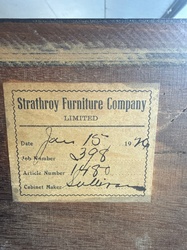
Factors positively impacting value include its apparent solid construction, good visual condition, and the integrated bookcase, which enhances functionality and display options. The decorative hardware and elegant form also contribute. A significant limitation of this appraisal is the lack of physical examination. I cannot definitively verify the wood species, internal mechanism functionality, or detect subtle repairs, woodworm, or structural weaknesses that might not be visible in a photograph. Full authentication, including precise age and origin, would require an in-person examination, potentially including assessment of joinery, wood grain, and hardware construction, and ideally, some provenance documentation or historical context.