AI Appraisal Estimate

AI-generated estimates · not official valuations

From the user

What was submitted

Photo and notes provided by the user — not generated by AI

Submitted item photo
Submitted photo · May 23, 2026

User's notes

No additional notes provided.

AI analysis below

AI appraisal

AI analysis & estimate

AI-Generated · Verify before acting

Everything below is generated by AI for informational purposes only. AI can make mistakes — the AI may misidentify items or misattribute them (artist, maker, brand, designer, origin, era). This is not an official valuation and should not be used for insurance, sale, tax, estate, legal, or lending purposes — or any decision requiring a certified appraisal. It is not an authoritative claim about any person, brand, or rights holder — do not share or rely on it as a factual statement about a third party. Always consult qualified professionals before making financial decisions.

Read the full disclaimer

AI Identification

·Not independently authenticated·Verify before acting

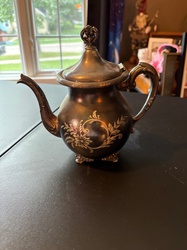
Silver-Plated Victorian Style Scuttle Sugar Bowl with Scoop

Antique Silverware & Tableware

AI Estimated Value

·Not an official valuation·Verify before acting

$45–$85

As of May 23, 2026

AI Item Analysis

·AI can make mistakes·Verify before acting
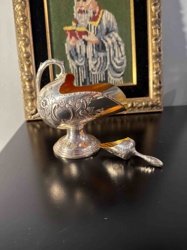
This item is a decorative miniature coal-scuttle-shaped sugar bowl, frequently referred to as a sugar scuttle, accompanied by its matching serving scoop stored on a rear hook. Crafted from silver-plated metal, likely white metal or brass base, the piece features an elaborate Victorian-era aesthetic. The main body is heavily embellished with high-relief repoussé or cast floral patterns, including scrolling foliage and blossoms, typical of Late Victorian or Edwardian revival styles from the late 19th to early 20th century. The interior appears to have a contrasting gold-tone wash, known as vermeil, intended to protect the silver from corrosion by sugar acidity. The vessel sits atop a flared, gadrooned pedestal base. A large, ornate C-scroll handle with decorative thumb-rests provides both functionality and visual balance. The accompanying scoop mimics the scuttle's design with a matching patterned handle. Condition-wise, the piece displays a significant darkened patina and heavy tarnish throughout the exterior crevices, which highlights the detail but may require professional cleaning. There are no immediate signs of structural damage or large dents visible, though minor surface wear and thinning of the silver plate (bleeding) are common for an object of this age. Makers' marks are not visible in the image but would typically be found on the underside of the base. This is a high-quality example of decorative tableware reflecting the ornamental luxury of historic tea service.
AI Appraisal Report

·AI can make mistakes·Verify before acting
Based on my visual examination of this silver-plated Victorian-style sugar scuttle, I have determined it to be a mass-produced decorative piece from the late 19th to early 20th century. My assessment reveals a cast base metal construction with a silver overlay showing characteristic 'bleeding' and heavy oxidation. The presence of a gold-wash interior adds significant aesthetic appeal and was a functional hallmark of quality designed to prevent corrosion. However, the heavy tarnish and lack of visible maker's marks suggest it is a standard commercial grade rather than a premium manufacturer like Elkington or Reed & Barton. The current market for silver-plated tea service accessories remains soft, as modern collectors often favor sterling silver or minimalist designs. Comparables at auction and in antique malls typically sell within the $40 to $90 range. Its value is primarily driven by its ornate repoussé aesthetic and the presence of the original matching scoop, which is frequently lost over time. Critically, a definitive appraisal is limited by the digital nature of this inspection. I cannot verify the weight, the base metal composition, or the presence of hallmarks beneath the tarnish without a physical examination. To fully authenticate this item and potentially increase its valuation, I would require an in-person inspection to seek out hallmarks (such as EPBM or EPNS) and an acid test to confirm the silver content. Documentation of provenance or a known maker's stamp could elevate its desirability toward the higher end of the provided range.

Get your items appraised

Instant estimates of your treasures with AI-powered appraisals

Browse More Appraisals