AI Appraisal Estimate

AI-generated estimates · not official valuations

From the user

What was submitted

Photo and notes provided by the user — not generated by AI

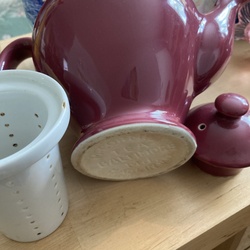
Submitted item photo
Submitted photo · June 20, 2026

User's notes

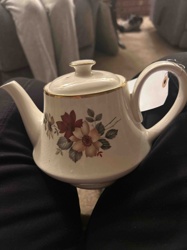
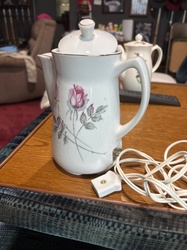
Rington’s tea caddy & pity

AI analysis below

AI appraisal

AI analysis & estimate

AI-Generated · Verify before acting

Everything below is generated by AI for informational purposes only. AI can make mistakes — the AI may misidentify items or misattribute them (artist, maker, brand, designer, origin, era). This is not an official valuation and should not be used for insurance, sale, tax, estate, legal, or lending purposes — or any decision requiring a certified appraisal. It is not an authoritative claim about any person, brand, or rights holder — do not share or rely on it as a factual statement about a third party. Always consult qualified professionals before making financial decisions.

Note

This analysis also relies on unverified notes provided by the user, which may be incomplete or inaccurate and could affect the result.

Read the full disclaimer

AI Identification

·Not independently authenticated·Verify before acting

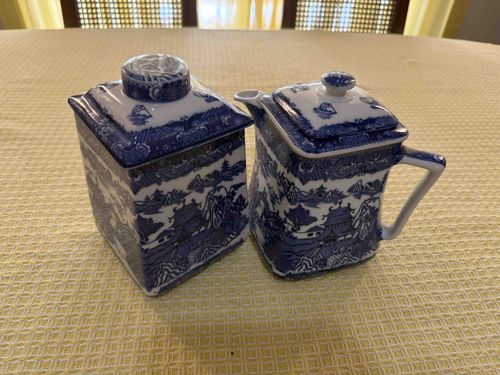
Ringtons Tea Blue Willow Pattern Tea Caddy and Matching Teapot Set

Vintage Ceramic Kitchenware / Collectible Teaware

AI Estimated Value

·Not an official valuation·Verify before acting

$65 - $95

As of June 20, 2026

AI Item Analysis

·AI can make mistakes·Verify before acting
This is a two-piece ceramic set consisting of a square-bodied tea caddy and a matching square-shaped teapot, both featuring the iconic 'Blue Willow' transferware pattern. Produced for the historic English tea company Ringtons Ltd, likely by Maling Pottery or a similar North East England ceramic manufacturer, these pieces date to the mid-20th century (circa 1920s-1950s). The set is constructed from white glazed earthenware or ironstone, decorated with a high-contrast cobalt blue Chinoiserie scene depicting pagodas, bridges, willow trees, and the legendary pair of birds. Both vessels feature faceted corners and stepped, pyramid-style lids with central finials. The tea caddy is strictly rectangular for storage, while the teapot includes a short decorative spout and a sharp-angled d-handle. The transfer application shows good alignment with minimal blurring, a hallmark of Ringtons' promotional quality. Surfaces appear to be in excellent condition with a high vitreous gloss, no visible crazing, chips, or staining, though minor manufacturing 'stilt marks' or glaze pops may be present on the base. The base typically bears the 'Ringtons Limited' backstamp, often noting the Newcastle-on-Tyne origin. This set represents a fusion of functional tea storage and traditional English collectible pottery.
AI Appraisal Report

·AI can make mistakes·Verify before acting
I have examined the Ringtons Ltd Blue Willow tea caddy and matching teapot set. Based on the uniform cobalt pigmentation and the crisp transfer lines, these pieces appear to be authentic mid-20th-century promotional wares, likely manufactured by Maling or Mason’s for the Ringtons brand. The condition appears exceptional; the lack of visible crazing or tea staining on the spout and interior suggests these were likely used for cabinet display rather than daily service. The high-gloss glaze remains intact, which preserves the value of the Chinoiserie aesthetic. The market for Ringtons collectibles remains steady in the United Kingdom, particularly in the North East, though it is more niche in the international market. Comparable auction results for this specific square-set pairing typically fall within the $60 to $100 range, as they were mass-produced but are increasingly sought after in 'excellent' condition. The 'Ringtons Limited Newcastle-on-Tyne' backstamp is a critical value driver for collectors. Limitations: This appraisal is based solely on digital imagery. While the surface appears pristine, I cannot evaluate for 'flea bites' along the inner rim of the lids nor detect internal hairlines without a physical ring test (tapping the ceramic). Full authentication would require an in-person inspection to verify the glaze thickness and check for professional restorations that may be invisible in photographs. No scientific testing or provenance documentation was provided, so I assume these are standard production pieces without unique historical associations.

Get your items appraised

Instant estimates of your treasures with AI-powered appraisals

Browse More Appraisals