AI estimate as of August 24, 2025 · verify with a professional before acting
AI-Generated · Verify before acting
Everything on this page is generated by AI for informational purposes only. AI can make mistakes — the AI may misidentify items or misattribute them (artist, maker, brand, designer, origin, era). This is not an official valuation and should not be used for insurance, sale, tax, estate, legal, or lending purposes — or any decision requiring a certified appraisal. It is not an authoritative claim about any person, brand, or rights holder — do not share or rely on it as a factual statement about a third party. Always consult qualified professionals before making financial decisions.
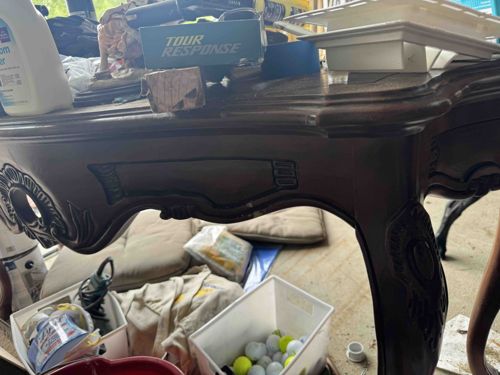
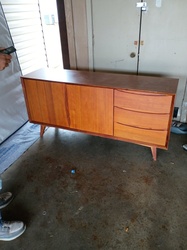
The item appears to be a heavily ornamented console table or a large side table, likely crafted from dark-stained wood, possibly mahogany or a similar hardwood, given its ornate carving and sturdy build. Its physical characteristics include a substantial, curvaceous top with a visible, thick beveled edge, suggesting a high-quality construction. The dark stain gives it a rich, traditional appearance. The most notable features are the heavily carved apron and legs. The apron features intricate, likely hand-carved floral or acanthus leaf motifs, particularly prominent on the left side visible in the image, with additional segmented, possibly reeded or fluted, embellishments in the center. The legs are cabriole in style, thick and robust, with substantial carving along their length, including what seems to be shell or scrollwork at the knee and possibly claw feet, although the feet are not clearly visible. The overall style points to a Baroque or Rococo revival period, or perhaps a more modern reproduction inspired by these styles, dating potentially from the late 19th century to the mid-20th century. The visible condition shows signs of use; there are scuffs and dust on the surface, consistent with an item that has been present in a lived-in or storage environment. Despite being somewhat obscured by various objects on its surface and around its base, the table exhibits good craftsmanship, indicated by the depth and detail of the carvings and the overall solid appearance. There are no obvious signs of major damage or repairs, but a thorough cleaning would reveal the true condition of the finish.
AI Appraisal Report
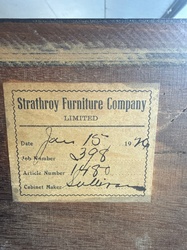
Upon examining the provided image of this ornate carved wooden console table, I assess its condition as fair to good, exhibiting typical signs of age and use such as surface scuffs and dust. There are no readily apparent signs of major damage or structural issues, though a thorough in-person inspection would be necessary to confirm this. The authenticity, based solely on visual cues, suggests a piece from the late 19th to mid-20th century, likely a Baroque or Rococo revival piece. The depth and detail of the carvings indicate solid craftsmanship. However, without physical examination, I cannot definitively confirm if it is a true antique or a high-quality reproduction. Market conditions for heavily carved, traditional furniture can be variable. While there's a niche market for such ornate pieces, they generally appeal to specific tastes. Comparables would include similar revival-style console or server tables from reputable auction houses or antique dealers. Demand is moderate, not high, and rarity is also moderate; many such revival pieces were produced. Factors significantly impacting value include the actual wood type (e.g., solid mahogany versus veneered common wood), the method of carving (hand-carved versus machine-assisted), and the overall craftsmanship upon closer inspection. The limitations of authenticity verification from images alone are significant; I cannot assess joinery, wood grain beneath the finish, or potential repairs. Full authentication would require in-person examination to verify construction techniques, wood species, and finish originality, possibly even UV light examination for repairs. Provenance documentation, if available, would also be crucial, especially for older pieces. Scientific testing, such as dendrochronology, would be excessive for an item of this type but might be considered for a truly high-value piece with unclear origins.