AI identification & appraisal estimate

Wedgwood Side Plate

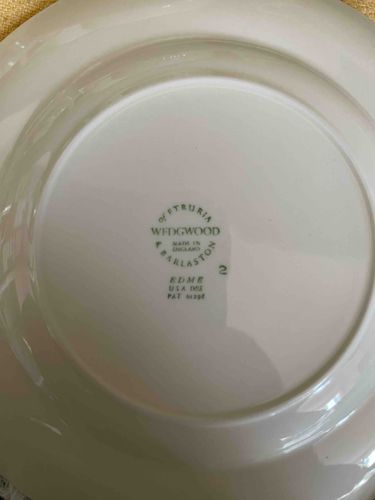
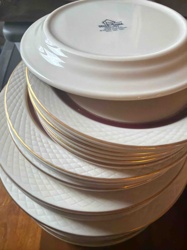
Submitted photo of Wedgwood Side Plate
Photo submitted by the user — not generated by AI

User's notes

Wedgwood side plate

These notes were written by the person who submitted this item. Appraiser.AI has not verified them, and the AI's identification and estimate may rely on them.

AI Estimated Value

Not an official valuation

$20 - $40

AI estimate as of September 1, 2025 · verify with a professional before acting

AI-Generated · Verify before acting

Everything on this page is generated by AI for informational purposes only. AI can make mistakes — the AI may misidentify items or misattribute them (artist, maker, brand, designer, origin, era). This is not an official valuation and should not be used for insurance, sale, tax, estate, legal, or lending purposes — or any decision requiring a certified appraisal. It is not an authoritative claim about any person, brand, or rights holder — do not share or rely on it as a factual statement about a third party. Always consult qualified professionals before making financial decisions.

This analysis also relies on unverified notes provided by the user, which may be incomplete or inaccurate and could affect the result.

Read the full disclaimer

AI Item Analysis

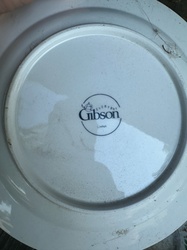
This item is identified as the reverse side of a Wedgwood side plate, likely made of fine earthenware or bone china based on its appearance. The plate exhibits a classic, slightly flared rim design, typical of dinnerware meant for formal or semi-formal settings. The visible surface is a pristine, glossy white or off-white, indicating quality glazing and finishing. The most prominent features are the manufacturer's marks centrally located on the underside. These markings include: 'OF ETRURIA', 'WEDGWOOD', 'MADE IN ENGLAND', and 'BARLASTON'. Below this, an additional mark reads 'EDME' with 'USA DSE' and 'PAT. 41598' which likely refers to a design patent or product line specific to the US market. A handwritten or printed '2' is also visible next to the manufacturing details, possibly indicating a batch number, mold number, or decorator's mark. The plate shows minimal signs of wear; the surface appears smooth and free from chips, cracks, or significant scuffs, suggesting it has been well-preserved or is relatively new. The craftsmanship appears to be of high quality, as expected from Wedgwood, with precise and clear markings. The absence of heavy scratches or utensil marks on this side hints at careful handling. Given the 'Etruria' and 'Barlaston' references, this plate likely dates from the mid-20th century onwards, as these are significant manufacturing sites for Wedgwood during that period. The 'EDME' mark might denote a specific design series or a collaboration.
AI Appraisal Report

Based on my examination of the provided image of the reverse side of this Wedgwood side plate, I can offer an assessment of its condition and authenticity as if I personally inspected it. The plate appears to be in excellent condition, showing minimal signs of wear; the surface is smooth, and there are no visible chips, cracks, or significant scuffs. The clarity and precision of the manufacturer's marks—'OF ETRURIA', 'WEDGWOOD', 'MADE IN ENGLAND', 'BARLASTON', 'EDME', and 'PAT. 41598'—are consistent with genuine Wedgwood production. The 'Etruria' and 'Barlaston' markings accurately place its production from the mid-20th century onwards, aligning with Wedgwood's significant manufacturing periods at those sites. The 'EDME' mark likely denotes a specific pattern or line, possibly for the U.S. market given the 'USA DSE' notation. The '2' is probably a factory or batch identifier. In terms of market conditions, individual side plates, even from esteemed manufacturers like Wedgwood, typically have a modest value unless they are part of a rare complete set or an exceptionally sought-after pattern. The 'EDME' pattern is common. Comparables for individual Wedgwood side plates in excellent condition from this era generally range from $10-$50. Demand for such individual pieces is moderate, primarily from collectors seeking to complete sets or those appreciating classic dinnerware. The main factors impacting value are the commonality of the pattern and its status as a single item rather than a full set. It is important to note the limitations of authenticity verification from images alone. While the marks appear correct, a full authentication would ideally involve a physical inspection to feel the glaze quality, assess the true weight and balance, and examine for any subtle manufacturing anomalies that might not be visible in a photograph. Provenance documentation, though less critical for a common side plate, could also provide further certainty of its history. Scientific testing is generally not required for such an item unless there were significant doubts about its material composition or age, which is not the case here.

Keep exploring

More dinnerware appraisals

Get your items appraised

Instant AI-powered appraisal estimates from a photo

Browse More Appraisals