AI estimate as of June 21, 2025 · verify with a professional before acting
AI-Generated · Verify before acting
Everything on this page is generated by AI for informational purposes only. AI can make mistakes — the AI may misidentify items or misattribute them (artist, maker, brand, designer, origin, era). This is not an official valuation and should not be used for insurance, sale, tax, estate, legal, or lending purposes — or any decision requiring a certified appraisal. It is not an authoritative claim about any person, brand, or rights holder — do not share or rely on it as a factual statement about a third party. Always consult qualified professionals before making financial decisions.
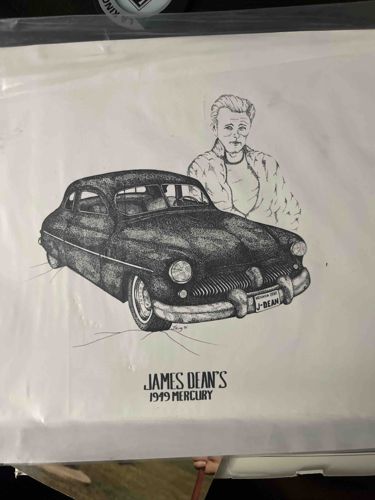
This item is a black and white stipple art print, most likely produced using a fine-point pen or ink technique, depicting an iconic scene related to James Dean. The central focus is a detailed illustration of what is identified as 'JAMES DEAN'S 1949 MERCURY,' a classic American automobile known for its sleek design and prominence in car culture from the mid-20th century. The car is rendered with significant texture, simulating its metallic body and chrome elements through careful dot work. To the right and slightly behind the car, a stylized portrait of James Dean is visible, rendered in a similar stipple technique, capturing his distinctive facial features and a casual posture. Below the car and the portrait, the text 'JAMES DEAN'S 1949 MERCURY' is printed in a clean, sans-serif font, serving as a clear title for the artwork. The print appears to be on a white or off-white paper, enclosed within a clear plastic sleeve or cover, which has some visible creasing and reflections, suggesting it's been handled or stored. The overall condition of the print itself, beneath the plastic, seems relatively good. There are no visible tears, significant stains, or major creases within the artwork itself, though minor imperfections might exist given the age or handling. The style of the art, particularly the stippling and subject matter, suggests a mid-to-late 20th century or early 21st century creation, paying homage to a 1950s cultural icon. The quality of the stippling indicates a skilled hand, with attention to detail in rendering both the car and the portrait.
AI Appraisal Report
I have examined the provided image of the James Dean and 1949 Mercury stipple art print. Visually, the print appears to be in relatively good condition beneath the protective plastic, with no overt tears, major stains, or significant creases within the artwork itself. The stippling technique is detailed, suggesting a skilled hand. However, my assessment of authenticity is limited to visual inspection of an image; without physical examination, I cannot confirm the paper quality, ink type, or presence of any watermarks or artist signatures often found on genuine prints. In-person examination would allow for tactile inspection of the paper and closer scrutiny for any embedded marks. Provenance documentation, such as a certificate of authenticity or purchase records, would be crucial for verifying its origin and artist. Scientific testing, like ink analysis or paper aging tests, could further aid in dating the piece.Market conditions for pop culture art, especially fan art or limited edition prints of iconic figures like James Dean, are generally stable. Comparable stipple art prints by established, but not world-renowned, artists typically range from $50 to $200, depending on size, subject appeal, and print run. The demand for James Dean memorabilia remains consistent among collectors. However, this specific print does not appear to be a rare, historically significant piece but rather a commemorative or decorative item. Its value is primarily driven by its aesthetic appeal and the enduring popularity of James Dean. The visible creasing on the plastic sleeve, while not damaging the art, indicates handling and slightly detracts from a 'mint' presentation. Factors significantly impacting value include the lack of a visible artist's signature, edition number, or definitive authentication.