Fossilized Megalodon Shark Tooth
Paleontology / Fossils

Fossilized Megalodon Shark Tooth

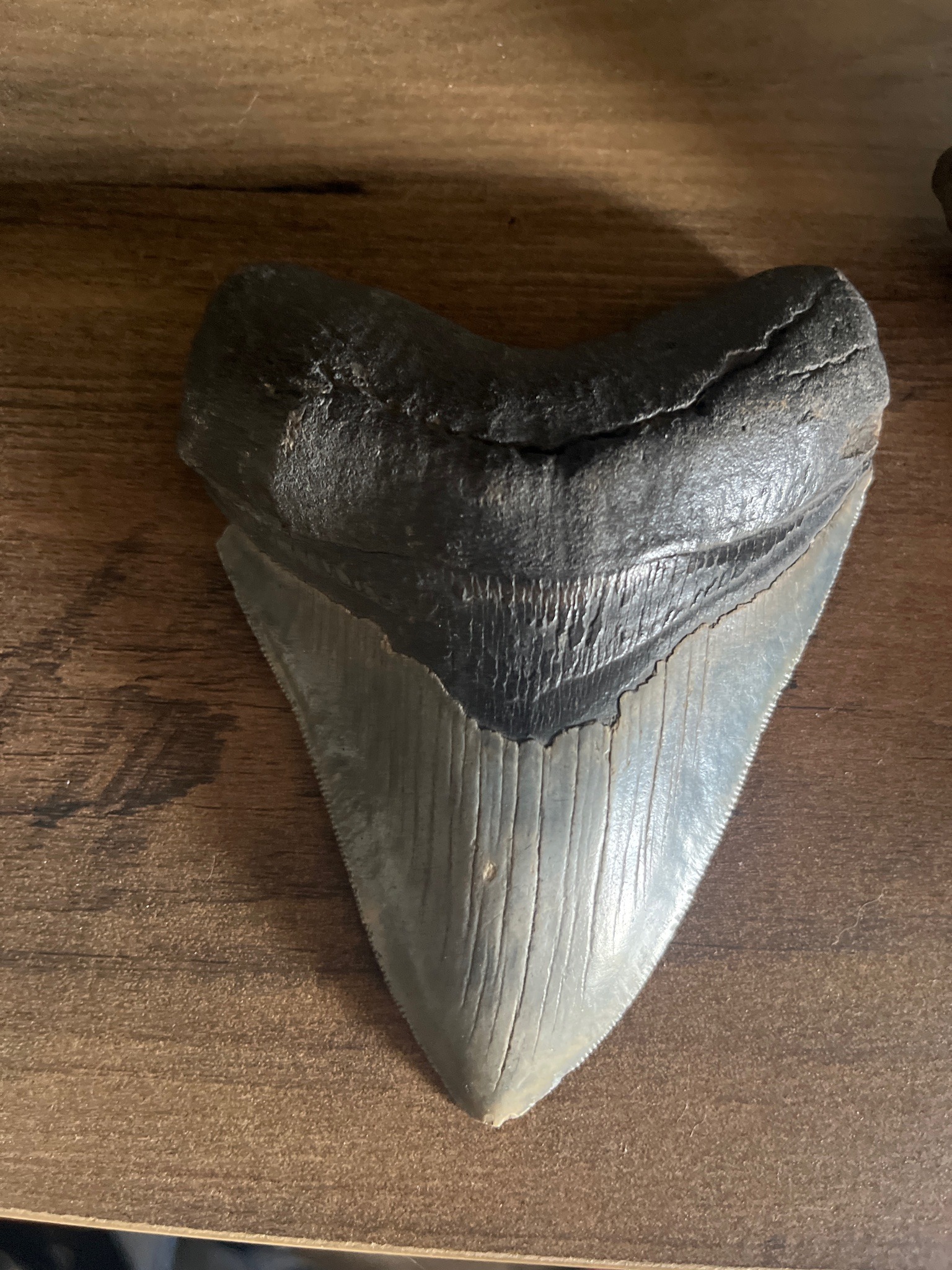
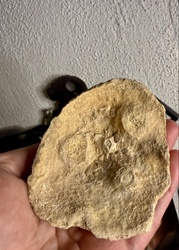
This is a large, fossilized tooth from the Otodus megalodon, an extinct species of megatoothed shark that lived approximately 23 to 3.6 million years ago. Geologically, the specimen features a robust, heavy mineralized crown and a thick, bi-lobed root structure. The coloration is a striking contrast: the root and bourlette area exhibit a deep charcoal to black hue, likely due to high phosphate or manganese content in the sediment where it was fossilized, while the labial enamel displays a weathered grayish-beige patina. The serrations along the blade edges appear somewhat worn but remain largely visible, particularly near the base of the crown. The bourlette—the chevron-shaped region between the root and the enamel—is well-defined and dark. In terms of condition, the root shows significant fossilization cracks and slight erosion at the tips of the lobes, common for specimens of this age. The tip of the tooth shows minor blunting, possibly from feeding wear (impact during the shark's life) or post-fossilization abrasion. There are no obvious signs of modern restoration or fillers, suggesting a natural authentic state. The tooth's symmetry and substantial mass indicate it likely originated from the upper jaw of a mature individual.
Estimated Value

$450 - $600

Basic Information

Category

Paleontology / Fossils

Appraised On

April 12, 2026

Estimated Value

$450 - $600

Item Description

This is a large, fossilized tooth from the Otodus megalodon, an extinct species of megatoothed shark that lived approximately 23 to 3.6 million years ago. Geologically, the specimen features a robust, heavy mineralized crown and a thick, bi-lobed root structure. The coloration is a striking contrast: the root and bourlette area exhibit a deep charcoal to black hue, likely due to high phosphate or manganese content in the sediment where it was fossilized, while the labial enamel displays a weathered grayish-beige patina. The serrations along the blade edges appear somewhat worn but remain largely visible, particularly near the base of the crown. The bourlette—the chevron-shaped region between the root and the enamel—is well-defined and dark. In terms of condition, the root shows significant fossilization cracks and slight erosion at the tips of the lobes, common for specimens of this age. The tip of the tooth shows minor blunting, possibly from feeding wear (impact during the shark's life) or post-fossilization abrasion. There are no obvious signs of modern restoration or fillers, suggesting a natural authentic state. The tooth's symmetry and substantial mass indicate it likely originated from the upper jaw of a mature individual.
Get Your Items Appraised

Instant estimates of your treasures with AI-powered instant appraisals

Browse More Appraisals