AI estimate as of October 26, 2025 · verify with a professional before acting
AI-Generated · Verify before acting
Everything on this page is generated by AI for informational purposes only. AI can make mistakes — the AI may misidentify items or misattribute them (artist, maker, brand, designer, origin, era). This is not an official valuation and should not be used for insurance, sale, tax, estate, legal, or lending purposes — or any decision requiring a certified appraisal. It is not an authoritative claim about any person, brand, or rights holder — do not share or rely on it as a factual statement about a third party. Always consult qualified professionals before making financial decisions.
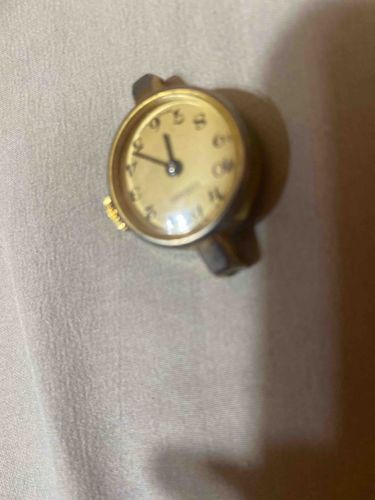
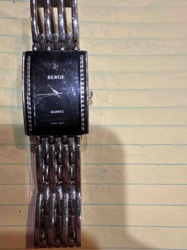
This item is a vintage women's watch head, characterized by its compact, round form and primarily gold-toned appearance. The physical characteristics include a circular dial with a light gold or cream background, featuring Arabic numerals in black for hour markers. The numbers appear to be stylized or possibly aged, with some asymmetry noticeable, especially for numbers like '3' and '8'. The watch hands are simple, black-toned, and of a classic baton or stick style, with a central pin that likely indicates the mechanical movement attachment. The bezel surrounding the dial is gold-toned, appearing polished or semi-polished, and shows some signs of wear consistent with age, such as minor scratches or tarnishing. On the right side of the watch head, a small, textured crown (winder) is visible, also in a matching gold tone, which suggests manual winding or time adjustment functionality. The case itself, where the movement would be housed, appears to be made of a base metal with a gold-tone plating, exhibiting some discoloration or patina, particularly on the lugs where a strap or bracelet would typically attach. These lugs are a standard design, indicating it was intended to be part of a wrist or pendant watch. No specific brand names or manufacturer's marks are clearly discernible from the provided image, though there appears to be some faded text or a logo above the '6' o'clock position on the dial. The overall condition suggests a vintage piece, likely from the mid-20th century, showing expected wear for its age, but no overt damage like cracked glass or major dents are visible. The craftsmanship seems standard for a mass-produced vintage timepiece from that era, focusing on functionality with a somewhat decorative aesthetic.
AI Appraisal Report
Based on my visual examination of this vintage women's watch head, I assess its condition as fair to good, consistent with a vintage item. There are visible signs of wear, such as tarnish on the gold plating and possible fading on the dial's text, but no major damage like cracked crystal or significant dents. I can't definitively confirm authenticity or material composition (e.g., actual gold content vs. plating) from an image alone. The lack of discernible brand markings or prominent design features limits its provenance investigation. Market conditions for unbranded or lesser-known brand vintage gold-tone watch heads are generally modest. Demand is primarily driven by collectors seeking parts or individuals interested in an affordable vintage aesthetic. Rarity is low given the mass-produced nature of such items in the mid-20th century. Factors impacting value negatively include the base metal construction with plating, the absence of a complete watch (no strap/movement), and the unidentifiable movement or maker. Without a verifiable brand or precious metal content, its value is largely decorative or as a component for repair. To fully authenticate and determine material composition, an in-person examination would be crucial, including opening the case to inspect the movement, testing the metal for gold content, and examining the dial under magnification to decipher any faded markings. Without these, the current valuation remains an estimate based on visual cues and prevailing market trends for similar generic vintage pieces.