AI Appraisal Estimate

AI-generated estimates · not official valuations

From the user

What was submitted

Photo and notes provided by the user — not generated by AI

Submitted item photo
Submitted photo · May 18, 2026

User's notes

No additional notes provided.

AI analysis below

AI appraisal

AI analysis & estimate

AI-Generated · Verify before acting

Everything below is generated by AI for informational purposes only. AI can make mistakes — the AI may misidentify items or misattribute them (artist, maker, brand, designer, origin, era). This is not an official valuation and should not be used for insurance, sale, tax, estate, legal, or lending purposes — or any decision requiring a certified appraisal. It is not an authoritative claim about any person, brand, or rights holder — do not share or rely on it as a factual statement about a third party. Always consult qualified professionals before making financial decisions.

Read the full disclaimer

AI Identification

·Not independently authenticated·Verify before acting

Vintage Catholic Sick Call Crucifix Set

Religious Artifacts & Sacramentals

AI Estimated Value

·Not an official valuation·Verify before acting

$45.00 - $75.00

As of May 18, 2026

AI Item Analysis

·AI can make mistakes·Verify before acting
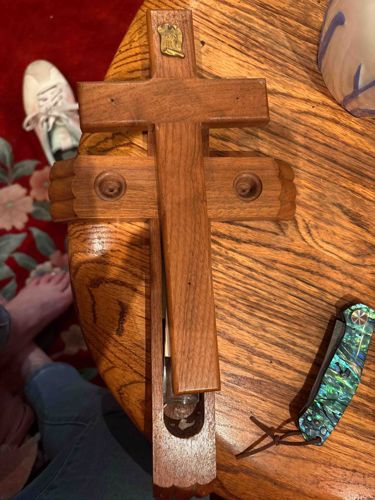
This is a vintage Catholic sick call or 'last rites' wall crucifix, likely dating from the mid-20th century, approximately 1940s-1960s. The set is constructed from a rich, medium-toned hardwood, possibly walnut or oak, with a natural grain finish. It features a unique sliding or 'shadow box' design where the front cross, which includes a small brass-toned metal corpus or emblem at the top, slides upward to reveal a hidden compartment. Inside this compartment, a set of liturgical items is housed for anointing the sick or performing last rites. The interior contains two circular indentations designed to act as candle holders for the small white votive candles visible inside. One candle remains in the lower well along with a small glass holy water vial. The woodworking features scalloped or 'radiator-style' carved ends on the horizontal crossbeam of the base, adding a decorative Art Deco or mid-century touch. The overall condition appears used but well-preserved; there are visible surface scratches, minor dings in the wood, and some white residue in the lower compartment consistent with past candle usage or holy water salt deposits. The construction utilizes simple joinery, and the wood has developed a warm patina over time.


AI Appraisal Report

·AI can make mistakes·Verify before acting
I have examined this vintage Catholic sick call crucifix, a common yet culturally significant sacramental item from the mid-20th century. My visual inspection confirms the piece is crafted from a stained hardwood, likely oak, featuring a slide-top shadow box design characteristic of the 1940s-1960s. The 'radiator' style carved ends suggest a late Art Deco influence. The condition is fair to good; while the wood retains a pleasing patina, the visible white residue (likely wax or saline from holy water) and surface abrasions indicate frequent devotional use. These signs of use, while detracting from a 'mint' status, offer evidence of the item's liturgical history. In the current secondary market, specifically for religious collectibles and sacramentals, supply is relatively high as these were staple items in Catholic households. Comparables on platforms like eBay and Etsy frequently settle in the $35-$60 range, with slightly higher valuations for sets that retain all original components, such as the holy water vial and unburned candles. The present example has an average level of rarity. Value is primarily driven by the integrity of the sliding mechanism and the presence of the interior glass vial. Major limitations of this digital appraisal include the inability to verify the wood species definitively or detect structural cracks hidden by the finish. A full authentication would require an in-person inspection of the joinery and metal corpus to rule out modern reproductions. No scientific testing is required for an item of this era, though provenance—such as a family record of the original purchase or use by a specific parish—could marginally increase the value to a niche collector.

Get your items appraised

Instant estimates of your treasures with AI-powered appraisals

Browse More Appraisals