AI estimate as of November 26, 2025 · verify with a professional before acting
AI-Generated · Verify before acting
Everything on this page is generated by AI for informational purposes only. AI can make mistakes — the AI may misidentify items or misattribute them (artist, maker, brand, designer, origin, era). This is not an official valuation and should not be used for insurance, sale, tax, estate, legal, or lending purposes — or any decision requiring a certified appraisal. It is not an authoritative claim about any person, brand, or rights holder — do not share or rely on it as a factual statement about a third party. Always consult qualified professionals before making financial decisions.
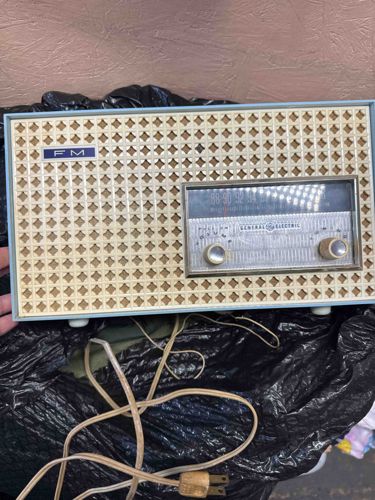
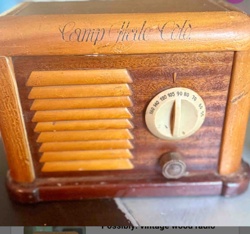
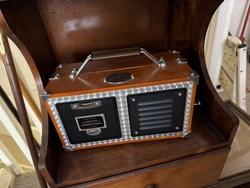
This is a vintage General Electric tabletop radio, likely dating from the 1950s or 1960s, featuring a distinctive mid-century modern aesthetic. The radio's casing appears to be made of light blue or teal-colored plastic, indicating a common material for consumer electronics of that era. The front grille, which covers the speaker, is a cream or off-white color with a repeating diamond or square lattice pattern punched out, allowing sound to project. Behind this decorative grille, there's a visible gold or brown colored fabric, which adds visual texture and serves as a dust filter for the speaker. On the left side of the grille, there's a rectangular blue accent panel with 'FM' printed in white capital letters, suggesting this model has an FM tuner, which was a notable feature at the time. To the right, a rectangular brushed metal tuning dial and control panel is present, with frequency markings visible, ranging from '88 90 92' and so on. Below the frequency display, 'GENERAL ELECTRIC' is clearly embossed or printed. There are two round, silver-colored knob controls on this metal panel, one on each side, which would typically be for tuning and volume. The radio is in visibly used condition; the power cord, a light beige color, is tangled and shows signs of age, including a discolored vintage two-prong plug. The overall condition suggests a working but unrestored piece, potentially with surface wear and grime consistent with its age. There are no obvious major cracks or breaks in the plastic casing visible in the provided image, but closer inspection would be needed to confirm. The design and construction showcase typical mass-produced electronics quality for household use during its period.
AI Appraisal Report
Based on my visual examination of the provided image, this vintage General Electric tabletop radio, likely from the 1950s or 1960s, is a charming example of mid-century consumer electronics. The light blue/teal plastic casing and cream/off-white lattice grille are characteristic of the era. The 'FM' indicator on the accent panel is a notable feature for its time, potentially adding to its functional appeal.
The condition appears to be used and unrestored. While no major cracks are evident, surface wear, grime, and a tangled, discolored power cord with a vintage two-prong plug are visible. This suggests it's in original, 'as-found' condition. Authenticity as a genuine General Electric product of the period is strongly supported by the visible branding and design elements; however, without physical inspection, I cannot confirm that all internal components are original or verify functionality. Market conditions for such radios are generally moderate. While there's a niche demand from collectors of vintage electronics and mid-century modern decor, these radios were mass-produced. They are not particularly rare, and demand typically focuses on examples in excellent cosmetic and working condition.
The primary factors impacting value include its unrestored state and uncertain functionality. A non-working unit or one requiring significant repair will command less. Conversely, a fully functional unit with professional restoration could exceed this range. For full authentication and a definitive assessment of condition and functionality, an in-person examination is crucial. This would allow me to inspect for hairline cracks, internal component integrity, actual operational status, and confirm originality of parts. Provenance documentation, though rare for such items, would also aid in verifying its history.