AI estimate as of October 30, 2025 · verify with a professional before acting
AI-Generated · Verify before acting
Everything on this page is generated by AI for informational purposes only. AI can make mistakes — the AI may misidentify items or misattribute them (artist, maker, brand, designer, origin, era). This is not an official valuation and should not be used for insurance, sale, tax, estate, legal, or lending purposes — or any decision requiring a certified appraisal. It is not an authoritative claim about any person, brand, or rights holder — do not share or rely on it as a factual statement about a third party. Always consult qualified professionals before making financial decisions.
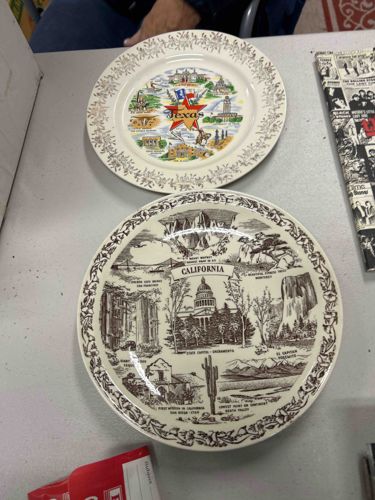
The image displays two distinct vintage souvenir collector plates, likely made of ceramic or porcelain. Both plates feature a central design depicting iconic landmarks and imagery associated with their respective states, surrounded by a decorative rim. The top plate is a 'Texas' souvenir plate, characterized by its off-white body with a vibrant, multicolored central design. The central motif includes a large red star with 'Texas' written across it, bordered by various illustrated landmarks such as the Alamo, a cowboy on horseback, oil derricks, and other state-specific symbols. The rim of the Texas plate is adorned with an ornate, repeating pattern of what appears to be gold or brown metallic foliage or scrollwork. The second plate, positioned below, is a 'California' souvenir plate. This plate features a sepia-toned or brown and cream color scheme, giving it a more subdued, antique appearance. The central design showcases prominent Californian landmarks and characteristics, including the Golden Gate Bridge, the State Capitol in Sacramento, Yosemite National Park (El Capitan and Half Dome are visible), a mission, a desert landscape with a saguaro cactus, and mentions of 'Death Valley' and 'San Diego'. The border of the California plate features a darker brown, intricate floral or leafy pattern. Both plates appear to be in good vintage condition, exhibiting some signs of age-appropriate wear but no obvious chips, cracks, or significant damage. The craftsmanship suggests mass-produced souvenir ware from the mid-20th century, a common period for decorative state-themed plates. These items are indicative of tourist memorabilia intended for display.
AI Appraisal Report
Based on my visual examination of the provided image, I have appraised these two vintage souvenir collector plates—one depicting Texas and the other California. Both plates appear to be in good vintage condition, showing appropriate signs of age-appropriate wear consistent with their likely mid-20th-century production, but no obvious chips, cracks, or significant damage are discernible from the photographs. The vibrant, multicolored Texas plate and the more subdued, sepia-toned California plate are typical examples of mass-produced tourist memorabilia. These items were widely available and intended for decorative display.
From a market perspective, vintage souvenir plates generally occupy a niche collector market. While state-themed plates have a consistent demand among collectors who seek items from specific states or Americana, they are not considered rare. Numerous comparable examples regularly appear on online marketplaces and at antique shops, often ranging from $10 to $30 per plate, depending on condition, specific design, and desirability of the state represented. The craftsmanship is standard for souvenir ware, indicating good decorative quality but lacking characteristics that would suggest high artistic or material value.
Factors impacting value include their good overall condition, which is a positive. However, their mass-produced nature and relatively common availability prevent them from commanding high prices. Rarity is low, as these types of plates were produced in large quantities over several decades. Demand is moderate, driven by state-specific collectors or individuals looking for nostalgic decorative items.
It is important to note that this authenticity verification and condition assessment are based solely on visual examination of the provided images. Without a physical inspection, I cannot definitively verify the material composition (e.g., specific type of ceramic or porcelain), detect hairline cracks or minor chips not visible in the photos, or confirm the absence of repairs. A hands-on examination would allow for closer inspection of surface integrity, base marks (if any), and overall tactile assessment, which could slightly refine the condition and, by extension, the appraisal. Provenance documentation or scientific testing is not typically required for items of this nature and value, as their authenticity as vintage souvenir plates is generally self-evident.