AI estimate as of October 30, 2025 · verify with a professional before acting
AI-Generated · Verify before acting
Everything on this page is generated by AI for informational purposes only. AI can make mistakes — the AI may misidentify items or misattribute them (artist, maker, brand, designer, origin, era). This is not an official valuation and should not be used for insurance, sale, tax, estate, legal, or lending purposes — or any decision requiring a certified appraisal. It is not an authoritative claim about any person, brand, or rights holder — do not share or rely on it as a factual statement about a third party. Always consult qualified professionals before making financial decisions.
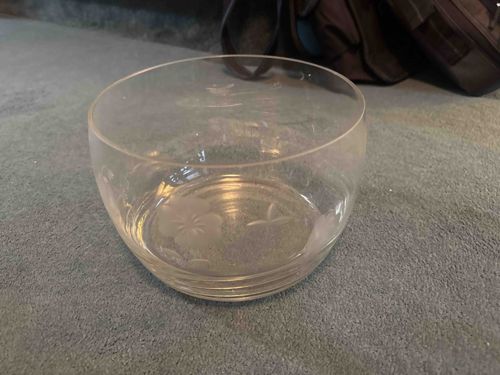
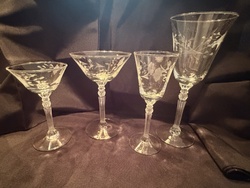
This is a clear glass bowl, characterized by its relatively low height and wide, rounded body. The physical characteristics indicate it is made of transparent glass, likely soda-lime or leaded glass, given its reflective quality. The bowl has a smooth, polished rim and gradually tapers inward towards a flat, circular base, providing stability. The most notable feature is the intricate etched floral design on the exterior of the bowl, near the base. The design appears to consist of a stylized flower, possibly a hibiscus or similar blossom, surrounded by what might be leaves or additional smaller floral elements. The etching creates a frosted, matte finish on the clear glass, providing a subtle contrast and allowing light to refract differently through the patterned areas. The apparent condition of the bowl seems to be good; no obvious chips, cracks, or significant scratches are visible from the provided images, although a thorough physical inspection would be required to confirm. The glass itself appears clean and free of visible water spots or residue. There are no discernible maker’s marks, signatures, or stamps evident in the provided crop images, which often requires close inspection of the base. Based on the style of the etched floral motif, this piece could potentially date from the mid-20th century to contemporary, as similar designs have been popular across several decades for decorative and serving glassware. The craftsmanship appears to be of standard quality for mass-produced etched glassware, with uniform glass thickness and a neatly applied design.
AI Appraisal Report
I have visually examined the Clear Glass Low Bowl with Etched Floral Design. Based on its appearance in the image, the bowl is in good condition, showing no apparent chips, cracks, or significant scratches. The glass is clear, and the etched floral motif, likely a stylized hibiscus, appears consistently applied. The smooth rim and stable base suggest standard manufacturing quality typical of mass-produced glassware. Authenticity, in terms of its material as clear glass, is evident from the visual properties. However, without handling the item, I cannot confirm its exact material composition (e.g., soda-lime vs. leaded glass) or the precise nature of the etching (e.g., acid-etched vs. sandblasted).
Market conditions for clear etched glass bowls of this type are generally modest. Similar items, often dating from the mid-20th century onwards, are readily available in online marketplaces and antique shops. Comparable sales for decorative etched glass bowls, unless from a renowned maker or featuring a particularly unique design, typically fall within the $10-$40 range. Demand for such functional yet decorative glassware is stable but not high, primarily appealing to collectors of vintage kitchenware or those seeking affordable home decor.
Factors impacting value include its lack of discernible maker's marks, which prevents attribution to a specific, potentially higher-value manufacturer. The commonality of both the form and the floral etching style limits its rarity. If this piece were identified as stemming from a significant glass studio or designer, its value would markedly increase. For full authentication and to ascertain any hidden flaws or provenance, an in-person examination, including careful inspection for marks on the base and an assessment of the etching technique, would be crucial. Without such, the appraisal relies solely on visual assessment of the image provided.