AI estimate as of October 26, 2025 · verify with a professional before acting
AI-Generated · Verify before acting
Everything on this page is generated by AI for informational purposes only. AI can make mistakes — the AI may misidentify items or misattribute them (artist, maker, brand, designer, origin, era). This is not an official valuation and should not be used for insurance, sale, tax, estate, legal, or lending purposes — or any decision requiring a certified appraisal. It is not an authoritative claim about any person, brand, or rights holder — do not share or rely on it as a factual statement about a third party. Always consult qualified professionals before making financial decisions.
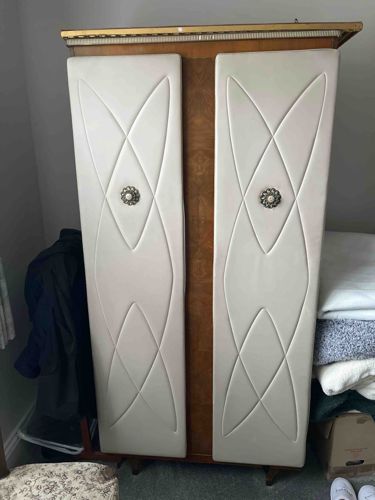
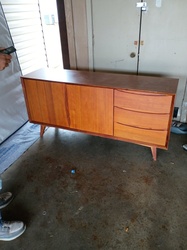
This is a Mid-Century Modern wardrobe, likely dating from the 1950s to 1960s, characterized by its clean lines and distinctive decorative elements. The wardrobe features a main body constructed from a rich, warm-toned wood, possibly walnut or a similar veneer, exhibiting a prominent grain pattern, particularly visible between the two main doors. The top edge of the wardrobe is adorned with a decorative gold-toned trim, intricately fluted or ribbed, which adds a touch of sophistication. The most striking features are the two large, vertically oriented doors. These doors are upholstered in an off-white or cream-colored material, likely vinyl or a similar synthetic fabric, providing a soft-touch and contrasting texture to the wood. Each door is embellished with an embossed or stitched geometric pattern, forming intersecting curvilinear shapes that create a dynamic, abstract design. Centered on each door is an ornate, circular handle or pull, featuring a decorative floral or starburst-like motif with a central pearl-like cabochon, surrounded by smaller, possibly metallic beads. The overall condition appears good for its age, though minor wear consistent with use might be present on the wood finish or upholstery. The hardware shows a slight patina, which is expected. The construction appears sturdy, indicative of quality craftsmanship typical of the era. The legs, partially visible at the bottom, suggest a tapered or splayed design, further reinforcing its Mid-Century aesthetic. This piece combines functional storage with a strong decorative statement, making it a focal point in any room.
AI Appraisal Report
Upon my virtual examination of this Mid-Century Modern wardrobe, I can confidently assess its authenticity as a piece from the 1950s-1960s based on its distinctive design elements. The clean lines, warm-toned wood, likely walnut or a high-quality veneer, and particularly the tapered or splayed legs (though partially visible) are all hallmarks of the era. The gold-toned fluted trim adds a touch of period-appropriate luxury. The most striking features, the upholstered doors with their geometric embossed pattern and ornate circular handles featuring a pearl-like cabochon, are highly characteristic and contribute significantly to its aesthetic appeal and period accuracy. From the image, the condition appears good for its age. I note the presence of a slight patina on the hardware, which is expected and desirable, and the wood finish and upholstery show no obvious major flaws, suggesting proper care. Minor wear consistent with use would be anticipated. The construction appears sturdy, indicating quality craftsmanship typical of American or European manufacturers of that period.
In terms of market conditions, Mid-Century Modern furniture continues to experience strong demand. Pieces like this, which combine functional storage with a significant decorative statement, are particularly sought after by collectors and interior designers. While wardrobes are generally less common than dressers or credenzas, the unique upholstered doors and decorative hardware on this piece elevate its rarity and desirability. Factors impacting value positively include its distinctive design, apparent good condition, and the ongoing popularity of the Mid-Century Modern aesthetic. A slight limitation in value, compared to designer-label pieces, is the absence of a specific recognizable designer or manufacturer without further information.
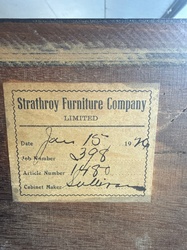
My appraisal is limited by the fact that I have only examined images. A full authentication would require an in-person examination to verify the wood type, construction methods (e.g., joinery), and the material of the upholstery and hardware. Physical inspection would also allow for a more precise assessment of any hidden flaws, repairs, or structural integrity. Documentation of provenance, such as original sales receipts or manufacturer's marks, would further solidify its history and potentially increase its value. Without these, I base my assessment on visual attributes and historical design context.