AI estimate as of November 13, 2025 · verify with a professional before acting
AI-Generated · Verify before acting
Everything on this page is generated by AI for informational purposes only. AI can make mistakes — the AI may misidentify items or misattribute them (artist, maker, brand, designer, origin, era). This is not an official valuation and should not be used for insurance, sale, tax, estate, legal, or lending purposes — or any decision requiring a certified appraisal. It is not an authoritative claim about any person, brand, or rights holder — do not share or rely on it as a factual statement about a third party. Always consult qualified professionals before making financial decisions.
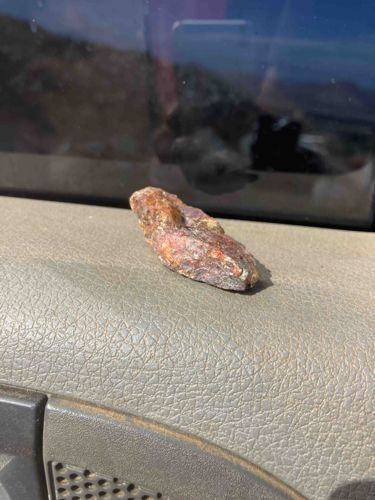
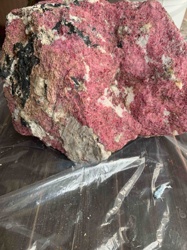
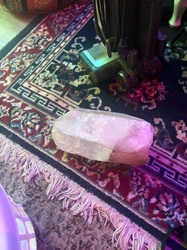
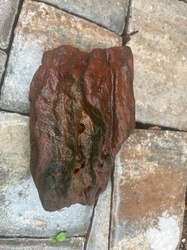
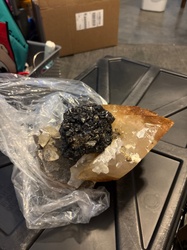
The item is a small, elongated piece of raw mineral, likely unworked or minimally processed. Its primary coloration appears to be a mottled mix of reddish-brown, dark brown, and possibly hints of a lighter, almost purplish-pink hue in certain areas, suggesting the presence of different minerals or inclusions. The surface is rough and uneven, indicative of a natural, unpolished state. Numerous small facets and sharp edges are visible, along with some slightly smoother, but still irregular, surfaces. The overall shape is irregular and somewhat angular, tapering slightly at one end. There are no discernible markings, inscriptions, or manufacturer's stamps visible from the provided image. Its size appears to be a few centimeters in length, resting on a textured, greyish-tan surface, possibly an automotive interior. The condition is consistent with a naturally occurring rock or mineral fragment, showing no signs of artificial wear or damage, though natural erosion or fracturing could be present. The specific mineral composition cannot be determined without further analysis (e.g., hardness tests, streak tests, or spectroscopic analysis), but its color profile could suggest minerals rich in iron oxides, or possibly certain forms of garnet, tourmaline, or other silicate minerals depending on its geological origin. The quality indicators are those of a natural specimen, with its value, if any, lying in its geological interest or potential for lapidary work.
AI Appraisal Report
Based on my visual examination of the provided image, this Unidentified Raw Mineral Specimen appears to be a natural, unworked mineral fragment. Its rough, uneven surface and irregular, angular shape are consistent with a naturally occurring rock or mineral. The mottled reddish-brown, dark brown, and purplish-pink hues suggest the presence of iron oxides or other common minerals. I find its authenticity as a natural specimen to be high, with no signs of artificial manipulation or damage other than natural wear.
Market conditions for such an uncharacterized raw mineral are generally low. Without specific identification (e.g., amethyst, garnet, tourmaline), its value is primarily decorative or as a geological curiosity. Comparables would include 'mystery rock' lots or unpolished, common mineral specimens sold in hobby shops or online, typically ranging from a few dollars to perhaps twenty dollars. Demand for unidentified raw minerals is limited; specific, rare, or aesthetically striking minerals command higher prices. This specimen, while interesting, does not exhibit features suggesting high rarity or significant intrinsic value.
Factors impacting its current low value include its unknown composition and lack of proven geological significance or aesthetic appeal for lapidary work without further processing. The primary limitation in this appraisal is the inability to perform physical tests. Full authentication, especially regarding its specific mineral composition, would require in-person examination, including hardness, streak, and density tests, or more advanced scientific analysis like X-ray diffraction or spectroscopic analysis. Provenance documentation, though unlikely for an unworked specimen, would also add value if it currently lacks.