AI estimate as of July 28, 2025 · verify with a professional before acting
AI-Generated · Verify before acting
Everything on this page is generated by AI for informational purposes only. AI can make mistakes — the AI may misidentify items or misattribute them (artist, maker, brand, designer, origin, era). This is not an official valuation and should not be used for insurance, sale, tax, estate, legal, or lending purposes — or any decision requiring a certified appraisal. It is not an authoritative claim about any person, brand, or rights holder — do not share or rely on it as a factual statement about a third party. Always consult qualified professionals before making financial decisions.
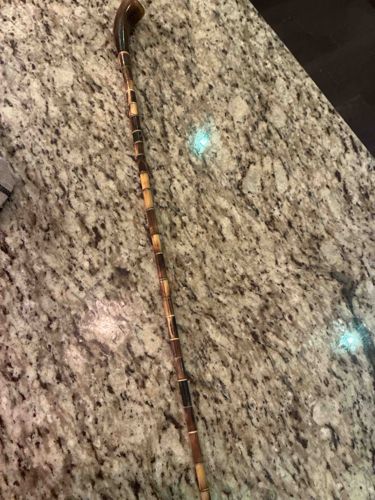
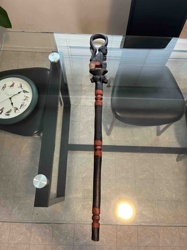
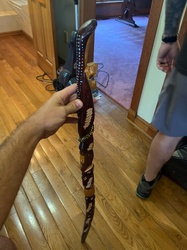
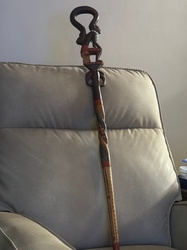
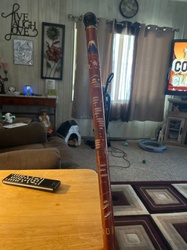
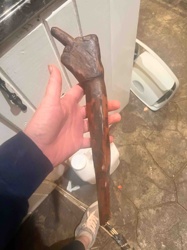
This item is a walking stick or cane, characterized by its distinctive handle and shaft. The handle appears to be an integral part of the overall piece, potentially formed from a natural material such as horn or a type of dark, polished wood, which has been bent or shaped into a comfortable, curved grip. Its color is a deep, rich brown, almost black in some areas, with a smooth, glossy finish that reflects light. The shaft of the walking stick is crafted from bamboo or a similar segmented cane material, exhibiting a natural, variegated color pattern. This pattern consists of alternating bands of lighter, natural tan or cream-colored segments and darker, possibly charred or naturally darker brown/black segments. This browning technique, often achieved through heat treatment, enhances the visual appeal and highlights the natural nodes of the cane. The segments are relatively consistent in thickness, suggesting a uniform diameter along most of the shaft. The construction appears sturdy, indicating a handmade or artisanal quality. There are no visible major cracks, breaks, or significant damage, suggesting it is in good overall condition. The finish on both the handle and shaft appears to be well-preserved, though minor scuffs or wear consistent with age and use might be present upon closer inspection. The overall style suggests a traditional or possibly vintage piece, likely from the early to mid-20th century, given the common use of bamboo and horn in walking stick construction during that period. No specific maker's marks or signatures are discernible from the image, which is common for many such items. The craftsmanship appears to be of good quality, with attention paid to the aesthetic of the alternating segments and the shaping of the handle.
AI Appraisal Report
Based on my visual examination of the provided image, this bamboo walking stick presents as a well-preserved, traditional piece. The condition appears to be good overall, with no obvious major damage such as cracks or breaks. The polished handle's smooth finish and the bamboo shaft's variegated pattern, likely achieved through heat treatment, contribute to its aesthetic appeal. The construction seems sturdy, suggesting artisanal quality. Authenticity, based solely on imagery, points towards a genuine early to mid-20th-century item, a period when such materials and craftsmanship were common for walking sticks.
In terms of market conditions, vintage walking sticks, particularly those with natural materials and unique features like this segmented bamboo, generally find a niche market among collectors of militaria, antique accessories, or those interested in folk art and traditional craftsmanship. While not exceedingly rare, pieces in good condition with appealing aesthetics are more desirable. Comparables would include similar bamboo or horn-handled canes sold at antique fairs, online vintage marketplaces, or specialized auctions.
Factors significantly impacting value include the excellent apparent condition, the distinctive handle, and the appealing natural variations of the bamboo. The lack of discernible maker's marks is common for such items and doesn't necessarily detract from the value, though a known provenance or maker could significantly increase it.
Limitations in authenticity verification from images alone are significant. I cannot definitively assess the handle material (horn versus polished wood), the true extent of minor scuffs or wear, or the integrity of the joins. A physical examination would allow for tactile inspection of materials, precise measurement, and a thorough search for any subtle repairs or hidden damage. Provenance documentation, if available, could confirm its age and history, while scientific testing might be used to definitively identify handle material if ambiguity arose.