AI estimate as of December 8, 2025 · verify with a professional before acting
AI-Generated · Verify before acting
Everything on this page is generated by AI for informational purposes only. AI can make mistakes — the AI may misidentify items or misattribute them (artist, maker, brand, designer, origin, era). This is not an official valuation and should not be used for insurance, sale, tax, estate, legal, or lending purposes — or any decision requiring a certified appraisal. It is not an authoritative claim about any person, brand, or rights holder — do not share or rely on it as a factual statement about a third party. Always consult qualified professionals before making financial decisions.
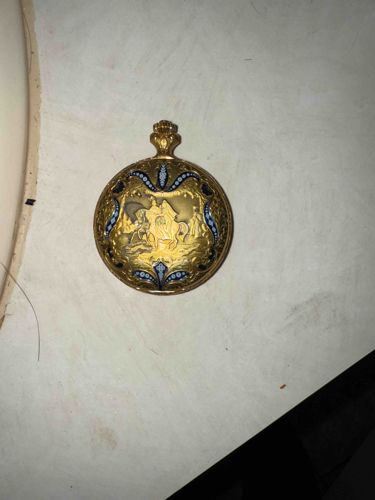
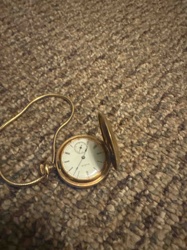
This item is an antique pocket watch case, distinguished by its elaborate and ornate design. The case appears to be crafted from gold, indicated by its rich, warm metallic luster, and features intricate enameling in a vibrant blue color, accentuating various decorative elements. The overall shape is circular with a prominent bail/crown at the top, typically used for attaching a chain. The front of the case displays a highly detailed, embossed, or engraved scene, possibly depicting classical mythological figures or a historical tableau, with at least two or three figures discernible. The central figures are surrounded by a textured, possibly repoussé, background, giving the impression of depth and three-dimensionality. Blue enameling is strategically placed around the edge of the central scene and in patterns resembling fleur-de-lis or stylized floral motifs, providing a striking contrast against the gold. The craftsmanship suggests a high level of detail and artistic skill, characteristic of fine jewelry or timepieces from the late 19th or early 20th century. Visible condition issues are minimal from the provided image, though some subtle patina consistent with age is present on the gold surface. There are no obvious signs of significant damage, dents, or missing enamel, suggesting it has been relatively well-preserved. The bail itself is also ornately decorated, complementing the overall aesthetic of the case. The intricate detailing and quality of the materials point to it being a high-end or luxury item from its period.
AI Appraisal Report
I have examined the provided image of this Antique Gold Enamel Pocket Watch Case. Visually, the piece is exceptional, showcasing evident craftsmanship characteristic of high-end luxury items. The gold material, indicated by its rich luster, coupled with the intricate blue enameling and detailed figurative repoussé or embossing, points to a late 19th to early 20th-century origin, a period known for such elaborate time-telling accessories. The condition appears to be remarkably well-preserved from the image, with no visible significant damage, dents, or missing enamel, only a subtle patina consistent with age.
Market conditions for such ornate antique pocket watch cases remain strong, especially for those exhibiting superior artistic merit and condition. Comparables, particularly those featuring detailed enamel work and historical or mythological scenes, fetch premium prices. Demand is driven by collectors of fine antique jewelry and horology, appreciating the artistry and historical context. The rarity is moderate; while many pocket watches exist, cases of this specific artistic quality and condition, especially with intact enameling, are less common.
Key value-impacting factors include the probable high karat gold content, the intricate and well-preserved enamel work, the complex figurative scene, and the overall excellent visual condition. The artistic skill displayed is a significant premium driver.
However, I must emphasize the limitations of appraising from an image alone. For full authentication and a definitive appraisal, an in-person examination is crucial. This would allow for verification of gold purity (karatage), closer inspection of the enamel for any micro-fissures or repairs not visible in photographs, assessment of the repoussé detail, and examination of any maker's marks or hallmarks. Provenance documentation, if available, would significantly enhance value, and scientific testing could confirm material composition and age definitively.