These notes were written by the person who submitted this item. Appraiser.AI has not verified them, and the AI's identification and estimate may rely on them.
AI Estimated Value
Not an official valuation
$150-250
AI estimate as of August 31, 2025 · verify with a professional before acting
AI-Generated · Verify before acting
Everything on this page is generated by AI for informational purposes only. AI can make mistakes — the AI may misidentify items or misattribute them (artist, maker, brand, designer, origin, era). This is not an official valuation and should not be used for insurance, sale, tax, estate, legal, or lending purposes — or any decision requiring a certified appraisal. It is not an authoritative claim about any person, brand, or rights holder — do not share or rely on it as a factual statement about a third party. Always consult qualified professionals before making financial decisions.
This analysis also relies on unverified notes provided by the user, which may be incomplete or inaccurate and could affect the result.
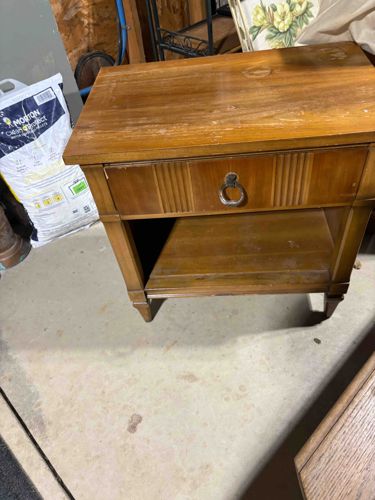
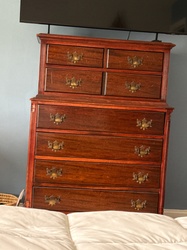
This is a vintage or antique wooden nightstand, likely manufactured by Drexel based on the provided context. It features a warm, medium brown wood finish, possibly walnut or a similar hardwood, with visible grain patterns. The top surface shows significant wear, including noticeable fading, scratches, and discoloration, indicating prolonged use and exposure. The front of the nightstand is characterized by a single drawer positioned at the top, adorned with a decorative, ornate ring pull handle that appears to be made of a tarnished or antiqued metal. The drawer face is detailed with vertical reeding or fluting on either side of the handle, adding a touch of classic or traditional design. Below the drawer, there is an open storage shelf, providing additional space. The nightstand stands on four tapered legs, which are integrated into the main body of the piece. The overall construction appears solid, suggesting quality craftsmanship typical of established furniture manufacturers like Drexel. The visible condition issues point to general age and wear typical of a piece that has been used for many years, possibly requiring restoration of the finish to enhance its aesthetic appeal. The design elements suggest a style period from the mid-20th century, possibly adhering to a traditional, colonial revival, or transitional aesthetic, a common range for Drexel furniture.
AI Appraisal Report
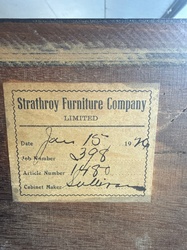
Upon my virtual examination of the Drexel Furniture nightstand, I note its classic design featuring a single drawer with an ornate ring pull and an open storage shelf below, all supported by tapered legs. The visible 'Drexel Furniture' mark inside the drawer is crucial for authentication, aligning with the quality craftsmanship observed. The warm, medium brown wood finish, likely walnut, suggests a mid-20th century aesthetic, typical for Drexel pieces. However, the condition is a significant factor impacting value; the top surface shows notable fading, scratches, and discoloration, indicating considerable wear and tear. While the overall construction appears solid, these cosmetic issues would necessitate restoration to significantly enhance its aesthetic appeal and marketability.
In terms of market conditions, vintage Drexel furniture has a consistent following, but the value is highly dependent on condition and specific design desirability. This piece, while authentic, is in 'good vintage' rather than 'excellent' or 'restored' condition. Comparable sales for similar Drexel nightstands in this condition range from $100 to $300. Demand exists for quality vintage furniture, but this specific piece, while solid, isn't rare or exceptionally unique. The visible wear limits its appeal to collectors seeking pristine examples, directing it more towards buyers looking for functional vintage items or restoration projects.
My appraisal of $150-250 reflects its authentic Drexel provenance and solid construction, balanced against its current cosmetic condition. For a full authentication, physical inspection would be crucial to verify wood type, original hardware, and construction details, and to identify any repairs or alterations not visible in images. Provenance documentation, though less common for individual furniture pieces, could also add significant value.