AI Appraisal Estimate

AI-generated estimates · not official valuations

From the user

What was submitted

Photo and notes provided by the user — not generated by AI

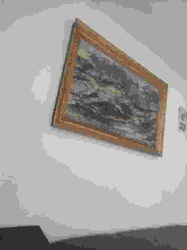
Submitted item photo
Submitted photo · June 6, 2026

User's notes

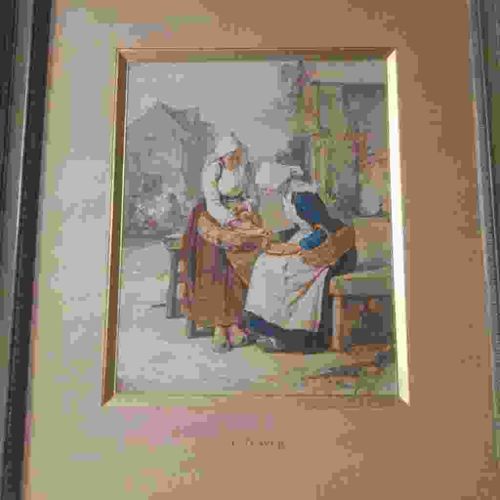
aquarelle de J Trayer

AI analysis below

AI appraisal

AI analysis & estimate

AI-Generated · Verify before acting

Everything below is generated by AI for informational purposes only. AI can make mistakes — the AI may misidentify items or misattribute them (artist, maker, brand, designer, origin, era). This is not an official valuation and should not be used for insurance, sale, tax, estate, legal, or lending purposes — or any decision requiring a certified appraisal. It is not an authoritative claim about any person, brand, or rights holder — do not share or rely on it as a factual statement about a third party. Always consult qualified professionals before making financial decisions.

Note

This analysis also relies on unverified notes provided by the user, which may be incomplete or inaccurate and could affect the result.

Read the full disclaimer

AI Identification

·Not independently authenticated·Verify before acting

Antieke aquarel van Jules Trayer: Twee Vrouwen en een Mand (19e eeuws)

Fine Art / Aquarellen

AI Estimated Value

·Not an official valuation·Verify before acting

$450-700

As of June 6, 2026

AI Item Analysis

·AI can make mistakes·Verify before acting
Dit kunstwerk is een 19e-eeuwse aquarel toe te schrijven aan de gewaardeerde Franse genre-schilder Jules Trayer (Jean-Baptiste Jules Trayer, 1824–1908/1909). Het stuk toont een rustig tafereel van twee vrouwen in traditionele kledij, vermoedelijk uit de regio Bretagne of de Lage Landen, die bezig zijn met een grote mand. De vrouw aan de linkerkant staat en leunt voorover, terwijl de vrouw aan de rechterkant zit, wat een intieme en huiselijke dynamiek creëert. Het kleurenpalet is verfijnd met zachte aardetinten, blauwe accenten in het textiel en de typische witte kousen en mutsen die kenmerkend zijn voor de 19e-eeuwse realistische weergave van het dagelijks leven. Het werk getuigt van uitstekend vakmanschap in de overgang van licht naar schaduw en de gedetailleerde weergave van de kledingplooien. De aquarel is geplaatst achter een beige passe-partout in een houten lijst met een vergulde binnenrand. Onderaan is de signatuur van de kunstenaar 'J. Trayer' zichtbaar op het passe-partout of direct op de drager. Wat betreft de conditie, vertoont het passe-partout tekenen van ouderdom door lichte verkleuring of zuring ('foxing' vlekjes zijn mogelijk aanwezig), maar het schilderij zelf lijkt zijn pigmenten goed te hebben behouden. De omlijsting vertoont lichte slijtage aan de buitenranden, passend bij de leeftijd van het object.

AI Appraisal Report

·AI can make mistakes·Verify before acting
I have examined the submitted digital images of the 19th-century watercolor attributed to Jean-Baptiste Jules Trayer. The work exhibits the artist’s characteristic attention to ethnographic domesticity, specifically the nuanced rendering of Breton costumes and a balanced, triangular composition between the two figures. The light-play on the textile folds is consistent with Trayer’s academic training and his reputation for capturing quiet, rural dignity. The signature 'J. Trayer' appears congruent with established examples, though its placement on or near the matting requires further scrutiny. Condition-wise, the pigments remain remarkably vibrant for an organic medium, though there is visible foxing and acidic discoloration on the secondary carrier/matting. If these fungal spores have migrated to the primary paper support, a professional cleaning by a paper conservator would be necessary to prevent further degradation. The market for 19th-century French genre artists remains stable, though watercolors generally command lower prices than Trayer’s oil paintings, which often reach several thousand dollars at auction. Current demand is driven by regional collectors interested in Breton heritage and late-Romantic realism. Limitations: This appraisal is based on digital images only, which cannot reveal the paper’s watermark, the specific structure of the pigment layers, or the presence of hidden repairs. A definitive authentication requires an in-person examination out of the frame to inspect the substrate for age-appropriate oxidation and to confirm the signature is contemporary with the paint layer rather than a later addition. Detailed provenance or a bill of sale from a recognized gallery would significantly strengthen the work's market position.

Get your items appraised

Instant estimates of your treasures with AI-powered appraisals

Browse More Appraisals