AI identification & appraisal estimate

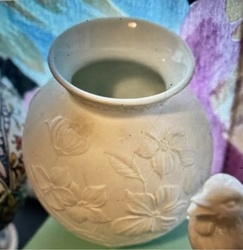
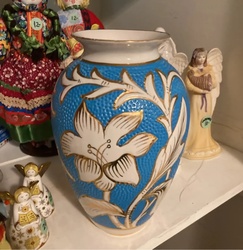
Baluster-form ceramic vase in the Chinoiserie style

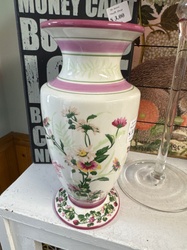
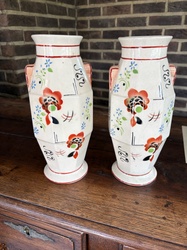
Submitted photo of Baluster-form ceramic vase in the Chinoiserie style
Photo submitted by the user — not generated by AI

AI Estimated Value

Not an official valuation

$45-85

AI estimate as of June 27, 2026 · verify with a professional before acting

AI-Generated · Verify before acting

Everything on this page is generated by AI for informational purposes only. AI can make mistakes — the AI may misidentify items or misattribute them (artist, maker, brand, designer, origin, era). This is not an official valuation and should not be used for insurance, sale, tax, estate, legal, or lending purposes — or any decision requiring a certified appraisal. It is not an authoritative claim about any person, brand, or rights holder — do not share or rely on it as a factual statement about a third party. Always consult qualified professionals before making financial decisions.

Read the full disclaimer

AI Item Analysis

This object is a ceramic vase featuring a flared rim, a constricted neck with cartouche details, and a rounded baluster body resting on a slightly flared foot. The piece exhibits a deep cobalt blue or black glaze, acting as a high-contrast ground for the polychrome decoration. The central motif depicts a peacock with stylized golden-brown and white plumage, surrounded by large pink floral blooms consistent with peonies and smaller white cherry blossoms. The neck is adorned with two hexagonal cartouches containing smaller floral sprays. Gilt accents are visible along the rim, the foot, and within the detailed plumage of the bird. No manufacturer markings or signatures are visible in the provided image; consequently, this identification is based on stylistic attributes. The overall aesthetic is consistent with mid-to-late 20th-century decorative export ware, often manufactured in Japan or China. The condition appears well-maintained with a high-gloss finish, though potential surface micro-scratches cannot be ruled out without physical inspection. The precision of the floral applications and the use of metallic gold-tone highlights suggest a piece intended for decorative display.
AI Appraisal Report

Based on my visual examination of the provided image, I have evaluated this ceramic baluster vase. The object displays characteristic traits of mid-to-late 20th-century decorative export ware, likely originating from Japan or China. I can observe a high-gloss cobalt ground with polychrome floral and peacock motifs, accented by metallic gold-tone highlights. While the aesthetic is consistent with the Chinoiserie style, I cannot determine the specific manufacturer or exact age from a photo alone, as no hallmarks or signatures are visible. The value I have assigned assumes this is a well-maintained decorative piece from the mid-to-late 1900s. Based on what I can see, the value is driven by its decorative appeal rather than rarity or a specific maker's attribution. General market demand for unattributed export porcelain of this era remains stable but modest, as these pieces were produced in significant quantities for the international market. I cannot verify the presence of micro-scratches, repairs, or the specific composition of the gilding without a physical inspection. To further clarify this valuation, one would need to inspect the underside for maker’s marks and evaluate the weight and porcelain translucency in person. If this item were to be identified as a contemporary reproduction or a mass-produced modern copy, the value would likely decrease to the $20-30 range. Conversely, if documentation or a physical hallmark were found to connect it to a specific prestigious workshop, the estimate could increase. This valuation reflects a decorative object in the current secondary market for vintage home accents.

Keep exploring

More vases and ceramics appraisals

Get your items appraised

Instant AI-powered appraisal estimates from a photo

Browse More Appraisals