AI estimate as of August 11, 2025 · verify with a professional before acting
AI-Generated · Verify before acting
Everything on this page is generated by AI for informational purposes only. AI can make mistakes — the AI may misidentify items or misattribute them (artist, maker, brand, designer, origin, era). This is not an official valuation and should not be used for insurance, sale, tax, estate, legal, or lending purposes — or any decision requiring a certified appraisal. It is not an authoritative claim about any person, brand, or rights holder — do not share or rely on it as a factual statement about a third party. Always consult qualified professionals before making financial decisions.
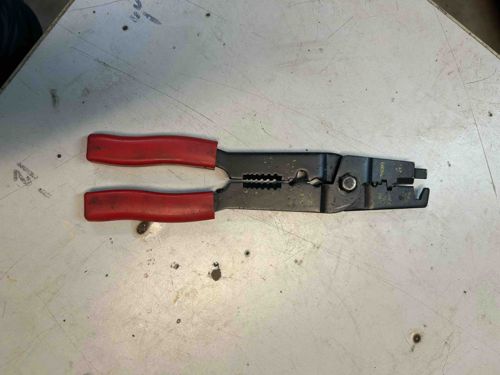
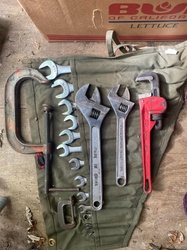
This item is a pair of wire strippers/crimpers, characterized by its black metal body and red plastic or rubberized handles. The tool appears to be made of a durable steel alloy, indicated by its dark finish and robust construction. It features multiple functionalities typical of electrical tools, including a stripping mechanism with multiple size grooves for stripping insulation from wires, and a crimping section near the pivot point, visible as various indentations designed for securing electrical connectors. The handles are ergonomically shaped with a slight curve for comfortable gripping, and show signs of use, including some dirt and scuff marks, mostly on the red material, but no significant cracking or degradation. The metal parts also exhibit wear consistent with regular use, such as minor scratches and a slightly dulled finish, but there's no visible rust or severe damage that would compromise its function. The pivot bolt is clearly visible, suggesting a standard mechanical linkage. Given the common design and apparent wear, this tool is estimated to be modern, likely manufactured in the late 20th or early 21st century. No distinct maker's marks or signatures are discernible from the provided image, indicating it could be a widely produced, unbranded or generically branded tool. The overall craftsmanship appears to be of standard industrial quality, designed for utility and durability rather than artistic merit.
AI Appraisal Report
I have examined the image provided of these wire strippers/crimpers. Based on the visual evidence, the tool is a standard, mass-produced item. Its black metal body and red plastic/rubberized handles are common design features for utility hand tools. The visible wear, including dirt, scuffs on the handles, and minor scratches on the metal, is consistent with regular use but indicates no severe damage that would impair function. Authenticity, based solely on the image, points to a genuine tool of its type, likely manufactured in the late 20th or early 21st century. There are no discernible unique features, maker’s marks, or artistic elements to suggest it’s anything other than a functional, utilitarian piece.
Market conditions for such tools are highly competitive, with a wide array of new and used options readily available from numerous manufacturers. Comparable new tools of similar quality can be purchased for $15-$40. Given its used condition and the absence of any premium branding or unique features, the demand for this specific item in secondary markets would be low, primarily appealing to individuals seeking an inexpensive, functional tool. Rarity is not a factor here; this is a common item. The primary factors impacting value are its generic nature, signs of wear, and the saturated market.
It is important to note the limitations of appraising from an image alone. Without physical inspection, I cannot ascertain the precise material composition, the smoothness of the pivot action, the sharpness of the cutting edges, or the accuracy of the stripping/crimping indents. An in-person examination would allow for tactile assessment of wear, functionality testing, and closer inspection for obscure maker's marks. Provenance documentation would be non-applicable for such a common tool. Scientific testing would be excessive and unnecessary.