AI Appraisal Estimate

AI-generated estimates · not official valuations

From the user

What was submitted

Photo and notes provided by the user — not generated by AI

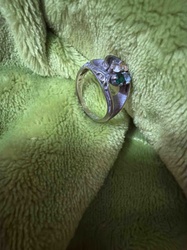
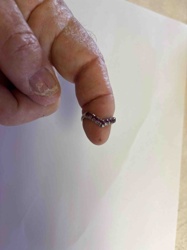
Submitted item photo
Submitted photo · June 12, 2026

User's notes

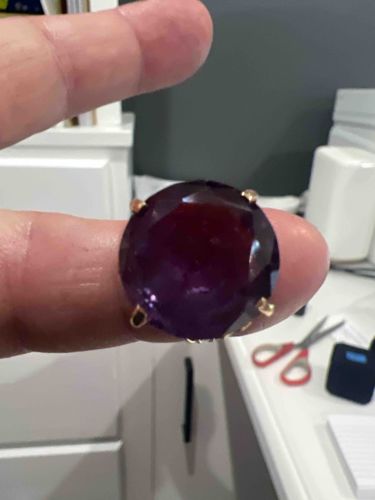
Size 5 3/4. Stone 16.75 mm

AI analysis below

AI appraisal

AI analysis & estimate

AI-Generated · Verify before acting

Everything below is generated by AI for informational purposes only. AI can make mistakes — the AI may misidentify items or misattribute them (artist, maker, brand, designer, origin, era). This is not an official valuation and should not be used for insurance, sale, tax, estate, legal, or lending purposes — or any decision requiring a certified appraisal. It is not an authoritative claim about any person, brand, or rights holder — do not share or rely on it as a factual statement about a third party. Always consult qualified professionals before making financial decisions.

Note

This analysis also relies on unverified notes provided by the user, which may be incomplete or inaccurate and could affect the result.

Read the full disclaimer

AI Identification

·Not independently authenticated·Verify before acting

Vintage Round-Cut Amethyst Solitaire Ring

Fine Jewelry

AI Estimated Value

·Not an official valuation·Verify before acting

$450-750

As of June 12, 2026

AI Item Analysis

·AI can make mistakes·Verify before acting
This piece is a vintage cocktail ring featuring a prominent round brilliant-cut amethyst gemstone. The amethyst displays a deep, saturated purple hue with visible flashes of violet and magenta, suggesting high-quality saturation. Measuring approximately 16.75 mm in diameter, the gemstone is held in an elevated four-prong setting, typical of Mid-Century or Retro-era jewelry (circa 1940s-1970s). The metal appears to be a warm-toned yellow or rose gold, which complements the deep purple of the stone. The ring size is documented as 5 3/4. Upon surface inspection, the crown facets of the amethyst show minor abrasions and edge wear consistent with its age and use as a decorative cocktail piece. The prongs appear thick and secure, though a professional jeweler's inspection of the metal under-gallery and shank for hallmark stamps (such as 14K or 18K) would be necessary for a full metallurgical valuation. The scale of the center stone relative to the band suggests a bold 'statement' design, valuing high-carat weight visibility over intricate metalwork. The transparency of the gemstone appears clear, lacking significant internal eye-visible inclusions that would detract from its brilliance.
AI Appraisal Report

·AI can make mistakes·Verify before acting
Based on my visual examination of the provided imagery, I have assessed this vintage solitaire cocktail ring, circa mid-20th century. The centerpiece is a striking round brilliant-cut amethyst measuring approximately 16.75 mm. Using standard specific gravity calculations for quartz, a stone of these dimensions suggests a significant carat weight estimated between 15.00 and 18.00 carats. The saturation is commendable, displaying the desirable deep Siberian-style purple with violet flash, rather than the washed-out lilac common in lower-grade commercial stones. The setting is a classic Retro-era elevated four-prong mount, likely 10k or 14k gold given the warm patina, though hallmarks are not visible in the provided angles. The visible abrasions on the crown facets are consistent with normal vintage wear for a softer gemstone (Mohs hardness of 7). While the stone makes a bold visual statement, the value is primarily driven by the sheer size and color of the amethyst rather than intrinsic rarity, as quartz is abundant. Market comparables for similarly sized vintage amethyst solitaires currently trend between $450 and $750 at retail. A higher valuation would require confirmation of 14k or 18k gold content and a lack of significant internal fractures. Please note that without physical inspection, I cannot definitively confirm the metal purity via acid testing or rule out synthetic origins (hydrothermal quartz), which was popular in this era. A gemological refractometer test would also be required to absolutely confirm the stone is natural amethyst and not a synthetic stimulant or glass, although the visible wear patterns strongly suggest natural quartz.

Get your items appraised

Instant estimates of your treasures with AI-powered appraisals

Browse More Appraisals