AI Appraisal Estimate

AI-generated estimates · not official valuations

From the user

What was submitted

Photo and notes provided by the user — not generated by AI

Submitted item photo
Submitted photo · June 23, 2026

User's notes

No additional notes provided.

AI analysis below

AI appraisal

AI analysis & estimate

AI-Generated · Verify before acting

Everything below is generated by AI for informational purposes only. AI can make mistakes — the AI may misidentify items or misattribute them (artist, maker, brand, designer, origin, era). This is not an official valuation and should not be used for insurance, sale, tax, estate, legal, or lending purposes — or any decision requiring a certified appraisal. It is not an authoritative claim about any person, brand, or rights holder — do not share or rely on it as a factual statement about a third party. Always consult qualified professionals before making financial decisions.

Read the full disclaimer

AI Identification

·Not independently authenticated·Verify before acting

Vintage Caned Rocking Chair

Furniture

AI Estimated Value

·Not an official valuation·Verify before acting

$250-450

As of June 23, 2026

AI Item Analysis

·AI can make mistakes·Verify before acting
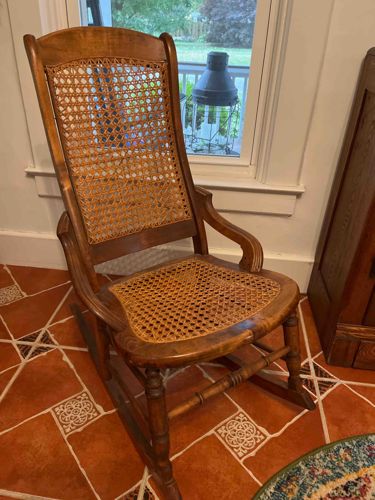
This is a vintage rocking chair featuring a light to medium brown stained wooden frame, likely constructed from a hardwood such as oak or maple, given its grain pattern and durability. The chair has a tall, elegantly curved backrest with a generous panel of machine-caned webbing, providing both comfort and a classic aesthetic. The seat also incorporates a matching machine-caned insert, which is slightly contoured for ergonomic sitting. The arms are gracefully curved, transitioning smoothly to the front legs. The frame exhibits turnings on the front legs and stretchers, indicative of period craftsmanship. The rockers are substantial and curved, designed for a smooth motion. Visible condition issues include minor scuffs and scratches on the wooden frame, consistent with age and use, particularly at the edges and feet. The cane webbing appears to be intact with no obvious breaks or sagging, suggesting good preservation or potential careful re-caning at some point. The wood displays a pleasing patina, indicating its age and adding to its character. The overall style suggests it could be from the late 19th to early 20th century, possibly adhering to Arts and Crafts or Colonial Revival influences due to its sturdy construction and emphasis on natural materials and traditional forms. No specific maker's marks or signatures are discernible from the provided images, but the quality of the joinery and finish indicates a well-made piece of furniture.

AI Appraisal Report

·AI can make mistakes·Verify before acting
This vintage caned rocking chair, featuring a light to medium brown stained hardwood frame (likely oak or maple), presents as a well-preserved example of early 20th-century craftsmanship, possibly influenced by Arts and Crafts or Colonial Revival styles. Visually, the machine-caned back and seat appear intact with no obvious sagging or tears, which is a significant factor in maintaining its value. The wooden frame exhibits minor scuffs and scratches consistent with age and use, particularly at the edges, which contributes to an appealing patina rather than detracting from the piece. The turnings on the front legs and stretchers, along with the gracefully curved arms and substantial rockers, all point to a quality-made item. Market conditions for vintage caned rocking chairs in good condition are generally stable. While not 'rare,' well-maintained examples like this are consistently sought after by collectors and individuals looking for functional accent pieces. Comparable sales for similar chairs in excellent condition typically range from $300-$550, with those requiring re-caning or significant frame repair often falling below $200. The absence of specific maker's marks is common for many pieces of this era and doesn't necessarily devalue the item, but rather prevents a premium associated with a renowned manufacturer. Demand is moderate, driven by the current trend for vintage and repurposed furniture. Without an in-person examination, I cannot definitively confirm the wood species or rule out hidden repairs or structural weaknesses that might impact long-term durability. A physical inspection would allow for testing the integrity of the joinery, assessing the original finish versus any possible refinishing, and confirming the stability of the caning. Additionally, detailed provenance documentation, if available, could sometimes add value by linking it to a specific historical context or maker, though this is less common for general furniture pieces of this type.

Get your items appraised

Instant estimates of your treasures with AI-powered appraisals

Browse More Appraisals