AI estimate as of August 7, 2025 · verify with a professional before acting
AI-Generated · Verify before acting
Everything on this page is generated by AI for informational purposes only. AI can make mistakes — the AI may misidentify items or misattribute them (artist, maker, brand, designer, origin, era). This is not an official valuation and should not be used for insurance, sale, tax, estate, legal, or lending purposes — or any decision requiring a certified appraisal. It is not an authoritative claim about any person, brand, or rights holder — do not share or rely on it as a factual statement about a third party. Always consult qualified professionals before making financial decisions.
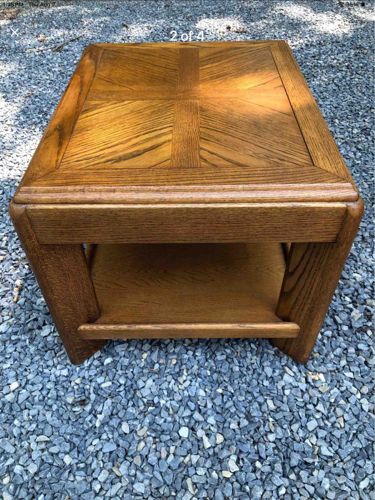
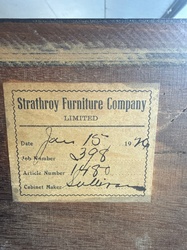
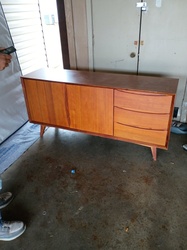
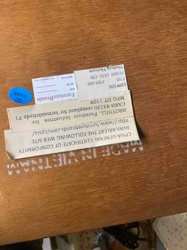
This is a rectangular end table, likely constructed from oak given its prominent grain pattern and warm, medium brown finish. The table features a classic design with a notable parquetry top, where the wood veneer is arranged in a quartered pattern, creating a striking visual effect with the grain radiating from the center. The top surface is bordered by a raised, rounded molding, adding depth and a finished look. Below the main tabletop, there is an open storage shelf, providing additional space for books or decorative items. This lower shelf is supported by solid, curved legs that flow seamlessly from the main structure, giving the piece a robust and continuous appearance. The overall construction appears solid, indicating quality craftsmanship. The wood shows a rich, amber hue, suggesting a clear varnished or lacquered finish that highlights the natural wood grain. Visible condition issues include some surface wear consistent with age and use, such as minor scuffs or light scratches on the tabletop as discernible from the reflections, and potentially some slight fading or variation in the finish. There are no obvious signs of significant damage like cracks or major chipping. The style period appears to be late 20th century, possibly 1970s to 1990s, characterized by the sturdy, somewhat blocky form and the parquetry detail which was popular during that era. There are no visible maker's marks or signatures in the provided image.
AI Appraisal Report
Based on my visual examination of the provided image, I appraise this Parquetry Top Wooden End Table. I assess its condition as good, consistent with age and use. The parquetry top shows its intended quartered pattern, and the overall structure appears solid, with no visible major damage such as cracks or significant chipping. Minor surface wear, scuffs, and light scratches are evident on the tabletop, which is typical for a piece of this age. Authenticity, based on design and construction style, points to a late 20th-century origin, likely 1970s-1990s. The parquetry detail was popular during this period. Without a physical inspection, specific wood species beyond 'oak-like grain' cannot be definitively confirmed, nor can internal construction methods be fully assessed.
Market conditions for vintage end tables of this type are stable. Comparables typically include similar parquetry top or solid wood end tables from the late 20th century. Demand is moderate, driven by individuals seeking functional and aesthetically pleasing pieces for living spaces. This table is not rare, but its solid construction and attractive parquetry enhance its appeal. Factors significantly impacting value include its good condition despite minor wear, the appealing parquetry design, and its functional open shelf. The lack of provenance or maker's marks limits its collectible value to historical or artistic significance.
For full authentication and a more precise appraisal, I would require an in-person examination to inspect the underside for labels or marks, assess the stability and joinery, closely examine the veneer quality, and confirm wood types. Provenance documentation, if available, revealing its origin or designer, would also significantly impact its value. Scientific testing is not typically applied to items of this nature an age unless specific material composition or historical accuracy is questioned, which is not the case here.